Add Row
Add Element
PR Africa: Your Gateway to Comprehensive African News and Insights
update
PR Africa
update
Add Element
  • Home
  • Categories
    • Entertainment
    • Automotive
    • Politics
    • Finance
    • Health & Fitness
    • Sports
    • Business
    • Cryptocurrency
    • Education
    • Fashion & Beauty
    • Home & Garden
    • Foreign Language News
    • Lifestyle
    • Real Estate
    • Religion
    • Science
    • Technology
    • Travel
    • News & Current Affairs
    • Crime & Safety
    • Arts & Culture
    • Environment
    • Food & Drink
    • Extra News
April 30.2025
2 Minutes Read

Unlocking Sustainable Agriculture with the Pivot Master Solution: A Game-Changer for African Farmers

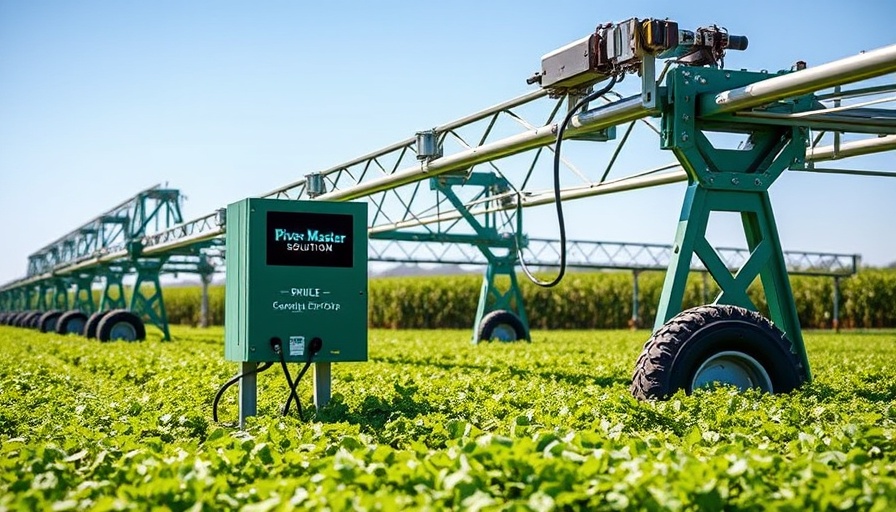
Energy-efficient irrigation system with Pivot Master Solution box.

The Evolution of Sustainable Irrigation in Africa

The new Pivot Master Solution is not just a technological advancement; it's a vital necessity for African farmers facing the dual challenges of rising energy costs and the need for sustainable agricultural practices. In regions where water scarcity and energy efficiency are paramount, this innovative system can revolutionize farmers’ approaches to irrigation. By combining solar technology with effective management tools, Tripple Hydro & Energy is propelling African agriculture toward a greener future.

Understanding the Cost-Effectiveness of Solar-Powered Irrigation

Traditional irrigation systems rely heavily on diesel generators and grid power, which can be prohibitively expensive, especially for small-scale farmers. The Pivot Master Solution eliminates the need for costly batteries and unnecessary hardware by providing a direct correlation between solar energy production and irrigation needs. Farmers can now access affordable, reliable energy that does not require significant capital investment, making it feasible for many who struggled with earlier methods.

The Impact of Energy Independence on Farmers

By adopting the Pivot Master Solution, farmers achieve a level of energy independence that not only enhances their productivity but also reduces vulnerability to fluctuating market prices and supply constraints. Off-grid capabilities mean farmers can irrigate crops without the fear of energy shortages or rising costs, fostering a more resilient agricultural economy.

A Comprehensive Design That Adapts to All Needs

With features catering to a wide range of farm sizes and types, the ability to customize the Pivot Master Solution for up to 15 pivot towers represents unprecedented scalability. This adaptability ensures that whether a farmer operates a small plot or a larger estate, they can benefit from modern technology tailored to their specific requirements.

Promoting Sustainable Practices in Agriculture

This new system supports a broader movement towards sustainability and environmental responsibility in agriculture. The reduction of carbon footprints associated with farms adopting the Pivot Master Solution can contribute positively to climate goals. By using solar energy, farmers align their practices with global sustainability standards, demonstrating environmental ethics alongside profitability.

What the Experts Say: Voices from the Field

Industry leaders like Hannes Moolman, CEO of Tripple Hydro & Energy, emphasize the significance of this technology in shaping future agricultural practices. The commitment to empowering farmers with cost-effective, reliable, and environmentally friendly solutions aligns with the pressing need for transformation within the sector.

Next Steps for Farmers Looking to Innovate

Farmers interested in the Pivot Master Solution are encouraged to participate in forthcoming demonstrations to see firsthand the potential of this exciting technology. For further insights and details about implementation, a visit to Tripple Hydro & Energy’s website is recommended.

In a world striving for sustainable development, innovative solutions like the Pivot Master not only empower farmers but also promise a brighter ecological footprint for future generations. Embracing these advancements is crucial for the agricultural sector as it navigates the complexities of modern farming.

Business

10 Views

0 Comments

Write A Comment

*
*
Related Posts All Posts
12.16.2025

Trustees Must File Their Returns By January 19, 2026: Here’s Why It Matters

Update Trustees: Your Deadline for Tax Returns is ApproachingThe South African Revenue Service (SARS) has set a crucial deadline for all trustees and provisional taxpayers: the submission of ITR12T trust and provisional tax returns must be completed by 19 January 2026. This reminder serves not only as a call to action but also as part of SARS' broader initiative to enhance compliance within the nation’s tax framework, thus reinforcing its role in maintaining the country’s fiscal integrity.Understanding Your Responsibilities as a TrusteeTrusts in South Africa, irrespective of their economic activity, are required to file annual tax returns. As trustees are recognized as representative taxpayers, they bear full accountability for all tax matters associated with their trusts. This legal obligation comes under the Income Tax Act, which reinforces the idea that no trust is exempt from filing its returns, regardless of its activity or income level. This initiative not only helps the government monitor economic activities but also ensures fairness and adherence to tax laws.Supporting Documentation: A Key to Smooth SubmissionGathering all requisite supporting documents ahead of the submission deadline is crucial. Trustees should ensure that they have the trust instrument, beneficiary information, financial statements, and any correspondence necessary for SARS. For trusts with fewer than ten beneficiaries not registered for eFiling, submissions can be done directly at a SARS branch. This flexibility is designed to encourage compliance, making it simpler for trustees to fulfill their obligations.The Implications of Non-ComplianceFailing to file tax returns can result in significant consequences, including monetary fines and penalties. SARS maintains a strict approach with taxpayers who neglect their responsibilities, emphasizing that such laxity is not merely a minor oversight but a potential violation of law. As the regulatory landscape continues to evolve, trustees must remain vigilant and informed about compliance requirements to avoid faltering at this critical juncture.Future Trends: The Evolving Tax Reporting LandscapeIn light of ongoing legislative adjustments, trustees should be prepared for upcoming changes in tax reporting, particularly those regarding the flow-through principle impacting non-resident beneficiaries. Being proactive about these trends not only enhances compliance but also provides strategic advantages when navigating future tax landscapes.Engaging with SARS: Tools and ResourcesSARS offers various online tools and resources available through their eFiling service, designed to simplify the submission process. Utilizing online guides can enhance trustees’ understanding of their requirements, making tax season less daunting and more manageable. It's advisable for trustees to regularly visit the SARS website or consult SARS representatives for the latest updates and best practices on filing.Community Impact and the Importance of EngagementTax compliance goes beyond individual trustees; it impacts the entire community and fosters trust in governmental systems. An efficient tax collection process ensures that public services and infrastructure can be maintained or improved, effectively supporting the development and stability of society. The push for compliance reflects an overarching commitment to improve governance and accountability at all levels.Take Action Now: Don’t Wait Until the DeadlineAs the deadline approaches, trustees are urged to take immediate action. Organizing documents and understanding tax obligations early can save significant time and reduce stress as the due date nears. Engaging with SARS before the last minute can provide clarity and facilitate smoother processes in meeting their tax obligations.

12.16.2025

Navigating Challenges: What Roald Goethe's Leadership Means for Tullow Oil

Update Roald Goethe's Ascension: A Turning Point for Tullow Oil On December 1, 2025, Roald Goethe stepped into a pivotal role as the new chairman of Tullow Oil, a British junior oil company that has been wrestling with significant financial burdens. His leadership marks a fresh chapter for the company, aiming to cut costs and revitalize its operations across Ghana and beyond. With the weight of excessive debt still looming, Goethe faces the daunting challenge of steering Tullow towards profitability amid fluctuating oil prices and investment uncertainties. The Burden of Debt and Organizational Change One of Goethe's foremost tasks will be managing the consequences of a prolonged period of excessive debt. The repercussions have not only affected Tullow’s financial stability but also hindered its operational capabilities in a competitive market. Investors are keenly watching how Goethe will address these pressing issues through strategic decisions aimed at cost-saving and efficient resource management. These challenges are not isolated to Tullow; they resonate throughout the oil sector, where companies are increasingly compelled to innovate in order to survive. Operational Strategy and Future Prospects Goethe’s appointment comes at a crucial time when Tullow Oil is exploring new avenues to reshape its asset portfolio. Recent divestures, including the sale of its Gabonese assets, highlight the company’s commitment to streamline operations. Such moves are intended not only to alleviate debt but also to free up resources for reinvestment aimed at expansion in other African markets. The potential for economic growth in these regions, coupled with Tullow’s plans for more robust governance, could signal a significant turnaround. Pan-African Opportunities and Investor Confidence The transition in leadership occurs against a backdrop of Pan-African initiatives that encourage investment across the continent. These efforts align with Tullow’s ambitions to solidify its presence within Africa, emphasizing the importance of governance, human rights, and sustainable development. As investor confidence shakes off the shadows of past mismanagement incidents, the opportunity for Tullow to become a beacon of responsible oil exploration emerges. Roald Goethe's leadership may play a crucial role in fostering these relationships as Tullow tries to secure new partnerships and funding for future projects. Sector-Wide Implications: Lessons from Tullow's Journey The fate of Tullow Oil under Goethe's direction holds implications that extend beyond the company itself, potentially acting as a catalyst for broader industry shifts. For stakeholders, from local communities to international investors, Tullow’s strategic pivot towards fiscal stability presents a case study of navigating corporate adversity in the oil sector. As Tullow seeks to lead by example, its journey could inspire other companies grappling with similar fiscal challenges. Innovative Practices and Future Trends In the ever-evolving oil market, innovation is key. Tullow's commitment to reducing its operational costs will likely involve adopting new technologies and practices that enhance efficiency. As renewable energy gains ground, the pressure mounts on oil companies to adapt and innovate. Goethe's tenure may well serve as a transformative period that underscores the necessity for industrialization and technological investment in Africa's future energy landscape. The road ahead for Tullow Oil is fraught with challenges, yet there exists an undercurrent of optimism with Roald Goethe at the helm. As he embarks on what can be termed the laborious endeavor of restoring Tullow's fortunes, stakeholders across the spectrum have every reason to remain hopeful. The intersection of governance, innovation, and sustainable development greets this British junior oil company not just as a business imperative but as a commitment to delivering equitable economic growth. In light of these developments, the broader community is encouraged to stay informed and engaged with the evolving narrative surrounding Tullow Oil and its strategies for overcoming obstacles. With awareness and dialogue, individuals can contribute to shaping a more sustainable and equitable future in the energy sector.

12.14.2025

Johannesburg's Economic Heartbeat: Insights from the G20 Summit

Update Joburg's Economic Resurgence: A Global StageThe recent G20 summit held in Johannesburg has put the city notably under the spotlight, marking it as the undisputed economic heart of Southern Africa. As global leaders convened to discuss issues impacting not just the continent but the world, Johannesburg proved it has the capacity and resilience to emerge as a significant player on the global stage. This event is a pivotal moment, enhancing the narrative around Johannesburg beyond its historical challenges and positioning it as an engine for future growth.The Underlying Strengths of JohannesburgGauteng, the province surrounding Johannesburg, contributes a staggering portion to South Africa's gross domestic product (GDP). Home to OR Tambo International Airport, sophisticated healthcare institutions such as Chris Hani Baragwanath Academic Hospital, and prestigious universities, Johannesburg is a hub that attracts interest from global investors looking for opportunities not just within the city but throughout Africa. This potential serves as an invitation for investment as it flourishes with innovation and entrepreneurial spirit.Infrastructure: The Critical Growth MechanismInfrastructure development forms the backbone of a robust economy, connecting citizens to jobs and businesses to markets. The South African government's commitment to a monumental investment exceeding R1 trillion in the coming three years signals a transformative era. Landmark projects like the Gautrain expansion and renewable energy initiatives promise to redefine mobility and energy access in the province, positioning Johannesburg as a model for urban renewal and economic revival.Reshaping Energy for Sustainable GrowthAmidst the global dialogue on energy security, Johannesburg is carving out its path by decentralising energy supply—leading to a renaissance in renewable energy solutions. Corporates are investing in large-scale projects to ensure sustainable power distribution, and the urgency for these solutions ties directly into broader conversations regarding climate resilience and societal responsibility. This shift is not just practical for energy needs but is pivotal for creating an attractive landscape for potential investors.Critical Investments in Water and SanitationWater and sanitation present avenues for investment that align with crucial UN Sustainable Development Goals, including SDG 6. The expansive potential here is being recognized by international entities looking to introduce innovative technological solutions for water treatment and management. The engagement of firms from Japan in partnership with local municipalities epitomizes how collaborative efforts can lead to meaningful societal developments.Transportation: A Framework for ConnectivityTransformation is also visible in Johannesburg's transportation network, which is being enhanced through significant projects like the Gautrain expansion. These improvements not only provide physical connectivity but also facilitate economic collaboration among diverse sectors. Better access means enhanced opportunities for local businesses to thrive, especially in areas traditionally viewed as underserved.Entrepreneurship: Fuel of the Local EconomyTo further augment its economic landscape, the township economy is being integrated into the larger narrative. Entrepreneurs from areas like Soweto are critical to driving economic activity, and creating conditions for them to thrive within a cashless economy supports a more resilient ecosystem. This inclusion in broader supply chains will undoubtedly aid in fostering a stronger local economy.A Vision for a Sustainable, Inclusive FutureAs Johannesburg aims to redefine its identity, a crucial component of this transformation is ensuring the city remains liveable and vibrant. Urban regeneration efforts must be balanced with the preservation of cultural heritage, particularly in artistic districts like Newtown. A holistic approach to urbanization will make Johannesburg an attractive destination for top talent globally.Conclusion: A Call to ActionThe G20 summit has catalyzed a renewed vision for Johannesburg as not only a critical economic player within Southern Africa but as a beacon for investment opportunities across the continent. For executives, decision-makers, and entrepreneurs, now is the time to explore how the emerging landscape might align with your strategic goals. Embrace the potential of Johannesburg—where infrastructure, resilience, and energy combine to set the stage for a prosperous future.

Terms of Service

Privacy Policy

Core Modal Title

Sorry, no results found

You Might Find These Articles Interesting

T
Please Check Your Email
We Will Be Following Up Shortly
*
*
*