Add Row
Add Element
PR Africa: Your Gateway to Comprehensive African News and Insights
update
PR Africa
update
Add Element
  • Home
  • Categories
    • Entertainment
    • Automotive
    • Politics
    • Finance
    • Health & Fitness
    • Sports
    • Business
    • Cryptocurrency
    • Education
    • Fashion & Beauty
    • Home & Garden
    • Foreign Language News
    • Lifestyle
    • Real Estate
    • Religion
    • Science
    • Technology
    • Travel
    • News & Current Affairs
    • Crime & Safety
    • Arts & Culture
    • Environment
    • Food & Drink
    • Extra News
April 22.2025
3 Minutes Read

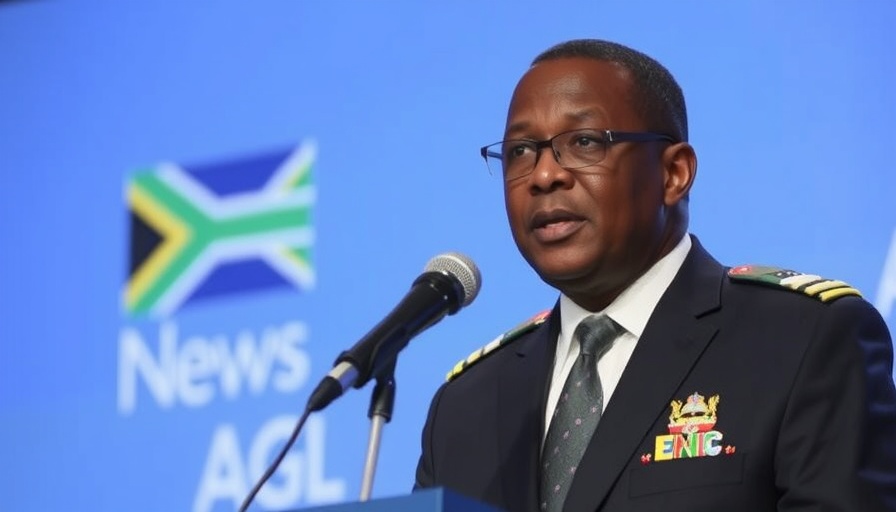
Unraveling Political Doubts: ANC Leaders and the Mashatile Assassination Claims

News24 | ANC leaders cast doubt on Mashatile 'assassination attempt' as SAPS bolsters security

Political Landscape and Uncertainty Surrounding Safety of Leaders

The recent reports about an alleged assassination attempt on ANC Deputy President, Paul Mashatile, have sent ripples through the political fabric of South Africa, igniting heated discussions among party leaders and constituents alike. While security around Mashatile has been augmented by the South African Police Service (SAPS), many leaders within the ANC are expressing skepticism regarding the authenticity of the assassination claims. Concerns have been raised not only around the safety of political figures but also about the political motivations behind such allegations.

Community Reactions: Skepticism and Fear

As tension rises, the fear stemming from such claims can be palpable within the communities that these leaders serve. Public safety has been a growing concern, with South Africa grappling with a host of challenges including high crime rates and load shedding crises. The endorsement of these claims can exacerbate existing anxieties amongst citizens who already feel vulnerable in their daily lives.

The Role of Media in Reinforcing or Dismissing Narratives

The media’s role is instrumental in shaping public perception. As such, the skepticism expressed by ANC leaders regarding Mashatile’s alleged assassination attempt serves as a reminder to critically evaluate information before assimilating it into policy discussions. Misinterpretations or unfounded allegations can lead to dangerous precedents, influencing everything from political stability to social cohesion.

The Historical Context of Violence in South African Politics

A historical lens reveals the volatile nature of South African politics, with a legacy of political assassinations leading to a culture steeped in fear and mistrust. Understanding this backdrop adds nuance to current events, as citizens navigate a landscape marked by political violence intertwined with socio-economic struggles.

Potential Implications for the Upcoming National Elections

With national elections looming, any claim of violence against political figures can have significant ramifications. It has the potential to shift voter sentiments and influence party dynamics. As political parties like the ANC, Democratic Alliance, and EFF prepare for campaigns, the implications of perceived threats to leaders — whether real or manufactured — loom large.

The Continuing Struggle for Accountability and Transparency

Furthermore, the ongoing narratives surrounding alleged threats to political figures highlights the broader struggle for accountability and transparency in government policies and practices. The South African public remains vigilant, demanding not only the safety of their leaders but also the assurance that political processes remain fair and equitable.

Conclusion: Why this Matters

The implications of these developments extend beyond the political sphere. They touch on the essence of democratic engagement in South Africa. As professionals and citizens alike, it’s essential to stay informed about these dynamics, considering how they affect governance and the delivery of services amid ongoing public sector struggles. Reflecting on these issues can guide informed discussions and decisions as we move forward.

To remain updated on the evolving situation and its impact on South African politics, stay connected with reliable news channels and engage in community dialogues. Understanding these intricate dynamics will empower you as a voter and advocate for a more transparent and accountable governance system.

Politics

25 Views

0 Comments

Write A Comment

*
*
Related Posts All Posts
12.09.2025

Will the ANC's Economic Policies Ever Change? Insights from the SACP

Update Why the SACP's Criticism of the ANC's Economic Stance Matters The heated rhetoric surrounding South Africa's political landscape, particularly from the South African Communist Party (SACP), signifies a pivotal moment as the ANC prepares for significant electoral challenges in the upcoming 2024 general elections and 2026 municipal elections. SACP Deputy-General Secretary, Madala Masuku, has publicly asserted that he believes the ANC's economic stance will remain static, despite repeated promises of reform. Masuku's claims echo frustrations regarding the ANC's failure to adequately address land reform and equitable resource distribution since the post-apartheid era. The Economic and Social Implications of Stagnation This critique from the SACP is steeped in the historical context of South Africa's socioeconomic struggles. With an unemployment rate hovering around 33.2%, the ideology underpinning current economic frameworks seems to prioritize neoliberal principles over grassroots development needs. The current economic policies' tendency to cater to elite interests has hampered the prospects for many South Africans, perpetuating inequality and poverty. Debating the Path Forward: Rhetoric vs. Action As ANC President Cyril Ramaphosa rallies party members to save the party from fragmentation, the clash between the ANC's proclaimed commitment to socioeconomic justice and the SACP's demand for substantive action becomes clearer. This schism highlights the urgent need for coherent policies addressing pressing issues such as youth unemployment, education reform, and state capture. Historical Context: From Liberation to Stalemate The SACP’s frustrations can be framed within a broader historical narrative of South Africa’s political evolution. In its fight against apartheid, the SACP aligned closely with the ANC, envisioning the creation of an inclusive economic landscape. However, the transition has been marked by challenges, including the failure to eradicate entrenched root issues tied to historical inequalities. Examining Policy Reviews: The Case for Radical Change The introduction of initiatives like the Growth and Inclusion (GAIN) strategy, criticized by the SACP as a mere continuation of existing neoliberal policies, underscores the sentiment that the current government frameworks are insufficient for achieving true economic reform. With South Africa’s policymakers often adopting a 'same old' approach, significant changes including increased state ownership and public sector reform may be necessary. Voter Sentiment and Electoral Challenges Ahead As South Africa moves towards the 2024 elections, the public's perspective on these issues, particularly regarding governance accountability and service delivery, will be paramount. The SACP’s decision to contest elections independently could signify a shift in voter engagement, particularly among communities who feel neglected in policy formation. The Future of the ANC and Coalition Politics The calls from the SACP for a break from outdated paradigms may resonate with a diverse range of voters who have increasingly shown disconnection from traditional party lines such as the ANC and the DA. Understanding this trend will be crucial as South Africa navigates coalition politics ahead of the elections. Pathways to Economic Inclusivity: From Critique to Action Amidst this debate, it is essential for stakeholders to engage collaboratively in dialogues aimed at reshaping South Africa’s economic future. By addressing core issues like land reform, gender-based violence, and universal health systems, the political landscape can shift to reflect a more responsive governance model that prioritizes the needs of its citizens. Call to Action: Engage in the Dialogue for Change As citizens of South Africa, it's crucial to engage in dialogues around these critical issues and hold our government accountable. The electoral landscape is shifting, and your voice matters in creating a roadmap for a more equitable future.

12.08.2025

The ANC’s National General Council: Leadership and Future Direction Under Scrutiny

Update Significant Political Gathering in South Africa: What’s the Focus? The African National Congress (ANC), one of the oldest liberation movements in the world, is preparing for its 5th National General Council (NGC) from December 8 to December 11, 2025. A gathering of this magnitude often serves as the pulse of the party during tumultuous political times, especially considering that the ANC has lost its parliamentary majority in the past year and faces significant challenges in governance. Leadership Stability Amid Chaos Deputy President Paul Mashatile has made it clear that discussing leadership change will not be on the NGC’s agenda. Instead, he emphasized that President Cyril Ramaphosa will serve out his term, leaving leadership debates for the 2027 conference. However, the silence around leadership raises questions about the ANC’s internal dynamics in an era of governance of national unity (GNU) in collaboration with opposition parties like the Democratic Alliance (DA) and others, and whether this will resonate with disheartened voters from previous elections. Examining Performance and Future Directions With concerns about the ANC’s performance since 2018 being a crucial focus, political analysts such as Sandile Swana predict the council will also address institutional acceleration and party renewal. The push for internal structural strengthening reflects a deep desire to revive the party's connection with its grassroots. South Africa’s socio-economic landscape, complicated by high unemployment and increasing crime rates, will feed into discussions about how the ANC can realign itself to regain voter confidence ahead of the 2024 general elections. The Stalemate Over Economic Transformation The tension within the ANC regarding economic policies will likely be palpable at the NGC. The debate between pursuing Radical Economic Transformation (RET) versus a more moderated economic approach is bound to play out as different factions vie for influence. The RET promises a reformation of economic injustice but carries the weight of past corruption. As Mashatile and other leaders emphasize the necessity for renewal and growth, the real challenge lies in how effectively they can foster agreement among deeply divided factions. What's at Stake? The Implications for Future Elections The upcoming NGC acts not only as a platform for policy discussion but as a litmus test for Ramaphosa's leadership. If the NGC succeeds in presenting a united front, it could effectively pave the way for greater stability in the ANC and a more reliable coalition, crucial ahead of not just the 2024 elections but the 2026 municipal elections as well. Conversely, any signs of division may embolden opposition parties like Julius Malema's Economic Freedom Fighters (EFF) and John Steenhuisen's DA, potentially further eroding public confidence in the ANC. A Call for Action: Engage in the Political Dialogue As the ANC embarks on this critical NGC, weighing the future of its leadership and policy directions, South Africans are encouraged to engage more deeply in political discussions surrounding these developments. A vibrant democracy thrives on informed citizen participation—your voice matters in shaping this nation's future. Following the outcomes of the NGC, we will see greater clarity on which direction the ANC will take, and how it plans to address pressing issues like youth unemployment, service delivery, and the pressing need for economic reforms.

12.06.2025

Afrika Mayibuye Movement Convention: Revolutionary Path for Economic Solidarity

Update Understanding the Afrika Mayibuye Movement's Aim for Economic Solidarity The Afrika Mayibuye Movement (AMM) recently concluded its National Convention at the University of Johannesburg’s Soweto Campus, reflecting a significant stride in its political ambitions under the leadership of Floyd Shivambu. Launched just a year earlier, the AMM has quickly established itself as a contender on South Africa’s political landscape, especially as the nation gears up for imminent local government elections in 2026 and general elections in 2024. The party's core mission revolves around promoting black economic solidarity, aimed at addressing deep-seated economic disparities that have persisted in the country since the end of apartheid. The Convention's Expectations and Outcomes With an anticipated attendance of approximately 2,000 delegates, this convention was not merely a gathering but a critical platform to formulate policy positions required for upcoming elections. The heavy participation underscores a burgeoning interest in alternative political movements amidst widespread disillusionment with major parties like the African National Congress (ANC) and the Economic Freedom Fighters (EFF). The AMM's focus on empowering marginalized communities reflects a growing societal demand for a united front against pervasive inequality. Social Context and Rising Inequality Inequality in South Africa stands as one of the most alarming globally, exacerbated by high levels of unemployment and economic exclusion. The AMM aims to reverse this trend by advocating for policies that prioritize the production and empowerment of black communities rather than perpetuating consumerism through support systems. The invocation of historical struggles against colonial and apartheid systems informs the party's rhetoric, making their call for black economic empowerment resonate deeply with a populace tired of marginalization and misrepresentation. Political Realignment: The AMM’s Position The existence of numerous opposition parties, including the DA and EFF, presents opportunities for political realignment leading up to the 2024 elections. The AMM seeks to attract voters disenchanted with the perceived failures of traditional parties like the ANC, which has been accused of state capture and corruption. Should the AMM manage to capture a significant voter base, it could substantially alter the voting dynamics, possibly forming coalition governments that would challenge the existing political stalemate. Countering Misconceptions: Not Just Another Party There are concerns voiced by critics that the AMM is simply another faction vying for a slice of the political pie, devoid of genuine intent to enact change. However, members emphasize that their approach differs fundamentally by emphasizing grassroots participation and constructive policymaking rather than reliance on established political practices. The party’s mission seeks to bridge divides and provide sustainable solutions to ingrained problems such as land reform and educational inequality, reflecting a commitment to democratic values and societal development. The Road Ahead: Capacity and Voter Engagement With the political landscape shifting, it’s crucial for parties like the AMM to harness voter engagement effectively. Measures aimed at improving voter turnout, particularly within underrepresented communities, are paramount for success. The recent convention served as a rallying point, not just for internal policy development, but also as a clarion call to encourage civic participation and enhance accountability among elected representatives. Conclusion: A Call to Action for Civic Engagement As South Africa inches closer to its next electoral cycle, the emergence of the Afrika Mayibuye Movement marks a significant juncture in the nation’s political evolution. The potential of this party to reshape political discourse hinges on its ability to mobilize grassroots support and present compelling alternatives to the electorate. Engagement from the public, informed voter decisions, and a commitment to active participation in the democratic process will be essential in determining the success of movements like AMM. We encourage everyone to stay informed and participate in upcoming discussions that will shape our collective future.

Terms of Service

Privacy Policy

Core Modal Title

Sorry, no results found

You Might Find These Articles Interesting

T
Please Check Your Email
We Will Be Following Up Shortly
*
*
*