Add Row
Add Element
PR Africa: Your Gateway to Comprehensive African News and Insights
update
PR Africa
update
Add Element
  • Home
  • Categories
    • Entertainment
    • Automotive
    • Politics
    • Finance
    • Health & Fitness
    • Sports
    • Business
    • Cryptocurrency
    • Education
    • Fashion & Beauty
    • Home & Garden
    • Foreign Language News
    • Lifestyle
    • Real Estate
    • Religion
    • Science
    • Technology
    • Travel
    • News & Current Affairs
    • Crime & Safety
    • Arts & Culture
    • Environment
    • Food & Drink
    • Extra News
March 26.2025
3 Minutes Read

Unlocking Potential: How the Blitzboks Build Real Belief and Bonds

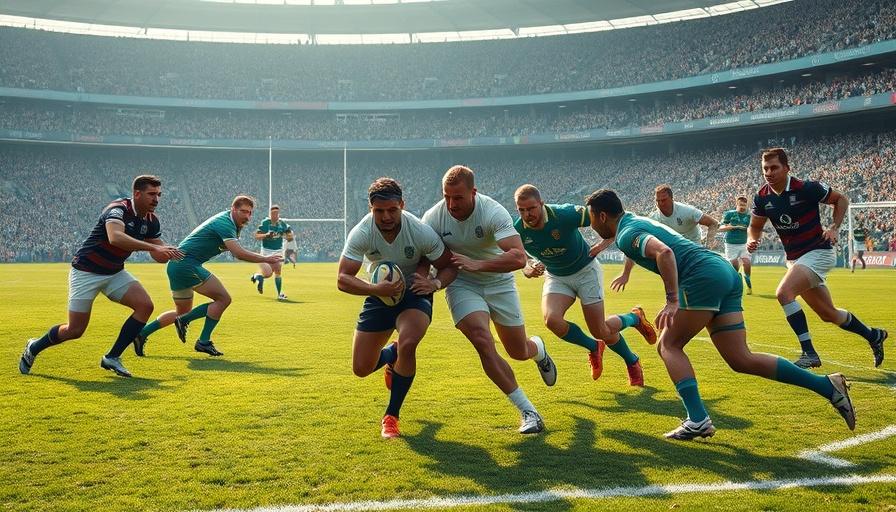
Blitzboks team spirit during an intense rugby match moment.

A Culture of Belief and Teamwork Among the Blitzboks

The Blitzboks, South Africa's national rugby sevens team, are experiencing a surge of confidence as they prepare for upcoming tournaments. Ryan Oosthuizen, an experienced forward who has been a part of this squad since 2017, emphasizes that the belief among the players is genuine. With a strong bond formed through shared experiences both in and out of the field, the team is focused and ready to face tough opponents in the HSBC Sevens World Series.

From Rookie to Veteran: Oosthuizen’s Journey

Reflecting on his journey since making his debut in Hong Kong years ago, Ryan Oosthuizen mentions the significant progress he and his teammates have made. Now on the verge of his 54th tournament, Oosthuizen not only draws on his athletic experience but also on the personal milestones that have shaped him, including the anticipation of becoming a father. This personal narrative enriches his dedication to the team, showcasing how pivotal life experiences can inform an athlete's commitment to their sport.

The Role of Coaching and Conditioning

Integral to the Blitzboks' recent successes is their coaching staff, particularly the strength and conditioning coach, Ghafoer Luckan. The team has adopted a coaching philosophy that prioritizes physical and mental readiness, allowing players to remain fit and prepared for challenges. Oosthuizen highlights the critical nature of having a solid medical team, stating, "Thanks to our medical staff, I am still going strong on the field," a sentiment that resonates with players like Zain Davids, who has battled injuries to return stronger than ever.

Looking Ahead: Upcoming Challenges

As the Blitzboks gear up for matches against Uruguay, Australia, and New Zealand, their sense of camaraderie and collective effort will be tested. Both Oosthuizen and Davids share optimism about their team’s defensive strategies and attacking flair. Their belief in one another strengthens their resolve and may well be the key to overcoming these formidable opponents. With significant competition looming, expectations are high for the Blitzboks to continue building on their recent gains.

Impact on the Broader South African Sports Landscape

The success and spirit of teams like the Blitzboks impact the broader South African sports community, including cricket and soccer. With icons like Siya Kolisi and Temba Bavuma representing the nation on various fronts, the victories of one sport often uplift another. This interconnectedness fosters a culture of support and enthusiasm among fans, ultimately influencing the youth who aspire to participate in these sports.

A Call to Young Athletes

The narrative shared by the Blitzboks serves as an inspiration to aspiring athletes across South Africa. Their journey emphasizes hard work, resilience, and the importance of believing in one’s team. Whether participating in regional leagues or aiming for prominence in global tournaments like the Rugby World Cup or the Olympics, young athletes can learn invaluable lessons about teamwork and perseverance from the Blitzboks' experiences. It’s a reminder to all emerging athletes that dedication and spirit can lead to remarkable achievements on the field.

As the Blitzboks continue their quest for glory, let their story motivate you in your own pursuits. Engage in your sport, support your teams, and remember: success often comes from a blend of hard work, belief, and camaraderie. The journey awaits, and it’s time to seize each moment on and off the field!

Sports

17 Views

0 Comments

Write A Comment

*
*
Related Posts All Posts
02.10.2026

Blame Nienaber Only Scratches the Surface of Ireland's Rugby Issues

Update Why Blaming Nienaber for Ireland’s Struggles Misses the Mark The Irish rugby community stands at a pivotal moment, grappling with the implications of its disappointing performance in the Six Nations. The finger of blame has pointed primarily at Jacques Nienaber, the former Springbok coach currently linked to Leinster. However, former players and analysts argue that isolating his influence misses the deeper, systemic issues affecting Ireland's game. The Real Issues Behind Ireland's Decline Former England hooker Brian Moore, alongside other pundits, insists that Ireland's recent struggles are reflective of a larger cycle in elite rugby rather than just tactical missteps orchestrated by Nienaber. While opinions have run rampant regarding Ireland’s uninspired tackling and basic errors during the match against France, focusing solely on the coach ignores crucial factors that are undeniably affecting performance. The age profile of Ireland's key players looms large. Many influential players, such as James Lowe and Bundee Aki, are over 30. As every athlete knows, experience is a double-edged sword; while it provides invaluable tactical knowledge, it can also lead to diminished speed and sharpness, crucial elements in international rugby. With a significant reliance on older stars, the question becomes whether there are sufficient younger players ready to fill those shoes. Historical Context and Future Implications Historical trends in rugby reveal that sustained excellence is challenging to maintain. After their ascent to the top of world rugby rankings, it’s not surprising to see Ireland in a transitional phase. Moore underscores that no team remains at the pinnacle for too long without experiencing a generational shift. The challenge for teams like Ireland is not merely about winning but evolving in a way that retains competitive edge against newer, emerging forces. This narrative of transition is mirrored in the Springboks' own journey. When South Africa faced its own transitional phases, it prioritized nurturing emerging talents while gradually phasing out seasoned players. This balanced approach can enable a nation to sustain success over time. Counterarguments: Why Nienaber Deserves Fair Appraisal While critics of Nienaber argue that his coaching style contributed to Ireland’s recent failures, it’s critical to consider that the evolution of a team’s playing style often involves periods of adjustment. The South African coach has played a role in leading Leinster’s resurgence in the domestic circuit, challenging claims that his coaching has only been detrimental. The fact that Leinster boasts a strong position in the URC highlights that while tactical tweaks are necessary, they don’t solely dictate failure or success. Psychological Factors at Play Mental fatigue and the psychological impact of previous tours can’t be overlooked. Ireland's performance during the Six Nations often follows a British and Irish Lions tour, which invariably leaves players with physical and mental scars. It may take time to recover from that, and until those influences are fully addressed, performance issues are likely to persist. Call for Balanced Criticism and Vision moving Forward Given the complex picture illustrated above, it is essential for Irish rugby pundits and fans to remain steady in their analyses and avert the temptation for scapegoating. While Jacques Nienaber may have an impact on Ireland through his coaching links, attributing all responsibility to him overshadows more significant structural issues both in player development and team strategy. The future of Irish rugby hinges on a collaborative approach to coaching and player development, balancing the seasoned wisdom of established stars with the fervor and energy of new talent. Only by addressing both tactical and psychological factors can the Irish rugby team hope to rise again and reclaim its position among the world's top competitors. As the rugby community looks ahead, it’s crucial to anchor discussions in accountability nurtured by a culture of understanding and growth. This will not only improve on-field performance but inspire the next generation of athletes looking to leave their mark on the beautiful game.

02.10.2026

Can Frank Ilett's Hair Challenge Inspire the Next Generation of Sports Fans?

Update Frank Ilett's Balancing Act: A Hairy Challenge UnfoldsIn the bustling world of football fandom, few stories have unraveled quite like that of Frank Ilett, a die-hard Manchester United supporter who has taken his loyalty to the next level. Over 500 days without a haircut, Ilett has embraced a challenge that resonates far beyond personal grooming. His journey, dubbed 'The United Strand', highlights the emotional rollercoaster that comes with supporting a team that’s famed for its inconsistent performance.The challenge began in October 2024, when Ilett vowed he wouldn’t cut his hair until Manchester United won five consecutive matches. After countless highs and lows, the milestone appeared within reach as the Red Devils recently clinched four back-to-back victories leading up to a crucial match against West Ham United. But what lies beneath this hirsute undertaking is a tale that is both humorous and poignant—a reflection of the current landscape of fan culture.Understanding the Viral PhenomenonIlett's challenge quickly became a point of amusement within the football community. As he documented his hair’s evolution on social media, his popularity skyrocketed, amassing over two million followers, many of whom found solace in his humorous take on Manchester United's struggles. From initially wanting to inject humor during a tough spell for fans, the lighthearted mission turned into a larger commentary on fanaticism in sports—a deep-rooted emotional connection that can lead to extreme pledges of loyalty.From the start, Ilett never anticipated that his pledge would capture the imagination of fans and players alike. Manchester United manager Michael Carrick even acknowledged Ilett's notoriety, expressing amusement at his children's revelations about the viral sensation, though he reassured that it wouldn't impact team talks.The Emotional Investment of Football FansThe stories behind rituals like Ilett's haircut challenge reveal the intricate relationship between fans and their teams. In many cultures, sports are more than just a game; they represent values of hope, resilience, and community. For Ilett, every day without a haircut became a testament to his unwavering faith in the Red Devils despite their erratic performances. This emotional investment resonates across various sports communities globally, including the Springboks, Proteas, and Bafana Bafana fans, who similarly embrace traditions that symbolize their allegiance.A Look Ahead: What Does the Future Hold?As Manchester United gears up to face West Ham, fans and onlookers are captivated by the possibility of Ilett finally strutting into a barber shop for the first time in over a year. The outcome of the match may ultimately determine the end of 'The United Strand', but it also serves as a metaphor for the hope that inherently comes with supporting a sports team where success can be as fleeting as it is ecstatic.The Broader Impact on Fan CultureIlett's narrative echoes the broader challenges sports fans face: the ups and downs of team performance, the communal rituals that bring fans together, and the lengths to which they go to express their loyalty. Other sports figures, from Siya Kolisi to Caster Semenya, similarly inspire shared sentiments of unity and pride, drawing fans into a collective circle of aspiration and celebration through moments of triumph, whether it's the Rugby World Cup or the Olympics. As sports continue their global reach, the threads that bind teams and the communities of their supporters remain ever potent.What We Can LearnThis quirky story serves as a reminder that sports are not just defined by the matches played or trophies won, but also through the unique experiences of fans and their intertwining life stories. Whether through a personal challenge like Ilett's or the collective excitement during marquee events like the Comrades Marathon or the T20 Challenge, the heartbeat of sports lies in these deeply personal yet universally relatable narratives.As we await the match that could alter Ilett's hair fate, one thing remains clear: football, with all its fever, forms an unforgettable bond between fans and the beautiful game.For those interested in the emotional experiences shared among sports fans or eager to follow the outcome of the United match against West Ham, stay tuned to see if Frank Ilett finally gets that haircut! Until then, celebrate the diverse tapestry of sporting loyalties that shape our culture.

02.09.2026

Rugby Double Standards: Why Genge’s Headbutt Decision Sparks Outrage

Update The Controversial Headbutt and Its Fallout Rugby is a sport that elicits intense passion and emotion, both on and off the field. Recently, the rugby community has been abuzz with discussions surrounding a controversial decision involving England’s Ellis Genge during the Six Nations that many believe highlights the sport's double standards. During a match against Wales, a seemingly innocuous incident unfolded when Genge appeared to headbutt Welsh flanker Alex Mann. Referee Pierre Brousset reviewed the moment but ultimately deemed it worthy of just a penalty, sparking outrage among fans, particularly from South Africa. Many are drawing parallels to a harsh ruling faced by former Springbok Jasper Wiese, who received a four-Test ban for a similar incident against Italy last year. Perceptions of National Bias in Rugby Keith Andrews, a former Springbok prop, publicly condemned the perceived inconsistency in officiating. “Certainly double standards!!” he would later note on social media. This sentiment was echoed by a tide of opinions from passionate fans, suggesting that Genge's nationality played a role in determining the leniency of the decision made that day. With phrases like, “The colour of your jersey in rugby matters,” many argue that such unequal treatment undermines the integrity of the game. The narrative isn't just confined to South African supporters. Observers from various backgrounds raise the point that officiating can often seem influenced by national affiliations, a reflection that can be seen across all sports. If countries such as South Africa feel minor infractions are more heavily scrutinized when viewed through their uniform’s colors, it raises broader questions of fairness in international competitions. The Role of Social Media in Shaping Discussions In today’s world, social media plays a significant role in shaping public opinion. The instantaneous nature of platforms allows for immediate reactions and commentary about contentious decisions. Andrews' comments gained traction quickly, and the ensuing debate illustrated how powerful a voice athletes can have outside the confines of their sports. The conversation turned not just towards rugby, but to the criteria by which all sports—whether it’s the Cricket World Cup or the Olympics—evaluate similar incidents. These discussions can provide significant insights not only for fans but also for athletes who seek to navigate the sometimes murky waters of officiating. For young athletes observing these discussions, it serves as a reminder of the importance of conduct and the broader implications of even minor decisions made on the field. Moving Forward: How to Improve Officiating Consistency As the rugby discourse continues, it's imperative to highlight potential solutions for addressing perceived inconsistencies. Here are a few suggestions: Streamline Training for Referees: Ensuring that officials across all leagues and competitions are trained under the same standards could improve the overall quality of officiating. Implement VAR-like Systems: Introducing technology akin to VAR used in football could help mitigate human error and add another layer of scrutiny to contentious calls. Community Forums: Engaging the rugby community and addressing their concerns through open discussions can help foster understanding and ensure a level playing field. While no system is perfect, the goal is clear: to ensure that every player, regardless of nationality or team color, is given the same treatment. The integrity of sports depends not only on how well players perform but also how equitably the game is administered. In Conclusion: Lessons for the Next Generation For young athletes and sports fans, such incidents provide critical lessons in ethics, fairness, and the importance of advocacy. As the next generation of athletes watches these events unfold, it becomes clear that their involvement in sports goes beyond just physical ability—it includes being vocal about injustice and fair play. As we rally for a consistent approach in officiating across the board, from rugby to cricket and beyond, let’s champion fairness, equality, and integrity in every match. The fabric of sport, much like the athletes themselves, should represent unity, respect, and a clear understanding of right versus wrong.

Terms of Service

Privacy Policy

Core Modal Title

Sorry, no results found

You Might Find These Articles Interesting

T
Please Check Your Email
We Will Be Following Up Shortly
*
*
*