Add Row
Add Element
PR Africa: Your Gateway to Comprehensive African News and Insights
update
PR Africa
update
Add Element
  • Home
  • Categories
    • Entertainment
    • Automotive
    • Politics
    • Finance
    • Health & Fitness
    • Sports
    • Business
    • Cryptocurrency
    • Education
    • Fashion & Beauty
    • Home & Garden
    • Foreign Language News
    • Lifestyle
    • Real Estate
    • Religion
    • Science
    • Technology
    • Travel
    • News & Current Affairs
    • Crime & Safety
    • Arts & Culture
    • Environment
    • Food & Drink
    • Extra News
September 01.2025
2 Minutes Read

Understanding the BGFIBank Shareholder Battle: The Bongo Clan's Impact on Gabon

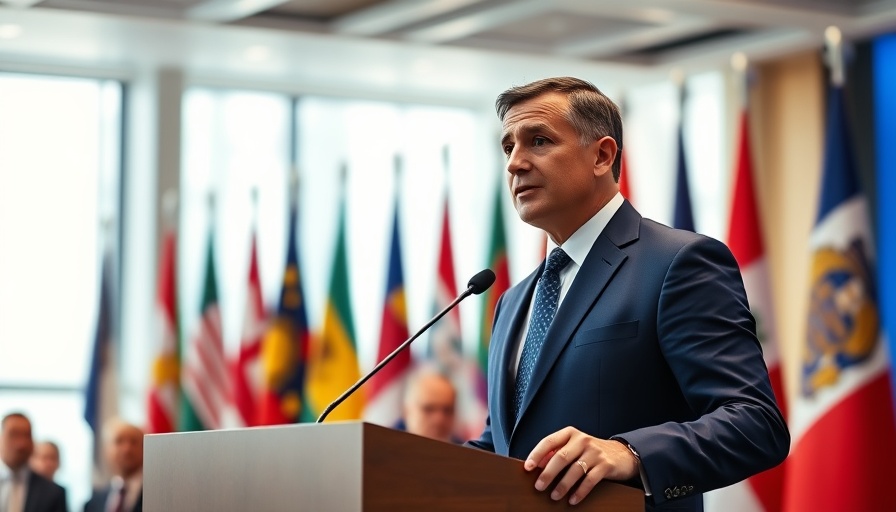
BGFIBank conference speaker discussing shareholder matters in Gabon

The Bongo Clan: A Legacy of Influence in Gabon’s Economy

The ongoing dispute surrounding BGFIBank’s initial public offering (IPO) highlights the profound influence of the Bongo family over Gabon’s economic landscape. Founded decades ago, BGFIBank was seen as a pivotal financial institution for both private and government interests. However, as external investors, particularly those connected to French-Gabonese billionaire Christian Kerangall, seek to disrupt the IPO, the shadows of past governance raise questions about ethics and leadership in Gabon.

Legal Battles and Economic Implications

The legal challenges facing BGFIBank stem from complex relationships between powerful shareholders, including those aligned with the Bongo dynasty. With President Ali Bongo Ondimba now sidestepped from power, the transition period has spurred aggressive tactics for control of financial assets, raising concerns over governance and corruption. As this battle unfolds, the economic wellbeing of ordinary Gabonese citizens hangs in the balance, intertwining politics with everyday financial stability.

Shifting Dynamics in Gabon’s Political Scene

The quest for equity in Gabon mirrors larger continental struggles for democracy and governance. The Bongo family, synonymous with corruption allegations and authoritarian rule, represents a legacy that many see as a barrier to progress. As the BGFIBank issues reveal, underlying tensions around corruption and the call for transparency not only resonate within Gabon but reflect broader continental trends related to governance and economic development.

Opportunities for Reform and Economic Growth

In light of the BGFIBank disputes, the need for institutional reform is more pressing than ever. The groundwork for economic growth can be laid by addressing systemic corruption and fostering an open environment for investment. The African Continental Free Trade Area (AfCFTA) presents opportunities for Gabon to engage more meaningfully with regional economies, potentially translating financial institution disputes into avenues for unbounded economic cooperation.

The Role of Civil Society and International Observers

The involvement of civic organizations and international observers will be crucial in navigating these turbulent waters. Current developments have galvanized civil society in Gabon, shedding light on the importance of human rights and inclusive representation in political and economic spheres. The push for accountability could become a turning point for Gabon’s societal framework, focusing on youth empowerment, gender equality, and technological innovation.

Envisioning a Prosperous Future for Gabon

As the conflict over BGFIBank unfolds, it symbolizes an opportunity for Gabon to turn the corner. By confronting the legacy of the Bongo family head-on and empowering civil society, the nation can initiate a more democratic and economically sound pathway. With the right policies surrounding infrastructure, trade, and entrepreneurship, Gabon could transform challenges into stepping stones towards a bright future, lifting people out of poverty while capitalizing on its vast resources.

Politics

14 Views

0 Comments

Write A Comment

*
*
Related Posts All Posts
11.10.2025

Insights into Egypt's Parliamentary Elections: What Voters Need to Know

Update The State of Egypt's Parliamentary Elections: An AnalysisAs Egypt embarks on the first phase of its parliamentary elections, over 63 million eligible voters find themselves at a crucial juncture in the nation’s democratic journey. Initiated on Monday, the voting process aims to fill 568 seats in the House of Representatives, with more than 1,200 candidates competing to secure a place in parliament. This election, set against a backdrop of political tensions and societal divisions, offers vital implications for the future of governance in the nation.In 'Egypt votes in parliamentary elections,' the discussion dives into the electoral process, exploring key insights that sparked deeper analysis on our end. Understanding the Election ProcessThe elections are unfolding in two phases. The initial phase takes place in several key provinces including Alexandria and Asut, with results not anticipated until November 18. Voters in the remaining 13 provinces will participate between November 24-25. The urgency of these elections is underscored by the impending expiration of the current parliament's mandate in January 2026, compelling voters to consider the implications of their choices carefully.The Power Dynamics at PlayAccording to political analysts, the pro-government coalition is anticipated to dominate the parliamentary vote, much like the Senate elections that occurred two months prior. This prevailing power dynamic raises questions about the credibility of the electoral process and the extent to which genuine competition exists among the candidates. With opposition parties grappling with internal strife and widespread infighting, the stakes are high as they struggle to form a cohesive front.Relevance to Contemporary Egyptian SocietyThe implications of this election extend beyond mere seat allocation; they delve into the daily lives of Egyptian citizens. The discourse surrounding these elections reflects broader themes of governance, accountability, and public trust in democratic institutions. As professionals engaged in varying sectors from technology to healthcare, the governance landscape shaped by these elections contributes significantly to the overall socioeconomic health of the country.Social Impact and Voter SentimentThe mood of the electorate is mixed. While some citizens express hope for transformative leadership, many are disillusioned by years of political mismanagement and corruption. This disconnect between voter expectations and political realities speaks to a critical issue within contemporary Egyptian society: the evolving relationship between citizens and their government. Professionals in all sectors—from entrepreneurs to those involved in African Technology—must pay close attention to these dynamics.Global Perspectives on the Egyptian ElectionsInternational observers are keeping a watchful eye on these elections, assessing their implications not just for Egypt, but for the wider region. The importance of stable governance in Egypt reverberates through Africa, impacting investments, diplomatic relationships, and economic cooperation across borders. As the African continent grapples with its political identity, developments in Egypt could foreshadow trends elsewhere.Future Predictions and OpportunitiesAs we analyze the implications of the ongoing parliamentary elections, it's imperative to consider potential outcomes. A parliamentary session dominated by the pro-government coalition could lead to continued economic policies focused on stability, though critics may argue this direction could hinder innovation and social welfare initiatives. Conversely, should opposition parties manage to overcome divisions, there could arise a strenuous yet productive discourse on governance and public policy.Call to Action for Civic EngagementAs Egypt’s citizens navigate this electoral process, there lies an opportunity for increased civic engagement and action. Professionals across various fields should advocate for transparency and accountability in the electoral process, encouraging their networks to participate in shaping their governance. Public discourse is critical, particularly in an age where information can empower or disenfranchise.In conclusion, the parliamentary elections in Egypt encapsulate pivotal themes of democracy, governance, and societal expectations. With each election contributing to the nation’s narrative, the commitment to fair representation and accountability remains paramount. As professionals, our understanding of these elections is crucial—not just as observers—but as active participants in shaping the future of governance in Egypt and throughout Africa.

11.10.2025

Unmasking the Cat: Is South African Tender Corruption on the Rise?

Update Unveiling the Shadows of Corruption in South Africa's SAPS Tender Deals The saga surrounding Vusimusi "Cat" Matlala, a figure entangled in corruption allegations, takes a more sinister turn as reports emerge that he secured a rental agreement for a state clinic at the Pretoria West Police Training Academy months prior to winning a controversial R360 million health services tender from the South African Police Service (SAPS). This raises serious questions about the integrity of tender processes within state departments and the scornful underbelly of South African politics. Who is Vusimuzi "Cat" Matlala? Matlala has often been described as a notorious "tenderpreneur," a term used in South Africa to identify individuals who gain lucrative government contracts through suggestive influence and unscrupulous means. His connection to high-ranking officials within the SAPS, coupled with his ability to seemingly predict the tender allocations, highlights systemic vulnerabilities within public procurement processes. Reports indicate that as Matlala was awaiting the approval of a lucrative tender, he had already acquired a clinic lease, suggesting foresight or insider knowledge that bypasses standard ethical boundaries. The Broader Context: Political Cadence and Tender Irregularities In the chaotic world of South African politics, the Matlala incident is not isolated. Investigators from the Investigating Directorate Against Corruption (Idac) are probing allegations that numerous politicians and SAPS officials are implicated in fraudulent practices concerning the awarding of tenders. Such issues underscore persistent allegations of state capture, a term that epitomizes the infiltration of private interests into the public sector, significantly affecting governance and accountability. Within Matlala's alleged dealings, it became evident that the procurement practices were shrouded in irregularities. Questions arise surrounding who exactly facilitated Matlala's preferential treatment—the whispers of collusion with public officials loom large. Recently, Idac’s head, Andrea Johnson, testified about ongoing investigations, indicating that substantial evidence points toward corruption in the awarding of Matlala’s contracts. Criminal Investigations and Their Implications on Governance The involvement of the Idac reflects a growing effort to restore integrity within the SAPS and related government departments. Their findings could impact not just Matlala but the very fabric of South African governance, leading to potentially higher scrutiny of past and future tenders, especially as the country heads towards national elections. The implications of successful prosecutions subsequent to these investigations resonate beyond just punitive measures. They could symbolize a potential turning point in curbing corruption, inspiring a cultural shift within government procurement practices—a much-needed reform considering recent trends in public sector corruption. Social Impact and Public Sentiment This unfolding narrative fuels public outrage, especially when citizens feel disenfranchised as economic recovery efforts are undermined by corruption. The SAPS tender was designed to provide crucial health services, yet questions surrounding its integrity threaten the trust citizens place in public institutions. With South Africa grappling with high unemployment rates and service delivery protests, exploiting public funds for personal gain could exacerbate social unrest. Future Predictions: A Call for Robust Systems As events progress in this unfolding drama, the public awaits to see whether systemic changes will occur in procurement processes to safeguard against future electoral fraud and misallocation of public funds. The nation's political landscape teeters on the brink of transformation, where accountability is not merely an aspiration but a necessity. The potential for progressive reforms to emerge from this situation hinges on robust public sentiment and consistent pressure on authorities to act against corruption. With promises of transparency and accountability, the path ahead may allow ordinary citizens to reclaim their voice in governance. A Call to Action: Engage with Political Oversight As South Africa navigates through these intricate political narratives, it becomes imperative for citizens and professionals alike to actively engage in the democratic process, advocating for transparency, accountability, and transformative governance practices. The continuation of tender investigations such as these can only thrive alongside public vigilance and activism, ensuring no private interest can overshadow public welfare. It is time for South Africans to demand action and uphold the principles of good governance. Stay informed and involved, as the repercussions of these developments will ripple throughout the economy, potentially influencing important issues such as economic recovery, service delivery, and electoral fairness in our beloved nation.

11.09.2025

How India and Angola's Cooperation Aims to Foster Peace and Stability in Africa

Update India's Vision for Peace in Africa During a recent state visit to Angola, President Droupadi Murmu articulately expressed India’s commitment to fostering peace, security, and stability across Africa. In her discussions with Angolan President João Manuel Goncalves Lourenco, President Murmu emphasized the shared goals between India and Angola, focusing on dialogue and peaceful conflict resolution as vital strategies. Strengthening Bilateral Cooperation To bolster their longstanding ties, India and Angola exchanged several Memorandums of Understanding (MOUs) aimed at enhancing collaboration in sectors such as fisheries, aquaculture, and marine resources. This not only reflects the depth of bilateral relations but also India’s strategic interests in securing resources and maintaining stability in the region. Shared Global Perspectives Murmu highlighted the alignment of both nations in key international forums, particularly within the United Nations. This mutual support underscores the importance of collective action against shared challenges, including the need for significant reforms in multilateral institutions to better reflect the current geopolitical landscape. The discussion around reforming the UN Security Council was pivotal, as both leaders identified it as essential for enhancing global governance effectiveness. The Road Ahead for India-Angola Relations As both countries move forward, the importance of sustaining a robust partnership is paramount, particularly in emerging areas such as technology and renewable energy. The agreements made during this visit indicate a commitment to diversifying economic ties and ensuring that cooperation extends to vital sectors like health and defense. Why This Matters to Global Executives For business leaders and decision-makers, understanding the implications of India and Angola’s partnership is crucial. As international dynamics shift, having an awareness of these bilateral agreements can aid in making informed decisions regarding trade and investment opportunities within the African continent. Collaboration in technological innovation, especially in areas like Fintech and renewable energy, may present lucrative avenues for corporate and economic growth. Conclusion: A Call to Action for Leaders As the global business landscape evolves, leaders must recognize the significance of fostering diplomatic relations that contribute to stability and economic prosperity across regions. Engaging in sectors identified for mutual growth not only benefits involved nations but also enhances the broader global economy. Encouraging dialogue and partnerships that prioritize sustainability and innovation is essential for future success.

Terms of Service

Privacy Policy

Core Modal Title

Sorry, no results found

You Might Find These Articles Interesting

T
Please Check Your Email
We Will Be Following Up Shortly
*
*
*