Add Row
Add Element
PR Africa: Your Gateway to Comprehensive African News and Insights
update
PR Africa
update
Add Element
  • Home
  • Categories
    • Entertainment
    • Automotive
    • Politics
    • Finance
    • Health & Fitness
    • Sports
    • Business
    • Cryptocurrency
    • Education
    • Fashion & Beauty
    • Home & Garden
    • Foreign Language News
    • Lifestyle
    • Real Estate
    • Religion
    • Science
    • Technology
    • Travel
    • News & Current Affairs
    • Crime & Safety
    • Arts & Culture
    • Environment
    • Food & Drink
    • Extra News
April 23.2025
3 Minutes Read

Ukraine’s President Zelenskyy Visits South Africa: A Diplomatic Turning Point

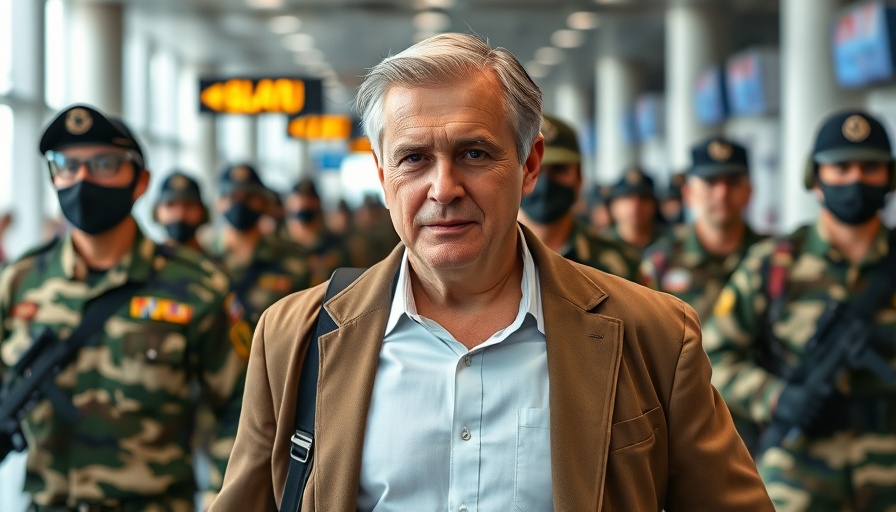
Ukraine's President in South Africa airport arrival with military.

Historic Arrival of Ukraine's President Zelenskyy in South Africa

On April 23, 2025, Ukraine's President Volodymyr Zelenskyy arrived in South Africa for his first official visit. This significant event comes at a critical juncture where international diplomatic ties and economic alliances are being scrutinized worldwide.

Welcomed by South Africa's Minister of International Relations, Ronald Lamola, President Zelenskyy’s visit symbolizes an intent to strengthen economic ties and engage in vital discussions about conflict resolution. In a statement reflecting the importance of diplomatic endeavors, Zelenskyy expressed, “We are preparing for important meetings in South Africa with President Cyril Ramaphosa and representatives of political, civil, and student communities of African countries. It is crucial to bring a just peace closer.”

Contextualizing the Visit: A Turning Point in South African Politics

The arrival of President Zelenskyy occurs amid a dynamic political landscape in South Africa, where national elections are on the horizon. As the African National Congress (ANC) prepares to defend its governance amidst growing discontent fueled by issues such as service delivery protests and economic recovery challenges, Zelenskyy’s visit could represent an opportunity for South Africa to reassess its international roles and alliances, particularly in the context of the Global South.

Broader Implications for South African Foreign Policy

Historically, South Africa has positioned itself as a voice of reason in international affairs, particularly within the African Union. As reports of corruption and state capture surface in local politics, President Ramaphosa may leverage Zelenskyy's visit to bolster South Africa’s image on the global stage. It showcases solid diplomatic relationships and a commitment to engaging with pressing global issues, which could influence foreign investment and South Africa's interactions with international trade agreements.

Focusing on Cultural and Educational Exchanges

President Zelenskyy noted the importance of cultural ties in his address, highlighting plans for future collaborations in education and culture. Strengthening these connections could not only serve as a medium for soft diplomacy but also offer pathways for increasing youth engagement through educational reforms and innovative programs. In a country with high youth unemployment, such initiatives can play a crucial role in shaping the next generation of leaders.

Challenges Ahead: Balancing Domestic and International Expectations

While the visit is promising, it happens against the backdrop of ongoing challenges within South Africa, such as the Eskom crisis and issues like land reform and economic inequalities. As South African society grapples with these pressing issues, the government must navigate its commitments to international partners while addressing local needs, striking a balance between global diplomacy and national priorities.

Looking Forward: A Call for Meaningful Engagement

The diplomatic exchanges resulting from Zelenskyy’s visit underscore the necessity for South Africa to participate actively in international coalitions, particularly concerning humanitarian efforts like the return of Ukrainian children allegedly abducted by Russia. This call for participation aligns with South Africa's historical advocacy for human rights and justice on the global stage.

As professionals across various sectors watch closely, the hope is that this visit initiates a new chapter in South Africa's international relations, fostering more profound economic ties, cultural exchanges, and a commitment to conflict resolution.

This pivotal encounter represents an opportunity for both nations to redefine their narratives in times of change, inspiring confidence not only within their borders but also in the broader global community.

For more updates on political developments and how they impact the economy and social policies, stay tuned to our coverage on South African politics.

Politics

24 Views

0 Comments

Write A Comment

*
*
Related Posts All Posts
01.03.2026

Why South Africa Urges UNSC to Intervene in Venezuela's Crisis

Update Calls for Urgent UN Action in the Wake of Venezuelan Crisis In a striking development on January 3, 2026, South Africa has officially urged the United Nations Security Council (UNSC) to convene urgently following the unilateral military actions taken by the United States against Venezuela. This call comes after U.S. forces captured Venezuelan President Nicolás Maduro and his wife, Cilia Flores, during a sudden military operation that has left the country reeling and raised significant concerns about the implications for international law. Understanding the International Legal Ramifications The South African government is staunchly advocating for adherence to the principles of the United Nations Charter, emphasizing that the use of force against another sovereign state is a blatant violation of international law. Chrispin Phiri, spokesperson for International Relations Minister, stated, "History has repeatedly demonstrated that military invasions against sovereign states yield only instability and a crisis." The implications are profound, as the U.S. military operation appears to lack legitimate justification under international law, particularly in light of assertions from multiple international leaders and organizations. The Crossing of Boundaries: A Dangerous Precedent The military intervention by the U.S. has set a concerning precedent within the region, reminiscent of previous interventions that have historically led to backlash and protracted conflicts. As highlighted by the Washington Office on Latin America (WOLA), such actions undermine the rule of law that governs international relations and risk exacerbating tensions across Latin America. WOLA emphasizes that the U.S. intervention not only threatens to deepen Venezuela's humanitarian crisis but also poses risks of a ripple effect on regional stability. Political Reactions and Global Responses Global reactions to the U.S. actions have been polarized. While some allies expressed support, reflecting more conservative or right-leaning political ideologies, many left-leaning governments condemned the strike. Brazil’s ruling authorities denounced the U.S. for crossing an 'unacceptable line,' while Russia called it an infringement on sovereignty. This division indicates that the consequences of the U.S. action could foster greater geopolitical instability as nations reassess their diplomatic relations with Washington in light of its disregard for international norms. Future Predictions: What Lies Ahead for Venezuela? As Venezuelan streets remain uncertain following Maduro’s capture, experts warn of implications for governance in the country. With power dynamics shifting rapidly, it is unclear who may emerge as legitimate leadership, further complicating efforts for a peaceful transition. The statements from U.S. officials regarding their plans to 'run' Venezuela until a transition takes place evoke memories of past interventions that have often led to more conflict rather than resolution. Hinting at what’s next, Christopher Sabatini, an expert at Chatham House, cautioned against the oversimplification that removing Maduro might immediately result in democratic governance. The Local Effects: Implications for South African Diplomacy South Africa's strong stance reflects not only its commitment to international legal norms but also its pursuit of a multifaceted foreign policy that promotes peace and stability. As a key player within the African continent and beyond, Pretoria's call for urgent UNSC action resonates strongly with other nations that fear escalated conflicts could arise if the situation in Venezuela spirals further out of control. The ANC and various opposition parties within South Africa’s political landscape will likely scrutinize the government’s responses, especially regarding its alignment with broader anti-interventionist principles. Taking Action: What Can Be Done? Faced with the unfolding situation in Venezuela, it is crucial for diplomatic entities across the globe to engage collaboratively. South Africa's call to the UN is an invitation for other nations to unify and address the ongoing humanitarian crisis through dialogue rather than military intervention. As conversations about international relations evolve, the emphasis on diplomatic cooperation and respect for national sovereignty must remain at the forefront to prevent further loss of life and foster recovery and stability in Venezuela. Conclusion: The Essential Role of Global Citizenship In light of these events, professionals engaged in international relations, politics, and human rights must remain informed and proactive. We are called to challenge narratives that support unilateral interventions by powerful nations while advocating for respect, dignity, and peace for all nations. An informed and active citizenry is vital as we move towards a more just world.

01.02.2026

The New Appeal in Cape Town Minstrels Competition: Cultural Significance in Legal Tensions

Update Legal Disputes and Cultural Significance of the Cape Town Minstrels Carnival The ongoing legal battle between the City of Cape Town and the Cape Town Minstrels Carnival Association (CTMCA) encapsulates broader tensions surrounding cultural events and municipal governance in South Africa. With the City appealing a court ruling compelling it to secure a venue for the CTMCA’s competitive events slated for January 2026, the stakes are not merely procedural but resonate deeply within the cultural and historical landscape of the region. The Background of the Minstrels Carnival Tradition The Cape Town Minstrels Carnival, also known as the Klopse, holds historical significance dating back to the 19th century when it served as a critical social expression for formerly enslaved communities. Taking place annually, especially prominent on January 2—Die Tweede Nuwe Jaar—this celebration commemorates a time when enslaved people were granted leave by their masters, allowing them to engage in festivities that highlight their cultural heritage. The Court's Impact on Cultural Rights A pivotal midnight ruling by Judge James Lekhuleni recognized the City’s actions as a potential violation of constitutionally protected cultural rights. The judge emphasized the City must provide an alternative venue for the competitions in line with the CTMCA’s requirements, even amidst an ongoing appeal. The judge's acknowledgment of cultural rights signifies an important recognition of South Africa's diverse heritage, reflecting the power dynamics between municipal authorities and cultural organizations. Discrimination and Delays: Voices from the CTMCA CTMCA representatives have voiced strong feelings of systemic discrimination and erratic administrative responses from the City. They argue that the withdrawal of approval for their originally booked venue, Vygieskraal Stadium, was abrupt and unjust. Despite assertions from the City regarding safety compliance and regulations, CTMCA officials assert that such concerns were raised too late to affect the planning of their significant annual cultural event. They emphasize that delaying or denying these events causes irreparable harm not just to their organization but to the cultural tapestry of the city itself. Municipal Challenges vs. Cultural Celebration Compounding the conflict is the City's insistence that alternative venues like Athlone Stadium are unavailable during the peak dates requested by the CTMCA due to existing bookings. The challenge lies in balancing public safety regulations, as the City cites statutory venue risk ratings (medium vs. low) determining which events can be hosted where. Despite the City’s noted support for minstrel events, this standoff illustrates the complexities of facilitating cultural celebrations amid logistical constraints. Looking Forward: The Future of Cultural Events in Cape Town As this ongoing legal saga unfolds, experts speculate on the implications for how cultural events are managed in Cape Town and beyond. The outcome not only influences the CTMCA and its beloved annual festivities but could reshape the operational framework for all city-licensed events. Moreover, as tensions rise, community engagement and civic activism could push for a cultural dialogue that fosters better collaboration between municipal authorities and community organizations. The Broader Political and Social Context This dispute highlights the intersection of local governance, cultural preservation, and civic rights within the broader terrain of South African politics. As the nation navigates the complex landscape of post-apartheid identity, events like the Cape Town Minstrels Carnival serve as a reminder of the importance placed on cultural expression and community recognition. The Cape Town Minstrels Carnival carries not only an entertainment value but a narrative that demands acknowledgement—of history, struggle, and resilience. The ongoing legal battle reinforces the necessity for transparency, accountability, and action from local leaders, especially as the country gears up for upcoming national elections, with cultural dialogues such as these poised to play an integral role in shaping community priorities.

01.01.2026

PAC's Vision for 2026: A Call for Stability and Integrity in Governance

Update Setting the Stage for Political Change in 2026The Pan Africanist Congress (PAC), under the leadership of President Mzwanele Nyhontso, is gearing up to transform its political strategy ahead of the 2026 municipal elections. Nyhontso's declaration of 2026 as a "year of stability, continuity, and growth" highlights the party's commitment to addressing significant administrative failures that have plagued local councils. His call for action aims to mobilize citizens as agents of change, especially within communities predominantly occupied by African populations.With a slogan promoting stability and growth, the PAC is poised to challenge the status quo, particularly targeting the rampant maladministration and corruption affecting local governance. The upcoming local elections present a vital opportunity for the PAC to reclaim its influence amidst a shifting political landscape characterized by competition from larger parties such as the African National Congress (ANC) and the Democratic Alliance (DA).The Political Landscape: Opportunities and ChallengesThe 2026 municipal elections will be crucial for all political parties, especially following the establishment of a Government of National Unity (GNU) in 2024. This coalition has ushered in a new period of political engagement, which includes the PAC participating actively to contest for voter trust and support. The emergence of parties like uMkhonto weSizwe (MK) adds complexity, as they enter the fray focused on vying for key metropolitan areas that previously leaned predominantly towards the ANC.According to the Independent Electoral Commission's statistics, over 27 million South Africans are ready to vote, with significant power resting in the hands of younger voters aged 30-39, who represent a vital demographic for all parties involved. The PAC, leveraging this demographic insight, must effectively communicate its anti-corruption and governance strategies to resonate with these voters.Addressing Maladministration and Corruption: A Core FocusNyhontso explicitly states the PAC's intent to confront maladministration, emphasizing transparency and accountability as critical components of good governance. The public's weariness with corruption scandals across the political spectrum presents a unique opportunity for the PAC to position itself as a reliable alternative.With the ANC struggling to maintain a majority following significant declines in voter support and facing accusations of corruption, the PAC's campaign for improvement in service delivery and quality governance can resonate deeply. As political analysts note, the upcoming elections may signal a shifting balance of power, with voters increasingly frustrated by the status quo.Electoral Dynamics: Predictions and Voter EngagementAs the political narrative unfolds towards the 2026 elections, the complexities of coalition governance will remain pivotal. The GNU, which includes the DA among others, has aimed to stabilize the governance landscape, yet dissenting voices from traditional bases, especially among ANC supporters, may challenge this stability as new parties emerge and align with grassroots movements.Political experts predict that the PAC's re-emergence can spark a political realignment, especially if it mobilizes underrepresented youth and communities disillusioned by the existing parties. Incorporating effective grassroots mobilization strategies, voter turnout initiatives, and community engagement can enhance its chances of success in the elections. Mobilizing citizens around issues such as land reform, service delivery, and anti-corruption could serve as rallying points to secure the PAC's relevance in South African politics.Lessons from the Past: Analyzing Voter BehaviorHistorical voter behavior teaches critical lessons pertinent to the 2026 elections. The previous municipal elections exhibited a trend toward fragmentation, with no single party dominating local governance. This fragmentation opens the door for smaller parties like the PAC to reclaim a foothold in local leadership. Campaign strategies need to prioritize not just winning votes but fostering long-term relationships and trust with constituents.This approach may involve honest dialogues on the past failures of governance and presenting a tangible plan that reflects an understanding of citizens' needs. Addressing socio-economic challenges like unemployment and service provision through proactive measures might appeal to the electorate tired of mere rhetoric.Looking Ahead: An Invitation to Engage with PoliticsAs political dynamics evolve, the PAC invites both members and the wider community to engage in the conversation surrounding the 2026 municipal elections. The voice of the people is crucial in shaping the future of governance in South Africa. Mobilizing voters, especially in African-majority communities, provides an opportunity not just to reshape local governance but to build a more inclusive democracy.The PAC's agenda for 2026 encapsulates a promise—a promise that change is possible if the populace becomes actively involved in ensuring their concerns are addressed. It is a call to action for everyone to recognize the power of their vote, highlight the significance of their participation, and actively participate in the upcoming electoral opportunities that can redefine South Africa's political landscape.In an era of political reawakening, every vote counts. Look closely at the issues, engage with your representatives, and be an active participant. Your vote is critical in crafting a resilient future for all South Africans.

Image Gallery Grid

Terms of Service

Privacy Policy

Core Modal Title

Sorry, no results found

You Might Find These Articles Interesting

T
Please Check Your Email
We Will Be Following Up Shortly
*
*
*