Add Row
Add Element
PR Africa: Your Gateway to Comprehensive African News and Insights
update
PR Africa
update
Add Element
  • Home
  • Categories
    • Entertainment
    • Automotive
    • Politics
    • Finance
    • Health & Fitness
    • Sports
    • Business
    • Cryptocurrency
    • Education
    • Fashion & Beauty
    • Home & Garden
    • Foreign Language News
    • Lifestyle
    • Real Estate
    • Religion
    • Science
    • Technology
    • Travel
    • News & Current Affairs
    • Crime & Safety
    • Arts & Culture
    • Environment
    • Food & Drink
    • Extra News
July 27.2025
2 Minutes Read

Trump and Von der Leyen’s Last-Minute Deal: Implications for Global Trade and South Africa

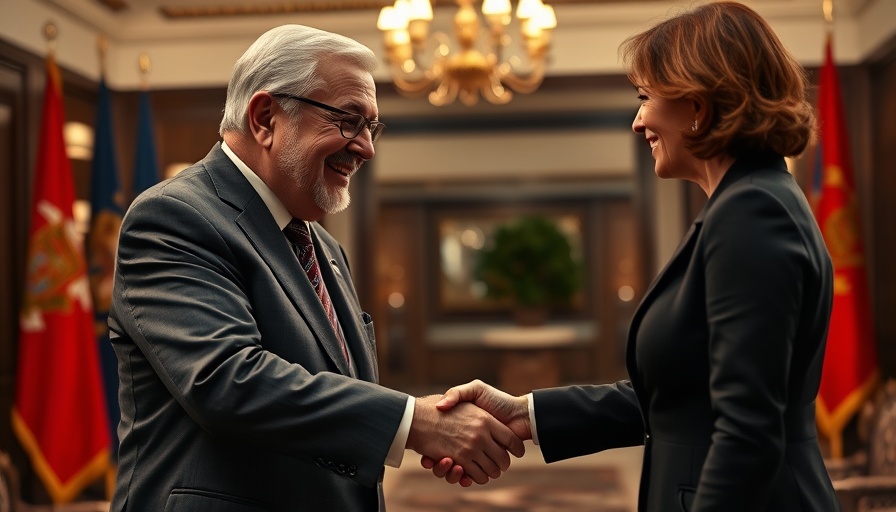
Trump and Von der Leyen in a trade deal meeting.

Historic Deal: A Last-Minute Agreement Between Trump and Von der Leyen

In an unexpected twist just hours before the deadline, former President Donald Trump and European Commission President Ursula von der Leyen announced a critical trade agreement poised to redefine transatlantic relations. This agreement addresses a wide range of economic concerns amid rising tensions surrounding tariffs and international trade policies.

The Implications of the Agreement for Global Trade

This last-minute deal is significant not only for the U.S. and EU but also for countries around the world that rely on international trade. By eliminating certain tariffs and easing regulatory burdens, the agreement aims to foster economic cooperation at a time when global trade faces numerous challenges, including the ongoing pandemic recovery and rising protectionist sentiments.

European Response: Mixed Reactions to U.S. Trade Strategies

The announcement has elicited mixed feelings across Europe. While many business leaders welcome the easing of tariffs, others express concern regarding U.S. intentions, fearing that this could lead to a new wave of economic pressures aimed at specific sectors within the EU. Job growth within the auto industry, a significant sector for both economies, could be particularly impacted, leading to questions about sustainability and employment stability.

Potential Ripple Effect on South Africa and BRICS Relations

The impact of this agreement may extend beyond Europe and the United States to emerging economies, particularly South Africa, which is positioned within the BRICS bloc. With South Africa heavily integrated into global supply chains, there are implications for foreign investment and trade dynamics in the region. South African leaders are keenly observing how this agreement may influence their strategy on international trade agreements and how it could affect local industries facing hurdles such as load shedding and unemployment.

Evaluating the Risks: What Lies Ahead for Global Economies

While optimism surrounds the announcement, experts caution against potential risks associated with such agreements. The quick turnaround from negotiation to announcement raises questions about the robustness of the deal and whether it adequately addresses the complexities of global trade. Additionally, existing tensions surrounding economic nationalism and environmental concerns may continue to challenge efficacy and implementation.

Conclusion: The Broader Impacts on Policy and Governance

As we examine the broader implications of this agreement, insights into governmental policies reveal a landscape where international collaboration can promote economic stability, yet also spark complex negotiations in governance. The need for accountability in trade agreements remains paramount to ensuring that they do not deepen existing inequalities, especially in nations grappling with poverty, unemployment, and other social issues.

This sudden agreement not only illustrates the volatility of international politics but also emphasizes the intricacy of navigating today’s global economy. As developments continue to unfold, both professionals and policymakers must stay vigilant to grasp the evolving landscape.

Politics

69 Views

0 Comments

Write A Comment

*
*
Related Posts All Posts
12.14.2025

Diko Challenges Malatsi's Directive: Implications for South Africa's Telecom Policy

Update Unraveling the Political Tensions: Diko vs Malatsi In a move that has sent shockwaves through South Africa’s political landscape, Khusela Diko, Chairperson of the Portfolio Committee on Communications and Digital Technologies, has demanded the withdrawal of controversial policy directives from Minister Solly Malatsi directed at the Independent Communications Authority of South Africa (ICASA). Diko's assertions underscore deep-seated tensions regarding regulatory independence and governmental authority. Background on the Controversy On December 11, 2025, Minister Malatsi issued directives aimed at amending ICASA's regulations to facilitate the entry of international firms like Starlink into South Africa's telecommunications market. These amendments would lift previously stringent black economic empowerment (BEE) requirements that mandated a minimum of 30% local ownership for telecom licenses. The intent is to attract foreign investment and bolster South Africa's connectivity infrastructure, a move touted as improving digital access nationwide. Diko’s Lawful Opposition Diko contends that Malatsi's directives breach legal protocols, as the minister allegedly bypassed essential steps that involve broader cabinet consultation on such significant policy changes. "The sanctity of our laws must be upheld," Diko emphasized, speaking to the media. By asserting that the directives are not just undesirable but unlawful, she seeks to reinforce ICASA's status as an independent regulatory body free from executive interference. Diko argues that any modification to such critical regulations should be rooted in legal procedure, not executive order. Malatsi’s Justification On his part, Minister Malatsi defends his actions, citing the Electronic Communications Act and the ICASA Act, which he claims provide him with the necessary jurisdiction to issue such directives regarding regulatory alignment. He stresses that these changes aim to seamlessly integrate international regulations, thereby enhancing South Africa's investment landscape. Moreover, Malatsi argues that by implementing Equity Equivalent Investment Programmes (EEIPs), multinational corporations can contribute to local community development without compromising their equity ownership in South Africa. Broader Implications for Governance This clash is emblematic of broader political dynamics within the South African government, particularly within the structure of the Coalition Government. The African National Congress (ANC), as part of a Government of National Unity (GNU), faces challenges in navigating diverse political interests, especially in advance of the 2024 general elections. Opposition parties, including the Democratic Alliance (DA) and Economic Freedom Fighters (EFF), have been vocal about perceived overreach by ministers, reframing this clash as a critical debate concerning accountability, transparency, and democratic governance. The Path Forward: Navigating Stakeholder Expectations As South Africa looks toward its upcoming elections, the fallout from this controversy may significantly impact voter sentiment. The current climate surrounding political realignment is fraught with uncertainty as parties position themselves around pivotal issues such as effective service delivery, telecommunications access, and economic empowerment strategies. This incident raises critical questions: How will the government ensure all voices are represented in policy-making? What measures must be taken to ensure that policies not only meet the needs of foreign investors but also that of local communities? Conclusion: Political Engagement and Accountability This ongoing dispute highlights the pressing need for effective parliamentary oversight and public engagement in policymaking. Citizens and stakeholders must remain vigilant and work towards holding their representatives accountable, ensuring that policies reflect the interests of all South Africans. As we advance toward the 2026 municipal elections, understanding the intricacies behind these political maneuvers becomes paramount for informed voting and civic engagement.

12.13.2025

Shamila Batohi Under Fire for NPA's Inaction: Implications for Justice Reform

Update Shamila Batohi's Leadership Under Scrutiny Amid NPA FailuresThe recent public backlash against National Prosecuting Authority (NPA) head Shamila Batohi has illuminated a growing crisis within South Africa's prosecutorial system. Adv. Thembeka Ngcukaitobi, legal counsel for the suspended South Gauteng Director of Public Prosecutions, has leveled serious accusations against Batohi, claiming her oversight and diligence in high-profile cases have been severely lacking, impacting justice delivery for families of victims.Central to this criticism is the case of Warrant Officer Gonasagren Padayachee, accused of the murder of 16-year-old Kwazi Ndlovu in Empangeni. Despite evidence being overlooked, Ngcukaitobi argues that the NPA failed to advance justice as crucial details, including a ballistic report, were ignored. In a staggering admission, Batohi stated she was unaware of vital evidentiary documents that could have swayed the case.A Pattern of Legal MismanagementThis incident is part of a more extensive narrative surrounding Batohi's leadership fraught with complaints about the NPA’s inability to pursue cases effectively and its adherence to corruption concerns. Drawing parallels with the case against Nigerian televangelist Timothy Omotoso, which resulted in an acquittal due to poor prosecution, Ngcukaitobi's allegations highlight an institutional crisis. Here, Judge Irma Schoeman criticized the NPA for its lack of coherent strategy and prosecutorial integrity, marking this as an ongoing issue under Batohi's tenure.The Cry for AccountabilityThe urgency for accountability resonates deeply across South Africa. As political parties like the Economic Freedom Fighters (EFF) and the Democratic Alliance (DA) weigh in on the need for judicial reform, the public's trust in the NPA hangs by a thread. Calls for Batohi's resignation reflect a broader concern regarding state capture and systemic dysfunction within the NPA, which has seen many critical cases fall through the cracks.Members of opposition parties have expressed growing frustration, emphasizing that it's not simply Batohi who is responsible; it's symptomatic of a deeper, pervasive issue. ActionSA’s Athol Trollip has called for a parliamentary inquiry into these failures, urging that the NPA's approach to serious crimes reflects negligence or a political agenda aimed at safeguarding the powerful, rather than pursuing genuine justice.Moving Towards Reform and RestorationThe situation necessitates a pivotal conversation about the future of the NPA. As South Africa heads towards the 2024 general elections, the discourse surrounding accountability and reform in prosecutorial practices takes on renewed significance. Discussions about constitutional amendments, public sector reforms, and anti-corruption measures must gain momentum. Moreover, Engaging civil society to ensure a more transparent and accountable judiciary may offer paths for restoring public confidence in enforcement bodies.Conclusion: Driving Towards Justice and ReformThe unfolding challenges faced by Batohi and the NPA stand as a call to action not just for political leaders, but for every South African invested in the upholding of justice and accountability. The intersection of public policy, justice delivery, and electoral integrity must be prioritized to pave the way for a functioning legal system that upholds the rights and security of all citizens.

12.13.2025

Goodbye 2025: Embracing Change in South African Politics Amidst Turmoil

Update Reflecting on the Year of the Snake: A Political Landscape The closure of one year often brings us to a moment of reflection, and as we bid farewell to the Year of the Snake, 2025 serves as a poignant marker in South Africa’s political narrative. This period has been characterized not only by the familiar turbulence of assertions and critiques but also by wider conversations on accountability, social dynamics, and a demand for change. The mantra of 'standing firm in a confusing world' resonates profoundly as the nation grapples with the consequences of leadership decisions, particularly within the African National Congress (ANC) and its implications for national elections. The Challenges of Leadership Leadership has faced scrutiny with corruption investigations, state capture disclosures, and the ongoing impacts of policies that have left citizens questioning their future. The ANC has often found itself at the center of controversy, with many believing it has lost touch with the people it vowed to serve. In this chaotic political arena, the Democratic Alliance (DA) and the Economic Freedom Fighters (EFF) have risen as voices of dissent, each presenting their vision for a South Africa that prioritizes truth over fear. Increasingly, voters are demanding accountability, aiming to shed the political snakes that have bitten them time and again. Societal Reflection: The Broader Implications As South Africa navigates the wave of political awareness, societal concerns have ballooned into movements. From the voices of gender-based violence protesters to the persistent call for equitable education reforms, the urgency for accountability in government policies reflects a nation hungry for change. The unrelenting impacts of load shedding and the Eskom crisis have amplified frustrations, leading to larger discussions about economic recovery and sustainability. However, the resolution of these issues demands critical thinking—an essential skill in an age where misinformation reigns supreme. The symbolic shedding of skin, as seen in the Year of the Snake, serves as a metaphor here; South African citizens are urged to discard outdated beliefs and embrace new paradigms that align with progress. Economic Recovery Versus Political Disarrangement In the backdrop of a shifting political climate lies the dire need for economic resurgence. With unemployment rates at staggering heights and inflation complicating the daily lives of citizens, the call for new leadership models is echoed through the land. As the moon cycles through its phases in the Year of the Snake, so too must leadership evolve. This evolution is not just a political necessity but is increasingly viewed as an ethical obligation to the South African populace. Financial stability goes hand in hand with robust trade agreements, foreign investments, and innovative practices. The youth unemployment crisis bears a reminder that today's preparation is worth tomorrow’s success, indicating a cascading effect on society’s future. Global Perspectives and Opportunities Furthermore, global relationships are transforming, which presents a unique opportunity for South Africa to reposition itself on the global stage. The dynamics between nations, particularly with entities like BRICS and the African Union, are crucial in a world clamoring for collaboration over competition. The soft power potential of South Africa is untapped, and as an influential member of these organizations, the nation holds the key to forging partnerships that can tremendously benefit its citizens. Rethinking Truth and Information in the Current Era As 'truth' continues to be weaponized in political dialogues, news media, such as News24, declare their commitment to providing unbiased reporting. This commitment is more important than ever in an environment saturated with misinformation. It appears that the snake of deceit and emotional manipulation is pervasive and its bite lethal, highlighting the necessity for responsible journalism alongside vigilant public engagement. Going forward, the collective responsibility lies in fostering public discourse that emphasizes discernment and promotes transparency among political leaders—demanding that the conversations we engage in reflect our true fears and aspirations simultaneously. Conclusion: Embracing Change and Challenging the Status Quo As 2025 unfolds, it is essential for South Africans to embrace the spirit of transformation embodied in the Year of the Snake. Challenging conventional wisdom, advocating for different perspectives, and remaining steadfast in the pursuit of truth are keys to revitalizing a nation weary of past struggles. The conversations and actions taken today will shape the future landscape of South Africa, determining whether it thrives or merely survives in the coming years.

Terms of Service

Privacy Policy

Core Modal Title

Sorry, no results found

You Might Find These Articles Interesting

T
Please Check Your Email
We Will Be Following Up Shortly
*
*
*