Add Row
Add Element
PR Africa: Your Gateway to Comprehensive African News and Insights
update
PR Africa
update
Add Element
  • Home
  • Categories
    • Entertainment
    • Automotive
    • Politics
    • Finance
    • Health & Fitness
    • Sports
    • Business
    • Cryptocurrency
    • Education
    • Fashion & Beauty
    • Home & Garden
    • Foreign Language News
    • Lifestyle
    • Real Estate
    • Religion
    • Science
    • Technology
    • Travel
    • News & Current Affairs
    • Crime & Safety
    • Arts & Culture
    • Environment
    • Food & Drink
    • Extra News
August 19.2025
3 Minutes Read

Traditional Leaders Demand Action for Rural Development: Government of National Unity Under Pressure

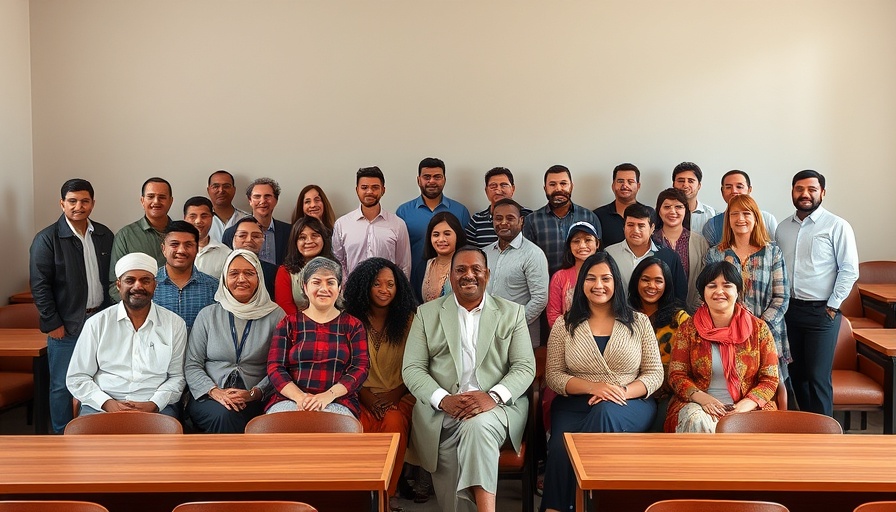
Group photo of diverse individuals at Government of National Unity meeting.

Traditional Leaders Express Growing Frustration Over Government Neglect

At the 2025 National House of Traditional and Khoi-San Leaders Imbizo held in Boksburg, traditional leaders voiced their deep discontent with the Government of National Unity (GNU), accusing it of failing to address the pressing needs of rural communities. This three-day summit served as a platform for over 300 delegates, including prominent figures like Kgosi Mathupa Mokoena, the President of the Congress of Traditional Leaders of South Africa (CONTRALESA), to express their grievances regarding sustainable rural development and necessary land reforms.

Promises Unfulfilled: A Turning Point for Political Engagement

Traditional leaders expressed their frustration over unfulfilled promises made by the government, particularly regarding land distribution. Mokoena lamented that despite President Cyril Ramaphosa’s assurance in 2017 to transfer communal land to traditional leaders within six months, little progress has been observed. As they prepare for the 2024 general elections, the leaders warned that continuous neglect might lead them to boycott the 2026 local elections. The sentiment reflects a broader concern regarding the coalition government’s ability to address the needs of marginalized communities effectively, especially in a post-apartheid South Africa where socio-economic inequalities linger.

Context of Rural Distress: The Broader Socio-Political Landscape

The dissatisfaction stemming from this Imbizo is situated within a broader context of political disillusionment among various factions in South Africa, including the African National Congress (ANC), the Democratic Alliance (DA), and the Economic Freedom Fighters (EFF). The unique composition of the GNU, created to stabilize the political environment, has faced criticism due to its inefficiency and inability to unify different agendas. For traditional leaders, this sensational discontent signals a pivotal moment—one that may reshape their alliances and influence voter turnout in upcoming elections. The challenge thus lies in reconciling long-standing grievances with the realities represented in the GNU.

Future Implications: Voter Sentiment and Political Realignment

As traditional leaders threaten electoral action, a significant implication arises for electoral reform and political realignment. Their strong position on voter awareness underscores the importance of accountable governance and reflective policymaking. If these leaders mobilize their bases effectively, they could sway political dynamics, attracting significant voter turnout and potentially altering power relations between the coalition government and emerging opposition parties. This period may also witness greater civic engagement from traditionally underrepresented groups, shifting the focus of political agendas.

Call for Dialogue: Bridging the Gap Between Leaders and the GNU

Kgosi Mokoena called for an urgent meeting with President Ramaphosa, emphasizing the need for open dialogue to address these rural challenges comprehensively. The demand for immediate action from the leadership is not just a critical plea but a manifestation of a collective frustration felt by many who believe that governance must go beyond mere promises. This proactive stance alludes to an emerging consciousness among rural constituents—they are no longer passive recipients of policy but active participants demanding transparency and responsiveness.

Conclusion: The Imperative of Accountability and Delivery

The sentiments expressed by traditional leaders during the Imbizo are indicative of a broader disenchantment with the status quo within South Africa's GNU. As we await the outcome of potential dialogues between traditional leaders and the President, the focus intensifies on the necessity for accountability and the timely delivery of promises made to rural communities. These issues, intertwined with notions of governance and social justice, resonate far beyond the confines of the meeting halls—they reflect a yearning for genuine representation and progress in a nation seeking reconciliation and holistic development.

Politics

29 Views

0 Comments

Write A Comment

*
*
Related Posts All Posts
01.06.2026

Nicolás Maduro in U.S. Court: Analyzing the Implications for Governance and Justice

Update The Unfolding Drama: Maduro’s Court Appearance Nicolás Maduro’s first court appearance in the United States has sent shockwaves through the political landscape, marking a dramatic turn of events for both Venezuela and U.S.-Latin American relations. Arriving shackled and flanked by armed law enforcement at a New York courthouse, Maduro's presence represents not just a significant moment for his personal fate but also highlights broader issues concerning governance, accountability, and international relations.In 'Maduro makes first US court appearance after capture', the discussion dives into the political and legal ramifications of Maduro's surprising capture, prompting deeper analysis on the broader implications for governance and justice. The Context of Capture: A Military Operation with International Implications The circumstances surrounding Maduro's capture are extraordinary. Speculation surrounds the motives of the U.S. military operation that led to his arrest in Caracas. Historically, such actions are fraught with complexities, ranging from geopolitical maneuvers to geopolitical stability. In a region already beleaguered by issues of governance and corruption, how this operation will affect U.S.-Venezuela relations remains to be seen. Will this action fuel tensions further, or could it signal a new, albeit precarious, path toward negotiations? Analyzing the Legal Ramifications: What Lies Ahead for Maduro? As Maduro prepares for his legal defense in the U.S., multiple legal questions arise. Much of the attention will focus on his charges, which may include drug trafficking and corruption—allegations that have plagued his regime for years. This moment underscores the importance of legal accountability for leaders accused of systematic wrongdoing. Should international laws hold leaders accountable, or does this case represent a double standard in the application of justice? The Resonating Impact on Venezuelan Society and Politics Maduro’s capture has stirred reactions from various sectors within Venezuela. While some view this operation as a necessary measure for justice and accountability, others see it as yet another example of foreign interference in domestic politics. This event raises pressing questions about Venezuela's path forward: what does this opportunity—should it be seized—mean for the future of governance in Venezuela? Public Sentiment and Global Reactions The international community is watching closely. Reactions vary from condemnation to support, reflecting complex historical ties within Latin America and beyond. How individuals perceive this incident often reveals regional sentiments about governance, imperialism, and sovereignty. This event serves as a crucial case study for public opinion in the context of international law and intervention. Implications for U.S.-Latin America Relations The ramifications of Maduro’s capture extend well beyond courtroom proceedings. Engaging with the historical context of U.S. involvement in Latin America, one must ask whether this action will alter the trajectory of U.S. relations in the region. Will it strengthen ties through a shared interest in combating corruption, or will it perpetuate cycles of distrust and resentment? Lessons from the Maduro Affair: A Broader Perspective on Governance and Accountability This episode serves as a poignant reminder that governance and accountability are ongoing struggles in many countries. Whether through internal uprising or international pressure, the pursuit of justice often invites scrutiny, debate, and complexity. This saga not only raises expectations for leaders to uphold ethical governance but also forces citizens to engage with their leaders in meaningful ways. This moment, particularly in African contexts where similar issues of governance prevail, could ignite discussions about accountability and reform. As we reflect on the cultural and political implications of Maduro’s trial, it urges us to consider our roles as informed citizens advocating for transparency and accountability. Looking Forward: Predictions and the Future of Venezuelan Politics What lies ahead for both Maduro and the Venezuelan populace? There are several avenues this situation may take, from further militarization to potential peace talks aimed at reconciliation. Understanding these trajectories hinges on a critical analysis of the events that unfold within the courtroom and beyond. As we gaze into the future, will the path towards renewal and reform emerge, or will the curtain fall on further entrenchment? In summary, Nicolás Maduro’s court appearance not only serves as a chapter in his narrative but also signals vital conversations about governance, justice, and how leaders must remain accountable to their people. The circumstances surrounding this event offer a profound opportunity for reflection, dialogue, and potentially, transformation in the sociopolitical fabric of Venezuela and beyond.

01.06.2026

What Does Maduro's Abduction Mean for Global Multilateralism?

Update The Unraveling of Global Cooperation The recent abduction of Venezuelan President Nicolás Maduro by U.S. forces represents a significant turning point in international relations, signaling an alarming decline in multilateralism and a potential restructuring of global power dynamics. As International Relations and Cooperation Minister Ronald Lamola of South Africa observed, this event raises serious concerns about breaches of state sovereignty and the sanctity of international law. A Dangerous Precedent The military raid conducted by U.S. Delta Force, which led to Maduro's capture, is not just a brazen act of aggression; it also sets a dangerous precedent for future international norms. The operation blatantly disregards the United Nations Charter – a foundational framework designed to promote peace and cooperation among sovereign states. In a world increasingly marked by unilateral actions, such assaults threaten to erode the very principles that have governed global diplomacy for decades. Political Repercussions and Opportunities for Reform This event further complicates the geopolitical landscape, particularly in terms of how nations respond to U.S. actions. It compels not just South Africa, but all nations relying on international law, to reconsider their approaches to foreign policy and multilateral cooperation. In South Africa, the ruling African National Congress (ANC) and other political entities may see this as a wake-up call to bolster their stances on international sovereignty and human rights, especially as they prepare for the forthcoming 2024 general elections. This incident emphasizes the need for a robust coalition government that can articulate clear foreign policy goals and reassure voters of South Africa's commitment to human rights and international peace. Resistance and Resilience Moreover, Venezuela’s experience underscores a broader narrative of resistance against imperialism and calls to defend sovereignty. The people of Venezuela, who have endured economic sanctions and destabilization efforts, now confront another layer of external pressure that attempts to undermine their government. This resilience offers a powerful lesson on grassroots movements and the importance of solidarity among developing nations. Calls for a New International Order The abduction of Maduro does not merely illustrate the vulnerabilities present in the current global order but signals a potential shift toward a more permissive environment for international criminality under the guise of national interest. The U.S. has effectively shifted the paradigm, with President Donald Trump explicitly stating intentions to dominate Venezuela's resources. This raises provocative questions: how can countries navigate this new landscape? What reforms in international law and diplomatic protocols are essential to protect smaller nations from becoming pawns in great power politics? Conclusion: A Call to Action This moment demands that countries, particularly those aligned with the principles of democracy and human rights, band together to advocate for a new international legal framework. Global leaders must prioritize restoring respect for sovereignty and utilization of diplomacy over military might. As we witness this seismic shift, the imperative for public sector reform and cohesive, proactive foreign policies has never been clearer. The imperative for national policies to align with ethical governance and accountability is essential as we strive towards a fairer global society. In the wake of these events, it is paramount for professionals in politics and international relations to engage in dialogue about the implications for upcoming electoral cycles and policy reforms. We urge you to share insights, engage with experts, and be part of the movement towards a more equitable global order.

01.05.2026

Pope Leo Calls for Peace Amid US Raid in Venezuela: A Critical Analysis

Update The Pope's Call for Peace in the Wake of US Intervention in Venezuela Pope Leo's recent plea regarding the escalating tensions stemming from the US raid in Venezuela has ignited significant discussions about the principles of sovereignty and the moral obligations of nations towards each other. In his address, the Pope emphasized that the well-being of the Venezuelan people should be the foremost concern, highlighting a critical perspective on international relations, particularly in this era of geopolitical tensions.In Pope voices concern over US raid in Venezuela, calls for peace and sovereignty, we see crucial insights into the intersections of international relations and humanitarian needs, prompting a deeper analysis of these pressing issues. The Human Cost of International Raids In the sphere of global politics, the impact of military interventions on civilian life cannot be overstated. The Pope's remarks underscore an often-overlooked issue: the enduring human cost inflicted upon innocent populations amidst power struggles. As military action intensifies, the individuals most adversely affected are not always the combatants but civilians caught in the crossfire, leading to humanitarian crises. This perspective is particularly relevant as the world increasingly grapples with the ramifications of such actions. From Syria to Yemen, the consequences of foreign incursions have devastated communities, provoking widespread displacement, economic collapse, and loss of life. Understanding these dynamics is crucial for professionals engaged in international relations, public policy, and humanitarian efforts. Interventionism vs. Sovereignty: A Delicate Balance At the heart of the Pope's concern lies the delicate balance between interventionism and respect for national sovereignty. The principle of sovereignty asserts that nations should have the autonomy to govern without outside interference. However, international crises often lead to debates regarding the justification of intervention for humanitarian purposes. The controversy surrounding the US raid in Venezuela brings to light the complexities inherent in such decisions. Supporters of intervention argue that action is necessary to protect human rights; however, critics assert that such measures often exacerbate conflicts, rather than resolve them. This dichotomy raises important questions for policymakers and political analysts about the ethics of intervention and the criteria that govern the decisions to act. The Global Implications of US Actions in Venezuela Venezuela's current political climate is emblematic of broader global trends wherein major powers engage in strategies that reflect their geopolitical ambitions. The implications of US actions extend beyond Venezuela's borders, influencing regional stability in Latin America and altering relationships with neighboring countries. As Venezuela grapples with internal strife, its situation serves as a cautionary tale that resonates within the context of African current events as well. Various African nations continue to navigate challenges tied to external influence and intervention, bringing to light the importance of fostering dialogue that respects national sovereignty. The lessons learned from Venezuela may offer invaluable insights for African leaders and policymakers as they confront similar issues. Pathways to Peace: The Role of Diplomacy and Dialogue In calling for peace, Pope Leo advocates for dialogue as the primary instrument for resolving conflicts. The importance of diplomatic channels cannot be overstated; they provide opportunities for nations to negotiate, share concerns, and work collaboratively towards sustainable solutions that prioritize the needs of the inhabitants. For professionals in foreign policy and international development, fostering dialogue and cross-border relationships is foundational to mitigating conflicts before they escalate. Events in Venezuela illustrate the need for proactive engagement that emphasizes communication and understanding over aggression and military posturing. Mobilizing Global Support for Venezuelan Sovereignty The Pope's position also highlights the imperative for the international community to unite in support of Venezuelan sovereignty. Solidarity among nations can serve as a powerful deterrent against unilateral interventions that undermine self-determination. Nations across Africa and beyond have a stake in the discourse surrounding Venezuela, as solidarity can strengthen diplomatic alliances and promote a political landscape that prioritizes the well-being of the citizenry. As professionals in public policy and international relations, advocating for collaborative efforts to respect sovereignty can pave the way for enduring peace. Conclusion Pope Leo's concern over the recent US raid in Venezuela calls attention to urgent questions of sovereignty, humanitarian implications, and the role of diplomacy. For professionals engaged in governance and public policy, recognizing these elements is critical for navigating the increasingly complex landscape of international relations. As we develop pathways to peace, it is essential that we place the well-being of people at the forefront of our actions. To stay informed about developments in Africa, the implications of international relations, and current news that affects our world, remain engaged with reliable sources like Africanews. Together, we can foster dialogue that nurtures understanding, encourages civic engagement, and promotes global solidarity.

Terms of Service

Privacy Policy

Core Modal Title

Sorry, no results found

You Might Find These Articles Interesting

T
Please Check Your Email
We Will Be Following Up Shortly
*
*
*