Add Row
Add Element
PR Africa: Your Gateway to Comprehensive African News and Insights
update
PR Africa
update
Add Element
  • Home
  • Categories
    • Entertainment
    • Automotive
    • Politics
    • Finance
    • Health & Fitness
    • Sports
    • Business
    • Cryptocurrency
    • Education
    • Fashion & Beauty
    • Home & Garden
    • Foreign Language News
    • Lifestyle
    • Real Estate
    • Religion
    • Science
    • Technology
    • Travel
    • News & Current Affairs
    • Crime & Safety
    • Arts & Culture
    • Environment
    • Food & Drink
    • Extra News
April 15.2025
3 Minutes Read

Tanzania's Opposition Faces Disqualification: Implications for Democracy

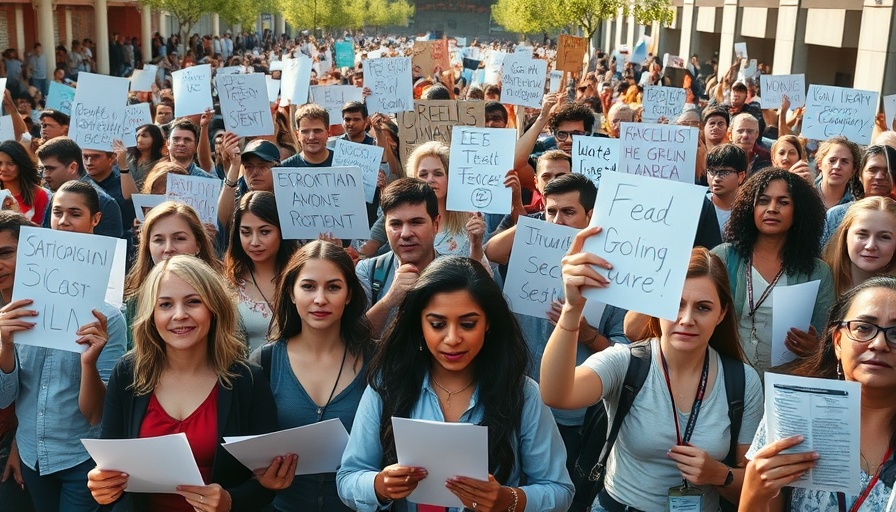
Tanzania's opposition protests election ban with a large crowd and signs.

Tanzanian Opposition Faces Major Setback in Upcoming Elections

Tanzania's political landscape is facing turmoil, following the election commission's disqualification of the main opposition party, Chadema, from participating in the upcoming general elections slated for October. This controversial decision has brought widespread condemnation from the opposition and has raised significant concerns about the country's democratic process.

In 'Tanzania opposition protests election ban,' the turmoil surrounding opposition disqualification raises essential questions around the state of democracy in Tanzania.

The Unconstitutional Ban: What It Could Mean for Democracy

Chadema's legal secretary asserted that the election commission's ban on the party is unconstitutional, igniting a debate around governance and electoral integrity in Tanzania. The demand for a signed document respecting the commission's decisions has been interpreted by some as a pretext to undermine opposition credibility. Without the participation of Chadema, the elections could resemble a farcical exercise deprived of genuine political competition.

Political Climate Sensitive to Arrests and Charges

The announcement of Chadema’s disqualification followed closely on the heels of the arrest of its leader, Tundu Lisu, who has now been charged with treason. This sequence of events highlights a pattern of intimidation against opposition figures, raising alarms about civil liberties in Tanzania. Observers are concerned that Lisu's arrest sends a strong signal to dissenters that the current regime is unwilling to tolerate critical voices.

Implications for President Samia Suluhu Hassan's Governance

This general election marks an important moment for President Samia Suluhu Hassan, as it will be her first since succeeding John Magufuli in 2020. With the possibility of running uncontested, Hassan's legitimacy as president could be called into question, both domestically and internationally. A void in political opposition invites scrutiny on the governance metrics of her administration, particularly concerning democratic freedoms and human rights.

International Responses to Tanzania's Election Crisis

The fallout from Tanzania's electoral situation may catalyze international attention and concern. As observers analyze developments in African politics, this case reiterates the necessity for international bodies, such as the African Union, to engage with Tanzania’s political dynamics and advocate for a fair electoral process. Keeping the global audience informed can lend transparency to the situation and pressure the regime to alter its course.

Future Predictions: The Path Ahead for Tanzanian Politics

As the October elections approach, various scenarios remain possible. Should the ban on Chadema be upheld, it could lead to increased civil unrest and political strikes among opposition supporters. Alternatively, should the party find a way to participate despite the restrictions, it might invigorate public discourse on democratic rights. Civilians are increasingly aware of the dramatic implications such political disruptions have on their freedoms, urging many to take a stand.

Activism and Civic Engagement: A Call for Tanzania's Future

This political crisis underscores the importance of civic engagement and activism within Tanzania. Educated youth and professionals have the potential to galvanize public opinion and create spaces for civic dialogue, emphasizing the nation's right to fair governance. Evidence suggests that societies with active citizen participation foster greater accountability among leaders, marking a critical area for Tanzania's future development.

Conclusion: The Call for Reform

The unfolding political saga in Tanzania may not just be an isolated incident but a reflection of broader trends within the region, prompting various stakeholders to rethink their strategies around governance and political engagement. This moment calls for an active civil society, eager to reclaim their right to participate in democracy. It is imperative for citizens and global observers alike to maintain vigilance, advocating for transparency and accountability to secure a better future for Tanzania.

Politics

22 Views

0 Comments

Write A Comment

*
*
Related Posts All Posts
12.08.2025

The ANC’s National General Council: Leadership and Future Direction Under Scrutiny

Update Significant Political Gathering in South Africa: What’s the Focus? The African National Congress (ANC), one of the oldest liberation movements in the world, is preparing for its 5th National General Council (NGC) from December 8 to December 11, 2025. A gathering of this magnitude often serves as the pulse of the party during tumultuous political times, especially considering that the ANC has lost its parliamentary majority in the past year and faces significant challenges in governance. Leadership Stability Amid Chaos Deputy President Paul Mashatile has made it clear that discussing leadership change will not be on the NGC’s agenda. Instead, he emphasized that President Cyril Ramaphosa will serve out his term, leaving leadership debates for the 2027 conference. However, the silence around leadership raises questions about the ANC’s internal dynamics in an era of governance of national unity (GNU) in collaboration with opposition parties like the Democratic Alliance (DA) and others, and whether this will resonate with disheartened voters from previous elections. Examining Performance and Future Directions With concerns about the ANC’s performance since 2018 being a crucial focus, political analysts such as Sandile Swana predict the council will also address institutional acceleration and party renewal. The push for internal structural strengthening reflects a deep desire to revive the party's connection with its grassroots. South Africa’s socio-economic landscape, complicated by high unemployment and increasing crime rates, will feed into discussions about how the ANC can realign itself to regain voter confidence ahead of the 2024 general elections. The Stalemate Over Economic Transformation The tension within the ANC regarding economic policies will likely be palpable at the NGC. The debate between pursuing Radical Economic Transformation (RET) versus a more moderated economic approach is bound to play out as different factions vie for influence. The RET promises a reformation of economic injustice but carries the weight of past corruption. As Mashatile and other leaders emphasize the necessity for renewal and growth, the real challenge lies in how effectively they can foster agreement among deeply divided factions. What's at Stake? The Implications for Future Elections The upcoming NGC acts not only as a platform for policy discussion but as a litmus test for Ramaphosa's leadership. If the NGC succeeds in presenting a united front, it could effectively pave the way for greater stability in the ANC and a more reliable coalition, crucial ahead of not just the 2024 elections but the 2026 municipal elections as well. Conversely, any signs of division may embolden opposition parties like Julius Malema's Economic Freedom Fighters (EFF) and John Steenhuisen's DA, potentially further eroding public confidence in the ANC. A Call for Action: Engage in the Political Dialogue As the ANC embarks on this critical NGC, weighing the future of its leadership and policy directions, South Africans are encouraged to engage more deeply in political discussions surrounding these developments. A vibrant democracy thrives on informed citizen participation—your voice matters in shaping this nation's future. Following the outcomes of the NGC, we will see greater clarity on which direction the ANC will take, and how it plans to address pressing issues like youth unemployment, service delivery, and the pressing need for economic reforms.

12.06.2025

Afrika Mayibuye Movement Convention: Revolutionary Path for Economic Solidarity

Update Understanding the Afrika Mayibuye Movement's Aim for Economic Solidarity The Afrika Mayibuye Movement (AMM) recently concluded its National Convention at the University of Johannesburg’s Soweto Campus, reflecting a significant stride in its political ambitions under the leadership of Floyd Shivambu. Launched just a year earlier, the AMM has quickly established itself as a contender on South Africa’s political landscape, especially as the nation gears up for imminent local government elections in 2026 and general elections in 2024. The party's core mission revolves around promoting black economic solidarity, aimed at addressing deep-seated economic disparities that have persisted in the country since the end of apartheid. The Convention's Expectations and Outcomes With an anticipated attendance of approximately 2,000 delegates, this convention was not merely a gathering but a critical platform to formulate policy positions required for upcoming elections. The heavy participation underscores a burgeoning interest in alternative political movements amidst widespread disillusionment with major parties like the African National Congress (ANC) and the Economic Freedom Fighters (EFF). The AMM's focus on empowering marginalized communities reflects a growing societal demand for a united front against pervasive inequality. Social Context and Rising Inequality Inequality in South Africa stands as one of the most alarming globally, exacerbated by high levels of unemployment and economic exclusion. The AMM aims to reverse this trend by advocating for policies that prioritize the production and empowerment of black communities rather than perpetuating consumerism through support systems. The invocation of historical struggles against colonial and apartheid systems informs the party's rhetoric, making their call for black economic empowerment resonate deeply with a populace tired of marginalization and misrepresentation. Political Realignment: The AMM’s Position The existence of numerous opposition parties, including the DA and EFF, presents opportunities for political realignment leading up to the 2024 elections. The AMM seeks to attract voters disenchanted with the perceived failures of traditional parties like the ANC, which has been accused of state capture and corruption. Should the AMM manage to capture a significant voter base, it could substantially alter the voting dynamics, possibly forming coalition governments that would challenge the existing political stalemate. Countering Misconceptions: Not Just Another Party There are concerns voiced by critics that the AMM is simply another faction vying for a slice of the political pie, devoid of genuine intent to enact change. However, members emphasize that their approach differs fundamentally by emphasizing grassroots participation and constructive policymaking rather than reliance on established political practices. The party’s mission seeks to bridge divides and provide sustainable solutions to ingrained problems such as land reform and educational inequality, reflecting a commitment to democratic values and societal development. The Road Ahead: Capacity and Voter Engagement With the political landscape shifting, it’s crucial for parties like the AMM to harness voter engagement effectively. Measures aimed at improving voter turnout, particularly within underrepresented communities, are paramount for success. The recent convention served as a rallying point, not just for internal policy development, but also as a clarion call to encourage civic participation and enhance accountability among elected representatives. Conclusion: A Call to Action for Civic Engagement As South Africa inches closer to its next electoral cycle, the emergence of the Afrika Mayibuye Movement marks a significant juncture in the nation’s political evolution. The potential of this party to reshape political discourse hinges on its ability to mobilize grassroots support and present compelling alternatives to the electorate. Engagement from the public, informed voter decisions, and a commitment to active participation in the democratic process will be essential in determining the success of movements like AMM. We encourage everyone to stay informed and participate in upcoming discussions that will shape our collective future.

12.05.2025

Afrika Mayibuye Movement's National Convention: A New Era for South Africa?

Update The Historical Significance of Afrika Mayibuye's First National Convention As the Afrika Mayibuye Movement prepares for its inaugural national convention this weekend in Soweto, the event marks not just a gathering of party members but a critical juncture in South Africa's political landscape. Established a mere four months ago, this movement seeks to define its identity among a plethora of opposition parties, including the African National Congress (ANC) and the Economic Freedom Fighters (EFF). With more than 2,000 delegates from across the nation set to convene, the party aims to solidify its manifesto, focusing on issues such as land reform, public sector reform, and economic rights. Understanding the Context of Political Realignment Recent political upheavals in South Africa, characterized by instability within traditional parties, have created a ripe environment for new movements like Afrika Mayibuye. Spokesperson Sydney Baloyi notes that the convention will serve as a platform to endorse significant policy positions, which are crucial for the upcoming 2024 general elections and the 2026 municipal elections. As political tides shift, the growth of movements that advocate for marginalized communities against the backdrop of increasing voter apathy becomes more relevant. The Party's Reading of Current Events: Challenges and Opportunities Despite its recent establishment, the Afrika Mayibuye Movement is not without challenges. The party has experienced notable resignations among its senior leadership, prompting questions about its internal stability. However, Floyd Shivambu, the leader of the movement, asserts that such growing pains are common for newly formed parties and reflects broader societal challenges. With a strategic vision that includes fostering a Government of National Unity (GNU), they hope to redefine coalitional politics in South Africa. What’s on the Agenda: Key Policy Themes Diving into the core issues, the movement's manifesto details its commitment to indigenous rights, social grants, and strategies to combat income inequality. The party's emphasis on racial reconciliation and empowering the youth through practical solutions aligns with its overarching commitment to a just and equitable society. The convention shapes up as a direct response to South Africa's pressing socio-economic challenges, integrating grassroots voices, and seeking to influence electoral reform and judicial independence. Engagement from Diverse Perspectives Throughout the convention, representation will extend beyond just party lines, as traditional leaders, religious figures, and even international guests will partake, affirming the movement's goal of inclusivity and collective action. The intention is to not only promote their manifesto but also listen to the concerns and demands of diverse populations that often feel disenfranchised by traditional governance structures. Future Predictions: A Movement to Watch Given the dynamics of South Africa's political landscape, the emergence of the Afrika Mayibuye Movement presents both opportunities and risks. As we approach the 2024 elections, the potential for real political shift hinges on voter turnout and engagement. Mature political commentators are keen to see how this young movement will impact established parties like the DA and the ANC, who have dominated the political scene for years. Will the promise of accountability and social justice resonate sufficiently to alter South Africa’s trajectory? Only time will tell, but the unfolding drama at the convention suggests that Namibia's next chapter in political history may be written this weekend. Call to Action: Stay Informed and Engaged As the political landscape evolves, it is vital for citizens to remain informed and engage with new movements shaping the future. The outcomes of the Afrika Mayibuye national convention may provide insights into upcoming political developments and the direction of governance in South Africa. Stay tuned for updates as the democratic dialogue unfolds!

Terms of Service

Privacy Policy

Core Modal Title

Sorry, no results found

You Might Find These Articles Interesting

T
Please Check Your Email
We Will Be Following Up Shortly
*
*
*