Add Row
Add Element
PR Africa: Your Gateway to Comprehensive African News and Insights
update
PR Africa
update
Add Element
  • Home
  • Categories
    • Entertainment
    • Automotive
    • Politics
    • Finance
    • Health & Fitness
    • Sports
    • Business
    • Cryptocurrency
    • Education
    • Fashion & Beauty
    • Home & Garden
    • Foreign Language News
    • Lifestyle
    • Real Estate
    • Religion
    • Science
    • Technology
    • Travel
    • News & Current Affairs
    • Crime & Safety
    • Arts & Culture
    • Environment
    • Food & Drink
    • Extra News
April 09.2025
4 Minutes Read

Rugby's Dynamic Paths Collide: White and Everitt's Reunion Ignites Excitement

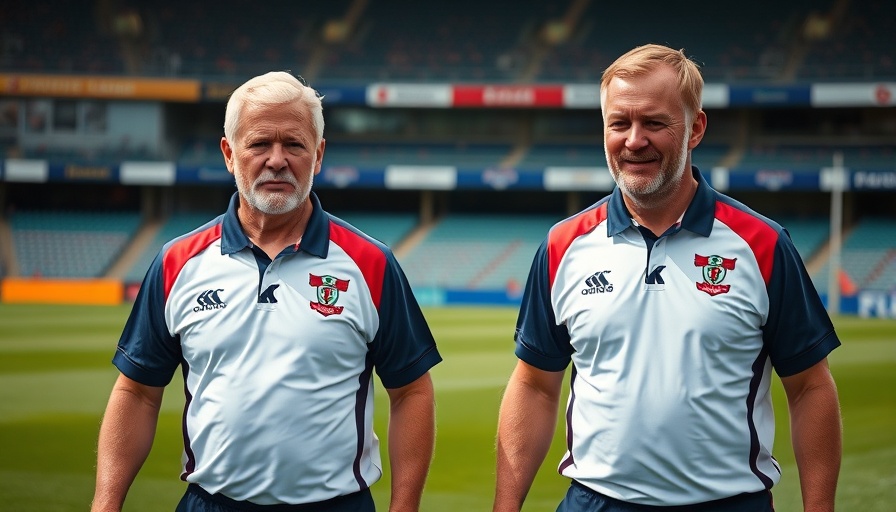
Everitt and White rugby reunion on field with coaching shirts.

The Reconnected Paths of White and Everitt

The upcoming showdown between the Vodacom Bulls and Edinburgh brings an electrifying twist to the rugby narrative, pitting two former colleagues turned rivals against each other. The historical bond between coach Jake White and his protégé, Duncan Everitt, sets the stage for a thrilling encounter on a European landscape, as both teams vie for a spot in the Challenge Cup finals in Cardiff. This meeting of minds underscores not just their shared rugby journey, but also their contrasting paths in the world of coaching.

A Foundation of Mentorship

It all began in 2013 at the Sharks, where White’s arrival as director of rugby marked a significant moment in South African rugby. Fresh off leading the Springboks to glory in 2007, White took a mentorship role, guiding Everitt, who had been an assistant coach at the time. Their relationship blossomed, characterized by a blend of respect, learning, and camaraderie.

While White's stint at the Sharks was brief, he laid the groundwork for Everitt’s rise within the franchise. Everitt eventually ascended to the head coach position and led the Sharks to notable Currie Cup finals. In 2020, both men faced a new chapter when White returned from France after a successful role at Montpellier, further intertwining their careers.

Contrasting Coaching Philosophies

The differences between their coaching styles add an intriguing layer to this match-up. White is renowned for his pragmatic approach, often prioritizing physicality and strategy to overpower opponents, as seen in his success with the Bulls. On the other hand, Everitt embodies a balance of defensive resilience and attacking flair, a reflection of his time spent honing his tactics with the Sharks and now with Edinburgh.

This philosophical divide will be on full display when their teams clash. Everitt, now at Edinburgh, aims to infuse Scottish rugby styles with innovative strategies. “I probably know him better than most other coaches know him,” White has previously remarked, highlighting the tactical mind games that will unfold on the pitch.

A Journey Through Time

The story of White and Everitt is one of continuous evolution, marked by victories and challenges across continents. White’s triumph with Montpellier in the Challenge Cup stands in juxtaposition to Everitt’s recent achievements with Edinburgh. This match symbolizes a poetic symmetry; once students of the game, they now hold respective reins of clubs eager to carve their legacy within European rugby.

For Everitt, meeting his former mentor adds an emotional element to this high-stakes match. He steps into this role with dreams of repeating what White achieved, hoping to elevate Edinburgh to new heights while grappling with the challenge of competing against his mentor.

Why This Match Matters

The upcoming fixture is not just a matter of points or progression; it represents the culmination of years of learning, growth, and friendship between two passionate coaches aiming for the same goal. As spectators, we are reminded of the intricate web of relationships that sports foster and the respect that courses through competition at this level.

For young athletes and coaches, this reunion serves as a reminder that mentorship can take many forms - from teacher-student dynamics to fierce competitive rivalries. The potential for growth and development is limitless, whether you find yourself on the same team or facing off against a once-mentor.

What’s at Stake for the Teams?

Beyond personal narratives, the stakes for both clubs are monumental. For Edinburgh, a strong showing could build momentum and confidence, solidifying their status in elite rugby circles. For the Bulls, this represents an opportunity to reclaim dominance in European competition, a realm they’ve historically navigated with success.

The match holds significance beyond mere rivalry; it is a chance to showcase the differences in player development philosophies cultivated by White and Everitt. Fan engagement, community morale, and national pride will drive both teams forward as they prepare for battle.

Conclusion: The Spirit of Rugby

As fans eagerly anticipate this exciting encounter, it’s essential to recognize the intertwined narratives that will unfold on the pitch. The meeting of White and Everitt illustrates the evolution of coaching and the transformative power of mentorship in sports. This game promises to be not just a clash between two teams, but a testament to the relationships that define rugby culture and sportsmanship.

As you follow the journey of these esteemed coaches and their teams, remember the spirit of competition and camaraderie that elevates sports. Join the conversation, share your thoughts, and support your favorite teams as they aim for glory in this thrilling match-up.

Sports

14 Views

0 Comments

Write A Comment

*
*
Related Posts All Posts
12.27.2025

Springboks Show Steel with 29-27 Victory: What This Means for Rugby

Update Springboks Claim Glory: A Historic Triumph in the Rugby Championship In a gripping finale that underscored the resilience and tenacity of South African rugby, the Springboks clinched the Rugby Championship for the second consecutive year with a narrow 29-27 victory over Argentina at Twickenham. This back-to-back title win marks a profound shift in South Africa's rugby narrative, showcasing not only skill but unyielding spirit amidst adversity. The Tectonic Shift: How the Springboks Dominated the Match The match turned into a testament of strength, as South Africa's formidable scrum and elusive play revitalized the team after a lackluster start. With Argentina initially taking an early lead, the Boks found themselves trailing at halftime, a situation reminiscent of their previous encounters against the Pumas. However, the resolve demonstrated by Springbok captain Siya Kolisi and scrumhalf Cobus Reinach transformed the game into a showcase of brutal yet skilled rugby. Siya Kolisi: The Heart and Soul of the Team As captain, Kolisi embodied leadership throughout the match, making 15 decisive tackles and leading by example. His ability to organize the defense was pivotal in stifling Argentina during their aggressive phases of play. Kolisi's grit was particularly critical when the match edged towards tensions, exemplifying the importance of emotional and physical resilience in sports. His post-match comments reflected gratitude for his team, highlighting a deeply ingrained belief that no moment is insurmountable—a sentiment that continues to resonate within the rugby community. Heroic Performances: Standout Players in the Spotlight Beyond Kolisi, several players demonstrated extraordinary performances that contributed to this historic victory. Cobus Reinach was named Player of the Match, scoring two vital tries and disrupting the Argentine defense with his speed and tactical awareness. Similarly, Malcolm Marx, with his two tries coming off rolling mauls, not only showcased his scoring prowess but also proved integral in maintaining control during essential moments of the game. Each player's individual brilliance contributed to the team's cohesive effort, signaling a bright future for South African rugby. Challenges Faced: A Glimpse into the Team’s Journey Despite lifting the championship trophy, the path to victory was fraught with challenges. The Springboks faced periods of intense pressure from Argentina, and mistakes—like early yellow cards—almost cost them the game. Understanding how to navigate these turbulent moments is crucial for athletes and teams striving for excellence. As such, the mental fortitude required to bounce back from adversity is a lesson well-highlighted by this match. The Future of South African Rugby: Rising to New Heights This championship victory marks not only a continuation of South Africa's storied rugby legacy but also a stepping stone towards upcoming challenges, such as the Rugby World Cup. With burgeoning young talent and extraordinary leadership in figures like Kolisi, the future seems bright for the Springboks. The triumph illustrates a commitment to hard work, strategic play, and a bond that transcends mere competition, embodying the very spirit of South African rugby. As rugby fans reflect on this remarkable achievement, the community is encouraged to embrace the journey ahead and support our athletes. The spirit of the game lies not just in victories but in the stories that inspire us all. South Africa’s journey in rugby continues, one match at a time. Join the conversation, share your thoughts, and never underestimate the heart of a Springbok!

12.27.2025

Controversial VAR Calls and Late Drama: Bafana's AFCON Defeat to Egypt

Update Late Drama Deflates Bafana Bafana's Hopes Against Egypt In a gripping encounter at the 2025 Africa Cup of Nations (AFCON), Bafana Bafana faced off against Egypt, only to succumb to a heartbreaking 1-0 defeat, characterized by instances of VAR controversy and intense competition. This encounter, occurring on December 26, at the Grand Stade D’Agadir in Morocco, highlighted not only the talents of both squads but also the intricate rules of modern football that often leave fans locking horns in debate. VAR Controversy Unfolds The match began with Egypt establishing a slight upper hand, exploiting the defensive lapses of Bafana Bafana early on. The turning point arrived shortly before halftime when South African defender Khuliso Mudau was penalized for a perceived foul on Egyptian superstar Mohamed Salah. The referee’s decision was bolstered by a VAR review that reversed his original call of no penalty, granting Salah the opportunity to open the scoring from the spot. Critically, multiple angles appeared to question the legitimacy of this call, leaving many to wonder: was it truly a penalty? As tensions simmered, the match took another twist just a minute later when Egypt's Mohamed Hany received a second yellow card, reducing the Pharaohs to ten men and igniting hopes for a comeback within the Bafana Bafana camp. Yet, as the teams returned for the second half, the South African squad appeared renewed and resolute, armed with the determination to capitalize on their numerical advantage. Bafana's Dominance and Frustration Resilience defined South Africa's performance after the break as they launched repeated attacks against a now-defensive Egyptian setup. Bafana Bafana created numerous promising chances; however, success remained elusive. Teboho Mokoena, in particular, posed a consistent threat and had a chance to level the score deep into stoppage time when a shot struck the arm of Yasser Ibrahim. Unfortunately for South Africa, the referee, following yet another VAR review, denied the appeal for a penalty, further heightening frustration both on the pitch and in the stands. Moreover, the disarray in the officiating decisions disrupted the rhythm and morale of the South African players, robbing them of a well-deserved opportunity to equalize. The final whistle came as a relief for Egypt, who managed to cling onto their lead despite mounting pressure. Mixed Reactions and Future Hopes Post-match, the ire of Bafana Bafana's head coach, Hugo Broos, echoed throughout the media as he expressed disbelief over the foul assessments—remarking on the inconsistencies of the rules that have left both teams in confusion regarding how they should navigate the modern game. His statements resonated with fans who could empathize with a team that has faced repeated challenges both in regulation and decision-making on crowded stages like AFCON. Despite the setback, there's a sense of hope and determination among the Bafana Bafana camp as they now shift focus to their upcoming match against Zimbabwe. With lessons learned from the Egyptian encounter, the players are keen to prepare for a must-win scenario that will determine their fate in the tournament. Community Response and Cultural Significance The match’s outcome has significant implications, not just for the players but also for the broader South African sporting community. As discussions emerge over the effectiveness of VAR, many fans point out how crucial it is for the integrity of sportsmanship—not only at the AFCON but also at other major events encompassing the Springboks and Proteas. Fans engaged in lively debates on social media, underscoring how deeply sports resonate with South Africa’s culture. Football, rugby, and cricket are woven into the nation’s fabric, and this AFCON match stirred emotions that extend beyond the pitch—highlighting the powerful role of sports in uniting cultures and shaping identities. Looking Ahead: A Call to Action As Bafana Bafana gears up for their next challenge, fans are called upon to rally behind their team, not only for support but also for constructive discussion about the future of sports officiating in South Africa. Leveraging social media platforms to advocate for more clarity in rule enforcement could pave the way for a positive shift in the sporting landscape. In conclusion, while the match ended in disappointment, the heart of Bafana Bafana remains resilient. South Africa is keen to redeem itself against Zimbabwe and push for knockout stage progression in AFCON 2025.

12.27.2025

Salah's Heroics Lead 10-Man Egypt Past South Africa in AFCON

Update Egypt's Triumph Amidst Adversity In a tense showdown at the Africa Cup of Nations in Agadir, Mohamed Salah once again proved to be the linchpin for the Egyptian national football team. Despite being reduced to ten men, Egypt held onto a narrow 1-0 victory over South Africa, ensuring their place in the knockout stage of the tournament. Salah Steps Up: A Leader on and off the Field With a stunning performance to convert a penalty just before halftime, Salah's leadership qualities shone brightly. Following an altercation where he was clipped in the face by South African defender Khuliso Mudau, Salah took the responsibility of the penalty kick, delivering a precise shot that left the opposing goalkeeper, Ronwen Williams, diving in vain. This marks his second goal in two matches, reaffirming his status as the team's key player. The Challenges South Africa Faced South Africa, while showing promise for much of the match, faced hurdles that hampered their ability to equalize. Coach Hugo Broos expressed frustration regarding the penalty awarded to Egypt, labeling it as “ridiculous” while also lamenting a potential penalty opportunity for his own team late in the game. The weight of expectation and the consequences of unfortunate refereeing decisions can ripple through a team’s performance in crucial moments. Mali's Draw Against Morocco: A Game of Missed Opportunities In another significant match of the day, Morocco was held to a 1-1 draw by Mali. Although Brahim Díaz opened the scoring for Morocco with a penalty, Mali quickly responded with a penalty of their own, thanks to a contentious VAR decision. This result, while disappointing for the Moroccan team, keeps them buoyed for their remaining games in the group stage, as they still lead the group with four points. The Road Ahead: What Lies for Egypt and South Africa As Egypt prepares to face Angola in their next match, they can do so with confidence, knowing that they have already secured qualification. This reinforces their status as seven-time champions and favorites for the tournament. In contrast, South Africa will need to regroup and strategize for their upcoming match against Zimbabwe, where failure to secure points could threaten their tournament journey. The Bigger Picture: How These Matches Impact African Football The Africa Cup of Nations serves as a vital platform for showcasing football talent across the continent. Matches like these not only enhance the competitive spirit but also foster a sense of unity and pride among nations. The dynamics of this tournament are not just about victories; they are pivotal moments that shape the future of African football. Looking Forward: Implications for Player Development As the tournament progresses, scouts and coaches from around the world are closely watching these players. The significance of tournaments like AFCON cannot be overstated—they are crucial for player development and the future of football on the continent. The exposure and experience gained by these athletes can propel them into lucrative opportunities in top leagues globally. In conclusion, as the Africa Cup of Nations unfolds, the narratives constructed by teams like Egypt and South Africa provide rich material for discussions about talent, teamwork, and the ever-evolving landscape of African football. For executives and decision-makers in the sports industry, understanding these dynamics is key to tapping into the growing football market in Africa.

Terms of Service

Privacy Policy

Core Modal Title

Sorry, no results found

You Might Find These Articles Interesting

T
Please Check Your Email
We Will Be Following Up Shortly
*
*
*