Add Row
Add Element
PR Africa: Your Gateway to Comprehensive African News and Insights
update
PR Africa
update
Add Element
  • Home
  • Categories
    • Entertainment
    • Automotive
    • Politics
    • Finance
    • Health & Fitness
    • Sports
    • Business
    • Cryptocurrency
    • Education
    • Fashion & Beauty
    • Home & Garden
    • Foreign Language News
    • Lifestyle
    • Real Estate
    • Religion
    • Science
    • Technology
    • Travel
    • News & Current Affairs
    • Crime & Safety
    • Arts & Culture
    • Environment
    • Food & Drink
    • Extra News
February 20.2025
3 Minutes Read

Renewable Energy Transforms Senior Living: Decentral Energy's Impact

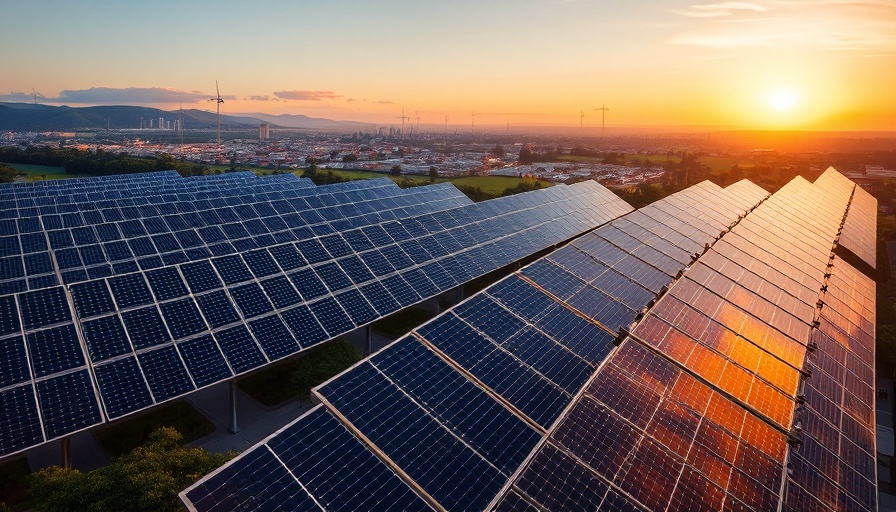
Solar panels at sunset near retirement village

Sustainable Energy Solutions: A New Dawn for Senior Living

In an age where climate change mitigation and energy security take precedence, the partnership between Decentral Energy and Mowana Communities NPC showcases a progressive approach to renewable energy integration in retirement living. This collaboration not only highlights the critical need for sustainable energy systems in communities serving senior citizens but also opens the door for future developments across similar sectors.

Building Resilience in Retirement Communities

Decentral Energy's installation of solar photovoltaic panels, battery storage systems, and diesel generators at Mowana’s residences in KwaZulu-Natal marks a significant shift towards energy resilience. As Trevor Clowes, CEO of Mowana, aptly pointed out, this integrated solution is essential in safeguarding the comfort and security of residents, especially in the face of South Africa’s worsening power challenges driven by load shedding and the aging coal-fired power infrastructure of Eskom.

The Shift Towards Renewable Energy in Senior Living

The need for renewable solutions in retirement facilities is, however, not unique to South Africa. As highlighted by reports from the U.S., green retirement options are on the rise, driven by a desire for more sustainable living and energy independence. Facilities across various regions are opting for solar power, which not only aids in reducing monthly expenses for residents but also contributes greatly to the battle against carbon emissions. Such practices resonate with the increasing push towards a sustainable economy and the Just Energy Transition framework.

Challenges and Counterarguments

While the promise of renewable energy in retirement communities is bright, skepticism still surrounds its viability. Critics argue that the high initial capital required for such green initiatives may limit access for many facilities, creating a disparity in energy access among senior communities. This view echoes debates on energy poverty in developing regions, where many still heavily depend on traditional energy sources that contribute to greenhouse gas emissions. Where can we find balance to ensure that these projects do not result in a widening energy gap?

Future Insights: Bridging Sustainability and Community Care

As Decentral Energy and Mowana Communities bring renewable energy solutions to the forefront, there is an opportunity to reassess how such partnerships can be expanded to other areas, thus ensuring the sustainability of vital community services. Investment in renewable energy not just aids in reducing dependency on coal-fired sources, but it can also revolutionize how eldercare facilities operate, enhancing both environmental impact and resident satisfaction.

Making Informed Decisions for Sustainable Living

Professionals in community planning and public policy must consider integrating renewable energy initiatives with broader sustainability practices, such as waste management, water conservation, and health-promoting activities. As seniors increasingly seek environments that reflect their values, understanding how these systems work can empower leaders to craft policies that foster sustainability in every aspect of eldercare.

The Role of the Community in the Energy Transition

The success of initiatives like those undertaken by Mowana relies on community involvement and awareness. As local governments and organizations collaborate, there's a need to foster a sense of ownership among residents, encouraging them to participate in conservation and renewable energy practices. Workshops and training sessions on energy efficiency and resource management could prove invaluable in spearheading this change.

Lastly, what questions remain unanswered regarding energy equity for senior communities in the face of renewables? Will future investments in green technologies adequately provide for elders while promoting social equity?

Conclusion: A Call to Action

The Mowana-Decentral Energy partnership is not just a project; it is a beacon of hope pointing towards a sustainable future for senior living communities. For broader adaptation and implementation, stakeholders must take heed of these initiatives and demand investments in cleaner energy pathways that enhance the resilience and well-being of all communities. The time to act is now, and innovative, renewable energy solutions can propel us into a greener tomorrow.

Environment

20 Views

0 Comments

Write A Comment

*
*
Related Posts All Posts
12.02.2025

Mopane Worms: Balancing Tradition, Economy, and Environmental Conservation

Update The Unsung Value of Mopane Worms: A Keystone Resource at Risk In Southern Africa, mopane worms (Imbrasia belina) have long been celebrated not only as a culinary delicacy but also as a vital source of income for countless rural communities. These caterpillars, derived from the emperor moth, thrive in the mopane woodlands that cover vast areas across Zimbabwe, Botswana, Namibia, and South Africa. The Socio-Economic Impact of Mopane Worm Harvesting The harvesting of mopane worms provides more than sustenance; it plays a critical role in the local economy. For many households facing economic challenges, mopane worms offer a low-cost protein alternative, especially during times of scarcity. Rural women and children, in particular, have been identified as the primary harvesters, contributing significantly to food security and family incomes. However, the residues of poverty and unemployment in the region exacerbate the demand for mopane worms, leading to unsustainable harvesting practices. According to insightful research, many families rely on these resources not just for food but for income, especially in the 'hungry season' when cash flow is particularly low. Reports from the field indicate that commercialization has shifted traditional harvesting practices towards more aggressive and unsustainable methods, driven by external demand from urban areas. Environmental Concerns and Threats to Sustainability Despite their economic importance, the sustainability of mopane worms is under serious threat due to several factors, including climate change and over-exploitation. Studies emphasize that crude harvesting methods, often carried out by external harvesters, are leading to significant degradation of mopane tree populations. This impacts not only the worms themselves but threatens the entire local ecosystem, which relies on these trees as vital resources. Moreover, informal settlements that spring up during harvesting periods can exacerbate these issues. The resulting environmental pollution and deforestation pose further risks to the habitats essential for the mopane worms’ lifecycle. As the numbers dwindle, the repercussions ripple throughout the communities, worsening the socio-economic conditions associated with their livelihoods. Need for Sustainable Practices and Community Governance Transitioning towards more sustainable harvesting methods is paramount. Community awareness and engagement in conservation strategies are crucial to ensure the continued availability of mopane worms. Suggested practices include rotational harvesting, where certain areas are left untouched each season to allow for ecological recovery. Additionally, reinforcing local governance structures can empower communities to manage and monitor harvesting practices. Traditional knowledge has proven effective in resource management, and integrating this with modern scientific approaches can help establish guidelines that protect both the worms and the ecosystems they inhabit. Leveraging Technology for Conservation Innovative technologies, such as IoT and satellite monitoring, can be harnessed to enhance observation of mopane worm populations. These solutions allow for more informed decision-making regarding harvesting practices, ensuring that they remain within sustainable limits. By promoting technological integration and local engagement, we can protect this delicate balance and ensure that mopane worms continue to serve as a vital resource in Southern Africa. A Collective Responsibility Towards Sustainability As stewards of natural resources, both local communities and broader governance structures must work collaboratively to safeguard the future of mopane worms. This collective responsibility hinges on embracing sustainable practices that respect local knowledge while adapting to modern demands. In doing so, we ensure not only the preservation of an important cultural delicacy but also the survival of communities that depend on it. Ultimately, it is a clarion call for enhanced regulations, increased community awareness, and international support to facilitate sustainable practices around mopane worm harvesting. As we continue to navigate the complexities of these socio-environmental dynamics, the future of mopane worms remains a litmus test for our collective responsibility towards sustainability in the region.

12.02.2025

Unlocking Energy Resilience in Africa: How AI-Powered Virtual Power Plants are Revolutionizing Energy Security

Update Transforming Africa's Energy Landscape with AI As Africa grapples with severe energy challenges, the spotlight is increasingly on innovative solutions that leverage technology for sustainable development. Energy is at the core of Africa's larger infrastructure narrative, impacting essential sectors like mining, transport, and construction, all of which depend on consistent electricity supply. Despite the continent's vast potential in renewable energy sources, the realization of dependable power systems has remained elusive. African nations are now embracing the concept of Virtual Power Plants, utilizing artificial intelligence (AI) as a crucial facilitator for energy resilience. The Promise of Virtual Power Plants Virtual power plants aggregate distributed energy resources—solar panels, wind turbines, and energy storage systems—transforming them into a unified, manageable energy supply that can respond dynamically to demand fluctuations. As articulated by Shingai Samduzi, CEO of Asoba, the goal is to achieve 100% electricity availability for all, addressing not only reliability but also the efficiency of energy generation. This orchestration moves beyond the mere addition of renewable projects, pivoting towards a coherent management system that integrates diverse energy sources. AI serves as the 'brain' of these virtual power plants, optimizing asset performance through predictive analytics. For instance, forecasting demand and scheduling energy dispatch mitigates common pitfalls such as outages and waste. With AI-powered platforms like Ona Grid Management, the expectation is not only a reduction in carbon emissions but also measurable improvements in environmental, social, and governance (ESG) factors, which increasingly dictate investment attractiveness. Challenges in the Energy Transition However, Africa's journey towards a more reliable energy infrastructure is fraught with challenges that cannot be overlooked. The continent is beset by aging physical infrastructure that struggles to meet burgeoning energy demands amid rapid urbanization and population growth. Frequent load shedding incidents in countries like South Africa reflect the urgent need for systemic improvements. Existing power plants are often incapable of maintaining consistency, and distribution networks are plagued by inefficiencies and theft. Moreover, financial complexities such as circular debts and insufficient tariffs interact with operational inefficiencies to create a precarious situation for utilities. As AI becomes recognized for its potential to enhance grid stability, it emphasizes the necessity of robust regulatory frameworks and skilled personnel to fully leverage technological advances. AI: A Tool for Opportunity, Not a Magic Bullet It is essential to understand that while AI technologies can optimize performance and reduce costs, they are not standalone solutions. As noted in various reports, successful implementation requires an existing framework of data integrity, smart metering, and effective policy structures. Stakeholders must ensure that they construct a solid foundation upon which AI tools can build. A promising avenue lies in the collaboration between national governments, independent power producers (IPPs), and technology providers. These partnerships can mitigate the existing friction in decision-making processes and enhance investor confidence. Proactive strategies that emphasize the integration of AI should not merely aim for immediate fixes but should be adopted with long-term goals of sustainability and innovation in mind. Conclusion: A Sustainable Energy Future Africa's energy future hinges on a paradigm shift beyond traditional infrastructure development. The promise of Virtual Power Plants powered by AI paves the way for tapping into sustainable resources effectively while accommodating the continent's unique challenges. This multifaceted approach positions AI at the heart of Africa’s energy transition, enhancing energy efficiency and security, ultimately steering the continent towards a sustainable, resilient, and economically viable future.

12.01.2025

Southern Africa's Leaders Unite to Combat Climate Change Challenges: Insights from SADC Parliamentary Forum

Update Southern Africa's Legislative Response to Climate Change At the recent 58th SADC Parliamentary Forum plenary assembly in Durban, prominent leaders from the Southern African Development Community (SADC) gathered to discuss the pressing challenges posed by climate change. With extreme weather events such as flooding, droughts, and heatwaves increasingly disrupting the lives of vulnerable populations—particularly women and youth—the stakes for effective legislative responses have never been higher. Speaker of Parliament Thoko Didiza emphasized the importance of scrutiny regarding the budget presented by the Finance Minister, which must adequately support necessary initiatives aimed at mitigating the impacts of climate change. South Africa’s climate action fund is also central to fostering investments crucial for addressing these challenges. “Support is needed in both the environment and agriculture ministries,” Didiza underscored, highlighting the need for drought-resistant crop development to bolster food security. Integrating Climate Resilience into Infrastructure Beyond agricultural reforms, Didiza calls for comprehensive planning that incorporates infrastructure designed to withstand climate threats. Current practices often treat climate resilience as an optional add-on rather than integral to the development process. “Planning must ensure that we can now plan our infrastructure in a manner that responds to climate change,” she stated, advocating for investments in innovation and public awareness to enhance citizen engagement in climate initiatives. Collaborative Frameworks for a Sustainable Future Secretary to Parliament Xolile George elaborated on the establishment of the Presidential Climate Commission, designed to create a Just Transition Framework for climate initiatives. This framework aims to promote sustainable financing mechanisms across both private and public sectors. George noted that budgets are evaluated against a blueprint provided by the Centre for Scientific and Industrial Research (CSIR) to ensure climate-proofing in development strategies. The Need for Urgent Legislative Action The urgency of legislative action is echoed by South Africa's Deputy President, Paul Mashatile, who stressed the need for coordinated efforts among parliamentarians. “We can no longer afford fragmented responses,” he asserted, highlighting that vulnerable communities cannot wait for piecemeal solutions as they grapple with eroding living standards worsened by climate impacts. Gender and Youth: The Frontline of Climate Action It is essential to recognize that women and youth are among the hardest hit by climate change. Lawmakers at the assembly acknowledged this and called for policy frameworks that specifically address the unique challenges faced by these groups. By integrating the voices of the youth and encouraging female-led initiatives, SADC countries can enhance resilience and adaptability to an increasingly unstable climate. Implementing Effective Climate-Focused Policies As the forum continues, it is crucial for lawmakers to shift from deliberation to action. By developing and implementing effective, coordinated policies, Southern Africa can tackle the dual threats of climate change and socio-economic instability. Each contribution to the draft legislation must consider the multifaceted impacts on local economies, social services, and the broader community. The call for renewable energy investment also aligns with global trends aiming for sustainability. By focusing on technologies conducive to green technology and sustainable innovation, policymakers can drive the region toward a future resilient against climate disruptions. Conclusion: A Collective Approach to Climate Mitigation In conclusion, as the SADC PF leaders deliberate on legislative measures, the collective vision of a greener future must resonate across various sectors. Effective climate action strategies can empower local communities and protect vulnerable populations, while also addressing the pressing need for economic stability. The ongoing discussions mark a pivotal point for Southern Africa in crafting a resilient and equitable response to climate change. Now is the time for businesses, executive leaders, and policymakers to join forces, share insights, and reinforce the urgency of a sustainable approach to tackle climate challenges in the region. Let’s collectively contribute to shaping climate resilience for generations to come.

Terms of Service

Privacy Policy

Core Modal Title

Sorry, no results found

You Might Find These Articles Interesting

T
Please Check Your Email
We Will Be Following Up Shortly
*
*
*