Add Row
Add Element
PR Africa: Your Gateway to Comprehensive African News and Insights
update
PR Africa
update
Add Element
  • Home
  • Categories
    • Entertainment
    • Automotive
    • Politics
    • Finance
    • Health & Fitness
    • Sports
    • Business
    • Cryptocurrency
    • Education
    • Fashion & Beauty
    • Home & Garden
    • Foreign Language News
    • Lifestyle
    • Real Estate
    • Religion
    • Science
    • Technology
    • Travel
    • News & Current Affairs
    • Crime & Safety
    • Arts & Culture
    • Environment
    • Food & Drink
    • Extra News
April 22.2025
3 Minutes Read

Pope Francis: A Champion for Justice and Equality Who Inspired Nations

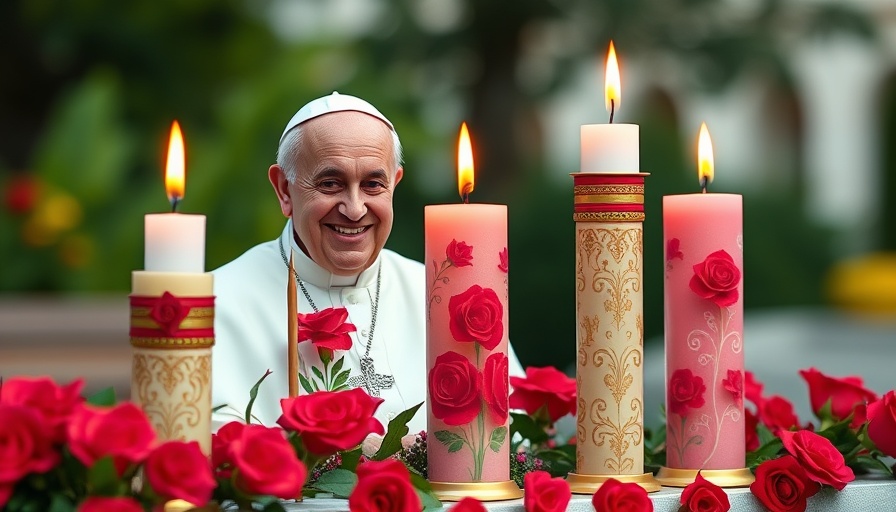
Devotional candles of Pope Francis with red roses, symbolizing justice and equality.

Pope Francis: A Legacy of Justice and Equality

As the world mourns the death of Pope Francis at the age of 88, tributes pour in from every corner of the globe, reverberating through political and social landscapes alike. Described as a relentless advocate for justice and equality, Pope Francis' death leaves a profound void that resonates especially within the context of systemic inequalities.

Political Reflections on a Papal Giant

In South Africa, political parties have swiftly acknowledged the legacy left behind by the Pope. The African National Congress (ANC), through its spokesperson, Mahlengi Bhengu-Motsiri, articulated how Pope Francis embodied compassion and challenged the status quo. His consistent call for social justice has often paralleled South Africa's own struggle against apartheid, emphasizing the importance of solidarity with the marginalized.

The Wider Impact on Global Politics

Beyond South African borders, the late pontiff was a champion of the downtrodden, directly addressing issues ranging from economic inequality to climate change. His spiritual leadership sparked conversations about 'income inequality' and 'justice reform'. Pope Francis alone urged nations to prioritize the welfare of the disadvantaged in political policies—shaping agendas for upcoming elections worldwide, including the 2024 general elections in various countries.

A Call for Unity in Crisis

Pope Francis' death comes at a crucial juncture for global politics, especially amidst rising concerns of 'state capture' and corruption. His calls for reform—including 'electoral integrity' and 'executive accountability'—echo loudly as nations grapple with disillusionment towards political processes. South Africa's coalition government debate among the ANC, the Democratic Alliance (DA), and the Economic Freedom Fighters (EFF) could find inspiration in his ideals, as they strive for a government that works for all.

Lessons from a Spiritual Leader

Pope Francis' commitment to truth and compassion also holds vital lessons for youth engagement and social reforms. He consistently highlighted pressing issues such as 'youth unemployment' and 'gender-based violence,' urging societies to create inclusive frameworks that elicit change. His legacy inspires young leaders across Africa to take up the mantle of challenging systemic injustices and advocating for 'black economic empowerment'

A Vision for Future Generations

Looking forward, Pope Francis leaves a monumental challenge for future generations—how can they seize his vision of justice and compassion? The intersection of his teachings with modern challenges shows just how much reform is needed. In the wake of his passing, calls for 'police reform', 'education reform', and 'public sector reform' should not just be hollow promises but actionable agendas that extend and cement the values he championed.

Pope Francis’ Enduring Influence

Despite the sadness of his passing, it is crucial to honor the “prophetic voice” that Pope Francis lent to our society. To carry forward his vision requires not only acknowledgment but also implementation of his teachings into our socio-political frameworks. Moving beyond mere tribute, engaging in civil society’s grassroots movements can lead to meaningful change.

As we reflect on the life of Pope Francis, let us commit to applying his lessons in our own lives—whether through advocacy, political discourse, or community engagement. In a world rife with division, the need for equality and justice remains paramount.

Religion

35 Views

0 Comments

Write A Comment

*
*
Related Posts All Posts
02.07.2026

Consecrated Life in Southern Africa: Challenges and Innovative Responses

Update Acknowledging the Evolving Landscape of Consecrated LifeIn a significant gathering held in Luanda, Angol, members of the Regional Conference of Major Superiors of Southern Africa (RCMSSA) took a bold step forward in addressing the multifaceted challenges facing consecrated life in the region. Convened under the theme "Consecrated Life United for Mission," this assembly spanned six days, concluding on February 2, 2026, where delegates engaged in deep discussions about the state of religious life amidst a rapidly changing societal backdrop.Challenges Identified: A Call for Formative RenewalOne of the pressing issues raised by the RCMSSA members was the deficiency in initial and ongoing formation for those entering religious life. There is a notable scarcity of qualified and adequately trained formators, which has a ripple effect on the efficacy of consecrated life. Additionally, concerns were voiced regarding the health and welfare of elderly members of religious communities, highlighting a broader societal reluctance to address physical and mental health concerns within these pivotal groups.Global Societal Struggles Call for Local ActionThe assembly did not shy away from pinpointing the larger societal issues that complicate its mission. Societal challenges, including poverty, corruption, and human trafficking, were underscored as critical points of concern. During the discussions, the delegates recognized the necessity of a united response to these challenges. Talitha Kum, the global network focused on combating human trafficking, has been an instrumental force in addressing these societal wounds and serves as a practical model for collaborative efforts against exploitation.Concrete Steps for Renewal: Strengthening the MissionThe RCMSSA members are not just identifying problems; they are taking steps to address them head-on. Recommendations for renewal include bolstering the integral formation of consecrated persons and ensuring that guidelines such as those outlined in "Laudato Si'" are implemented within their communities. The assembly also urged national conferences to adopt protocols for the protection of minors and vulnerable individuals, showcasing a commitment to safeguarding essential values within their congregations.New Leadership and a Unified DirectionAs part of their commitment to ongoing development, the RCMSSA saw new leadership elected, including Fr. José Joaquim Luís Pedro as President, signifying a new chapter for the organization as it moves forward. This fresh leadership brings with it a renewed emphasis on vocation promotion, self-sustainability, and strengthened community networks. The establishment of the Conference headquarters is also a significant step, ensuring that resources and support systems are centralized for greater efficacy.Looking to the Future: A Collaborative ApproachThe delegates at this gathering have made it clear: the road ahead requires collaboration and mutual support. With the understanding that their work transcends borders, they are dedicated to fostering a framework that promotes networking and exchange of experiences among various conferences and commissions across Southern Africa.Empowering Consecrated Life Through TechnologyIn a world increasingly influenced by technology, the integration of digital tools and platforms can enhance community engagement and outreach. For instance, leveraging e-learning resources can aid in the education and formation of new members, creating a robust support system for spiritual growth. Additionally, digital platforms for sharing best practices and challenges can further unify efforts across regions and established communities. As the religious community embraces this intersection of faith and technology, the potential for secular and spiritual growth becomes limitless.Call to Action: Uniting for the Mission of ImpactIn these challenging times, it’s imperative for society to rally around the missions of groups like RCMSSA and Talitha Kum, particularly as they combat serious issues such as human trafficking. The collective effort of all religious communities, aligned in purpose with societal responsibility, can lend a voice to the voiceless and bring about meaningful change.

01.22.2026

How Synodality Fuels Evangelization in Today's Digital Age

Update The Critical Synergy Between Synodality and Evangelization The Apostolic Nuncio in South Africa, Archbishop Henryk Mieczysław Jagodziński, has brought forth a vital message regarding the intertwined nature of synodality and evangelization during the Southern African Catholic Bishops’ Conference (SACBC). Noting that both elements are essential for the Church's mission, he eloquently stated, "A synodal Church that does not proclaim Christ loses its soul; a missionary Church that does not walk together risks losing communion." This perspective not only reflects the Church's internal calls to restructure authority and participation but also resonates with a broader audience searching for relevance in today's fast-paced world. Understanding Synodality Synodality, derived from the Greek word meaning 'walking together,' emphasizes listening and shared decision-making within the Church. It invites a collective journey rather than a hierarchical dictate. Archbishop Jagodziński reinforced this by stating that true authority exists not in dominance but in service. This approach reflects the church's ongoing transformation as it seeks to resonate with contemporary issues, addressing concerns from the faithful and facilitating community engagement. Cultural Responsiveness and Local Contexts Archbishop Jagodziński pointed out that a synodal approach must respect and adapt to local cultures and circumstances. This technological age challenges traditional views of authority and community life. The Church's mission can draw lessons from the business world, especially with the rise of digital transformation and organizational models that prioritize adaptability and learning over rigid structures. As industries promote agility and customer-centric practices, the Church too must mirror this spirit by fostering environments where diverse voices can be heard and valued. Inviting Young People Back to Faith The need for the Church to reconnect with youth and families is paramount. Coming from various backgrounds, the younger generation navigates a complex world filled with digital interactions and shifting social norms. By leveraging technology and fostering communities emphasized on faith and service, the Church can build genuine relationships with the youth. This idea aligns with growing trends in fields such as Edtech and digital platforms that aim to engage the younger population more effectively. Future Predictions: The Role of Technology In a world where digital environments play a crucial role in societal dynamics, integrating technology into church practices could enhance evangelization efforts. The deployment of tools like social media and mobile apps can facilitate outreach, promote community activities, and provide platforms for discussions on faith and values. The challenge lies not only in employing these tools but in ensuring they genuinely serve community formation and spiritual growth. Fostering Inclusive Dialogue Effective dialogue involves understanding diverse perspectives and experiences. This approach is particularly important when navigating cultural sensitivities in a globalized world. The emphasis on listening—which Archbishop Jagodziński underlines—fosters an environment where diverse voices enhance rather than dilute the truth sought within the Church community. Lessons from disruptive technologies and innovative sectors reveal that collaboration fosters growth and understanding, enabling communities to thrive. Conclusion: A Call to Active Participation The feedback from the SACBC's Plenary Assembly is not just limited to internal church dynamics—it represents a broader call for active participation in global conversations about faith, culture, and technology. As the digital transformation influences all aspects of life, meaningful engagement in these discussions could birth innovative strategies not only for church growth but for enhanced societal impact. Engaging with this topic is crucial for leaders across all sectors. Understanding this intersection may offer insights into fostering community, innovation, and progress within your own networks. To learn more about how leveraging technology in community contexts can enhance engagement, explore the latest trends in digital transformation.

01.18.2026

75th Anniversary Logo of Southern Africa’s Catholic Bishops: A Faith Journey

Update Unpacking a Visual Homily: Exploring the Symbolism of the 75th Anniversary Logo On January 18, 2026, the Southern African Catholic Bishops’ Conference (SACBC) introduced a remarkable logo to commemorate the 75th Anniversary of its establishment. This logo has transformed into a profound visual representation of faith, mission, and the experiences of the Catholic community across Botswana, Eswatini, and South Africa. Rather than a mere celebratory design, this anniversary emblem embodies a rich theological and cultural narrative rooted in the life of the Church. The Central Crosier: A Symbol of Pastoral Leadership At the heart of this logo is the crosier, a symbol of the pastoral authority exercised by bishops, rooted in Christ who embodies the Good Shepherd, as articulated in John 10:11. The presence of the crosier serves as a reminder of the dedication shown through decades of episcopal ministry committed to teaching, guiding, and sanctifying the faithful. In times of social and political upheaval, the crosier represents a call for authority rooted in service, illustrating the bishops' roles in responding to their congregations' burdens and hopes. Significance of the Number 75: A Call to Journey Forward Interwoven with the crosier, the number 75 signifies not just a chronological milestone but also an invitation to trust and obedience. Referencing the biblical story of Abram setting out in faith at 75 (Genesis 12:4), this element frames the Church’s journey not as a retrospective glance but as a renewed call to respond to God’s directions towards deeper synodality and sustainability. It beckons both the clergy and laity to journey together, moving forward with trust and courage. The SACBC Coat of Arms: Linking History and Mission The SACBC Coat of Arms anchors the logo, affirming the Church’s apostolic mission within the three-nation context. This emblematic shield symbolizes the safeguarding of faith and emphasizes the continuous transmission of the Gospel through generations, reminding the faithful of their deep-rooted traditions amidst contemporary challenges. People with Raised Arms: Celebrating Diversity and Unity A beautiful representation within the logo features figures with raised arms, reflecting the diversity and unity of the People of God. This imagery resonates with the vision of Lumen Gentium, emphasizing a Church that listens, walks together, and discerns in communion. The colorful representation also invokes the spirit of Pentecost, highlighting a celebratory unity formed through diverse cultures across the Southern African region. National Flags: An Embrace of Local Cultures Prominently displayed are the flags of Botswana, Eswatini, and South Africa, which contextualize the logo within local identities. These flags serve as affirmations of the Church’s incarnational presence in each nation, highlighting a long-standing commitment to dignity, justice, and peace. This inclusivity is vital, especially considering the historical contexts and contemporary challenges faced by these nations. The Boat: Navigating Through Challenges At the base of the logo is the ancient symbol of a boat, representing the Church as the Barque of Peter. This metaphor draws from Gospel narratives where Jesus guides his followers through turbulent waters, symbolizing mission, trust, and perseverance. The image assures the faithful that despite uncertainty, the Church continues its voyage, led by Christ and sustained by the Holy Spirit. A Green Future: Emphasizing Sustainability Green symbolizes life, growth, and renewal, echoing Pope Francis' call towards ecological responsibility highlighted in Laudato Si. Within the logo, this color represents a commitment not only to spiritual renewal but also to caring for creation and future generations, integrating ecological stewardship into the Church's broader mission. The Anniversary Theme: Walking Together Towards the Future “Walking Together in Faith: Towards Synodality and Sustainability” is more than just a motto; it encapsulates the essence of the 75th Anniversary. Drawing inspiration from biblical journeys, it emphasizes collective navigation of faith towards a sustainable future, bridging past experiences with modern-day challenges and aspirations. Conclusion: A Call to Renewed Commitment This logo stands as a visual homily, inviting the faithful to reflect on the past, embrace the present, and step boldly into the future. It calls on individuals and communities alike to give thanks for their history while remaining engaged in a shared mission of faith, inclusivity, and sustainability. As the SACBC celebrates three-quarters of a century, may this logo serve not only as a reminder of the past but also as a beacon of hope guiding towards a united future in faith.

Terms of Service

Privacy Policy

Core Modal Title

Sorry, no results found

You Might Find These Articles Interesting

T
Please Check Your Email
We Will Be Following Up Shortly
*
*
*