Add Row
Add Element
PR Africa: Your Gateway to Comprehensive African News and Insights
update
PR Africa
update
Add Element
  • Home
  • Categories
    • Entertainment
    • Automotive
    • Politics
    • Finance
    • Health & Fitness
    • Sports
    • Business
    • Cryptocurrency
    • Education
    • Fashion & Beauty
    • Home & Garden
    • Foreign Language News
    • Lifestyle
    • Real Estate
    • Religion
    • Science
    • Technology
    • Travel
    • News & Current Affairs
    • Crime & Safety
    • Arts & Culture
    • Environment
    • Food & Drink
    • Extra News
September 08.2025
4 Minutes Read

Nepal’s Protests Against Corruption and Social Media Ban Turn Deadly: A Wake-Up Call

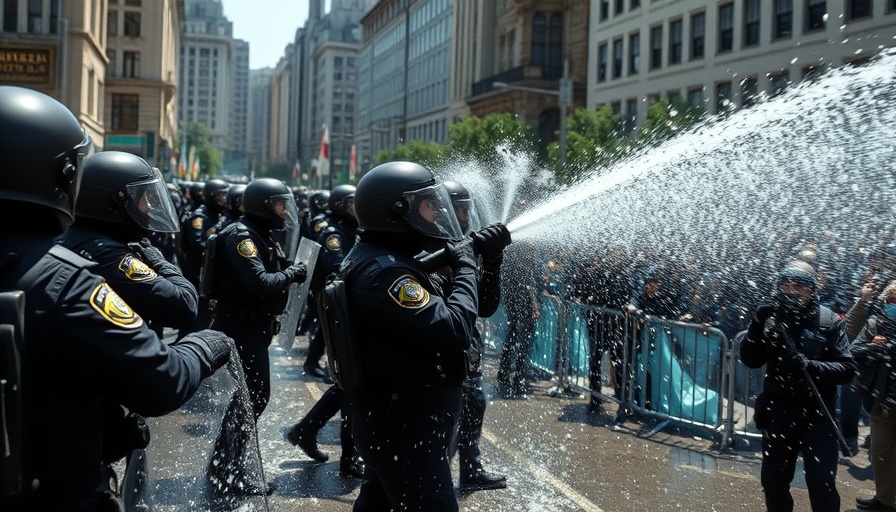
Nepal protests against corruption and social media ban captured in intense urban scene.

Unraveling the Crisis: Protests Erupt in Nepal

In a dramatic turn of events, the political landscape of Nepal has been shattered as police opened fire on protesters in Kathmandu on Monday, resulting in the tragic loss of at least 17 lives. This alarming act of violence came in the wake of widespread demonstrations against government corruption and a controversial ban on social media platforms—decisions that have ignited public outrage across the capital and beyond.

In 'Nepal police kills at least 17 people protesting corruption and social media ban', the discussion dives into the intersection of governance and civil rights, exploring key insights that sparked deeper analysis on our end.

The protests, driven predominantly by the Gen Z demographic, demonstrate a generational shift in Nepal's civic activism. Thousands of demonstrators flocked to the streets, voicing their frustration not only at the restrictive policies of their government but also at what they perceive as an increasing authoritarian grip on their freedoms.

A Catalyst for Change: Understanding the Root Causes

The unrest began as the Nepalese government enacted measures to ban major social media platforms such as Facebook, X, and YouTube, citing a lack of registration and accountability to local laws. However, this explanation has fallen flat for many citizens who interpret it as an attempt to suppress dissent and avoid scrutiny over pervasive corruption. The government's decision to silence voices of dissent amid economic grievances only serves to exacerbate feelings of discontent.

Corruption in Nepal has long been a thorny issue. According to numerous reports, it hampers economic growth, undermines public trust, and affects service delivery in various sectors. This backdrop has provided fertile ground for the current protests, illustrating the frustrations brewing beneath the surface in a nation seeking accountability.

The Human Cost: Lives and Injuries

The violence unleashed by the police on protesters has drawn condemnation both locally and internationally. Eyewitness accounts describe scenes of chaos and horror, with many demonstrators reportedly shot in critical areas such as the head and chest. Medical professionals at the National Trauma Center confirmed that more than 145 people have sustained injuries, highlighting the severe human cost of this political showdown.

Physicians treating the wounded have stated that many injuries are consistent with high-velocity impacts, indicating the potential use of live ammunition. Such confrontations raise essential questions regarding the use of force in policing, especially in the context of public demonstrations.

The Role of Technology: A Double-edged Sword

As protesters chant slogans like "stop corruption, not social media," it becomes clear that technology plays a crucial role in shaping modern activism. While the government’s ban on social media may have been intended to obstruct communication among activists, it has also galvanized them. Social media platforms have historically provided a space for organizing and voicing dissent, leading many to challenge government authority in unprecedented ways.

However, in imposing such bans, authorities risk isolating themselves further from the populace, pushing citizens to seek alternative means of expression and engagement while potentially stoking further unrest.

Global Perspectives and Implications

The events in Nepal resonate with a broader narrative across similar global movements where governments have enacted restrictive measures in response to civil unrest. The use of force against protesters, especially during epochs of digital communication, illustrates the complex dynamics at play as individuals navigate their rights within modern governance frameworks.

As news of these protests and their violent turn circulates on platforms like Africanews and other international outlets, it becomes essential to recognize the interplay between local action and global discourse on human rights and governance.

What’s Next for Nepal?

The situation in Nepal remains tenuous, with the government subsequently declaring a curfew around key administrative areas, signaling a further escalation of tensions. As smaller protests continue to emerge, the question arises: what solutions lie ahead for a nation deeply divided over trust in its leadership?

The country’s youth, possessing greater access to digital tools and global information, may become the catalysts for a renewed push toward accountability and transparency. Engaging in democratic processes and voicing their needs could be critical in shaping the future of Nepal, ensuring that such tragedies are not repeated in the weeks and months to come.

Conclusion: The Call for Accountability

The fundamental challenge remains for the Nepalese government and its police forces to reassess their approach to public dissent and prioritize accountability over repression. Citizens should be allowed to voice their concerns without the fear of violence; only then can genuine progress toward a more transparent and less corrupt state be achieved.

As observers of this ongoing situation, we urge the global community and those interested in African current events to pay close attention to events in Nepal and support movements advocating for justice, transparency, and human dignity. The situation serves as a powerful reminder of the responsibilities that come with governance and the fundamental rights of individuals under any regime.

Politics

12 Views

0 Comments

Write A Comment

*
*
Related Posts All Posts
11.09.2025

How India and Angola's Cooperation Aims to Foster Peace and Stability in Africa

Update India's Vision for Peace in Africa During a recent state visit to Angola, President Droupadi Murmu articulately expressed India’s commitment to fostering peace, security, and stability across Africa. In her discussions with Angolan President João Manuel Goncalves Lourenco, President Murmu emphasized the shared goals between India and Angola, focusing on dialogue and peaceful conflict resolution as vital strategies. Strengthening Bilateral Cooperation To bolster their longstanding ties, India and Angola exchanged several Memorandums of Understanding (MOUs) aimed at enhancing collaboration in sectors such as fisheries, aquaculture, and marine resources. This not only reflects the depth of bilateral relations but also India’s strategic interests in securing resources and maintaining stability in the region. Shared Global Perspectives Murmu highlighted the alignment of both nations in key international forums, particularly within the United Nations. This mutual support underscores the importance of collective action against shared challenges, including the need for significant reforms in multilateral institutions to better reflect the current geopolitical landscape. The discussion around reforming the UN Security Council was pivotal, as both leaders identified it as essential for enhancing global governance effectiveness. The Road Ahead for India-Angola Relations As both countries move forward, the importance of sustaining a robust partnership is paramount, particularly in emerging areas such as technology and renewable energy. The agreements made during this visit indicate a commitment to diversifying economic ties and ensuring that cooperation extends to vital sectors like health and defense. Why This Matters to Global Executives For business leaders and decision-makers, understanding the implications of India and Angola’s partnership is crucial. As international dynamics shift, having an awareness of these bilateral agreements can aid in making informed decisions regarding trade and investment opportunities within the African continent. Collaboration in technological innovation, especially in areas like Fintech and renewable energy, may present lucrative avenues for corporate and economic growth. Conclusion: A Call to Action for Leaders As the global business landscape evolves, leaders must recognize the significance of fostering diplomatic relations that contribute to stability and economic prosperity across regions. Engaging in sectors identified for mutual growth not only benefits involved nations but also enhances the broader global economy. Encouraging dialogue and partnerships that prioritize sustainability and innovation is essential for future success.

11.08.2025

In South Africa, Political Corruption Leads to Targeted Attacks on Investigators

Update High-Profile Attacks Highlight Dangers Facing Corruption InvestigatorsThe recent kidnapping and brutal attack on Matthews Sesoko, head investigator of South Africa's Investigating Directorate Against Corruption (IDAC), has struck a nerve across the nation. Sesoko was forcefully taken from his vehicle, shot at, beaten, and robbed of sensitive technology including a state-issued laptop and cellphone. This attack is symptomatic of alarming trends concerning the safety of officials engaged in high-stakes corruption investigations. The Context: Escalating Violence Allowing Corruption to BreedTo fully grasp the implications of this incident, one must recognize the broader context of political violence and corruption in South Africa. With ongoing discussions surrounding state capture and political accountability, these violent acts threaten to undermine the integrity of investigation efforts. Only two days prior to Sesoko's attack, IDAC head Andrea Johnson articulated the threats directed at officials undertaking critical prosecutions, highlighting an intensifying climate of fear. The Role of IDAC in South African PoliticsEstablished to combat corruption, IDAC plays a pivotal role in South African politics, especially amidst ongoing issues with governance and service delivery. Their work is crucial in holding individuals in power accountable. However, each attack on an investigator not only derails specific corruption cases but also sends a broader message of intimidation against those challenging the status quo. Corruption in the Light of National ElectionsAs South Africa approaches the national elections, the fallout from this incident resonates deeply within the political landscape. Parties like the ANC, the DA, and the EFF are closely scrutinizing each other's records on corruption, while tensions rise among voters, leading to severe questions about government policies and the integrity of public officials. The impact of corruption on economic recovery efforts remains significant, and incidents like these only exacerbate public disillusionment. The Push for Reform amid Rising Crime StatisticsSeductive politics coupled with the chaos borne from systemic corruption threaten economic recovery in South Africa, as citizens face repercussions such as unemployment rates and underfunded public services. What remains alarming is the direct correlation between rising crime statistics and the often ineffective response from government agencies. As IDAC grapples with issues of intimidation and attacks on its personnel, the need for restructuring safety protocols for investigators is more pressing than ever. Bracing for Future Challenges: A Call for Protective MeasuresEnsuring the safety of investigators like Sesoko is paramount if progress is to be made in holding corrupt individuals accountable. The police's investigative efforts into this incident, while necessary, must be complemented by systematic reforms to protect officials in the field. This includes revisiting law enforcement practices and enhancing support structures for whistleblowers and corruption investigators. Conclusion: The Fight Against Corruption Must ContinueAs South Africans reflect on the attack on Matthews Sesoko, a deeper understanding of the systemic corruption within their government must emerge. The incident not only highlights individual risks faced by investigators but also unearths the fragility of political accountability in the current climate. A unified effort is essential—voting for reform-minded leaders, supporting anti-corruption initiatives, and prioritizing safety measures for those tackling corruption can be a starting point for genuine change.

11.07.2025

Examining Police Reform: The Blue Light Saga and Accountability Challenges

Update The Allegations Face Behind Blue Lights: A Look at the Madlanga Commission The recent testimony given by Ekurhuleni Metro Police Department (EMPD) Chief Jabulani Mapiyeye exposes significant issues of accountability within South Africa's law enforcement, especially concerning the so-called blue light saga. During the Madlanga Commission of Inquiry, which took place in Pretoria, Mapiyeye revealed that of seven ongoing investigations, progress was only noted in the blue light incident, which reportedly involved serious allegations of corruption and misuse of power. Insights into Police Accountability and Internal Corruption Police accountability has been a topic of intense debate in South Africa, particularly in the context of the Government of National Unity (GNU) and its efforts to address corruption within state institutions. The testimony from Mapiyeye sheds light on systematic failures within the EMPD, where Mapiyeye claims that some officers have been reinstated despite serious allegations of corruption, including kidnapping and extortion, which directly threatens community safety and trust in law enforcement. Such cases underscore the critical need for comprehensive anti-corruption measures and proper oversight mechanisms within the police force. Blue Light Saga: A Warning for Future Elections As South Africa approaches the 2024 general elections, this scandal offers a stark warning that electoral reforms are essential. Analysts suggest that the public's voter turnout may pivot significantly if issues of police integrity and safety are not resolved. Mapiyeye highlighted the troubling reality that allegations against officers may become potent campaign fodder for opposition parties like the Democratic Alliance (DA) and the African National Congress (ANC), which could exploit public sentiment to call for further public sector reform. Political Realignment and Public Perception The fallout from the blue light saga has implications beyond police reform; it may contribute to a significant political realignment in the upcoming elections. With parties such as the Economic Freedom Fighters (EFF) and splinters from the ANC capitalizing on sentiments around service delivery and safety, the portrayal of police corruption could sway public opinion and alter political landscapes. The blue light scandal features prominently in discussions about integrity, public service, and governance, compelling citizens to reevaluate their loyalty to existing political parties. Makhwanazi’s Controversial Rise: The Deputy Chief’s Alleged Misconduct At the center of Mapiyeye’s testimony lies the figure of his deputy, Julius Mkhwanazi, whose controversial ascension to the rank of deputy chief of police raises red flags. Mapiyeye recounted that Mkhwanazi was appointed despite the panel’s recommendations against it, suggesting breaches of protocol that could reflect wider issues within employee management and that hint at political interference, especially amidst murmurs of Mkhwanazi's alleged connections with nefarious figures like suspected cartel member, Vusimuzi 'Cat' Matlala. This points to deeper questions of leadership integrity and trust within the department. What Lies Ahead: Future of Police Reforms and Community Safety Looking forward, the Madlanga Commission’s findings could lead to pivotal changes in how police departments operate, pushing for greater transparency and accountability. The call for reform extends into the realm of police training, vetting, and public engagement, emphasizing the need for programs aimed at enhancing community relations in a climate where trust is eroded. Ongoing discussions around police empowerment in line with constitutional amendments will be essential, particularly in the context of addressing issues like gender-based violence and the broader crime prevention strategies. Overall, without decisive action, the EMPD could further lose legitimacy among the communities it serves. Conclusion: The Importance of Holding Authorities Accountable This saga exemplifies the urgent need for effective police accountability measures in South Africa to safeguard public interests and reinforce confidence in law enforcement. As we await further testimony from key witnesses in the commission, it is incumbent upon citizens, lawmakers, and activists alike to push for robust investigations that will ultimately expose and eradicate corruption within the forces tasked with protecting them.

Terms of Service

Privacy Policy

Core Modal Title

Sorry, no results found

You Might Find These Articles Interesting

T
Please Check Your Email
We Will Be Following Up Shortly
*
*
*