Add Row
Add Element
PR Africa: Your Gateway to Comprehensive African News and Insights
update
PR Africa
update
Add Element
  • Home
  • Categories
    • Entertainment
    • Automotive
    • Politics
    • Finance
    • Health & Fitness
    • Sports
    • Business
    • Cryptocurrency
    • Education
    • Fashion & Beauty
    • Home & Garden
    • Foreign Language News
    • Lifestyle
    • Real Estate
    • Religion
    • Science
    • Technology
    • Travel
    • News & Current Affairs
    • Crime & Safety
    • Arts & Culture
    • Environment
    • Food & Drink
    • Extra News
August 05.2025
3 Minutes Read

Morocco's Humanitarian Aid to Gaza: A Critical Support Amid Crisis

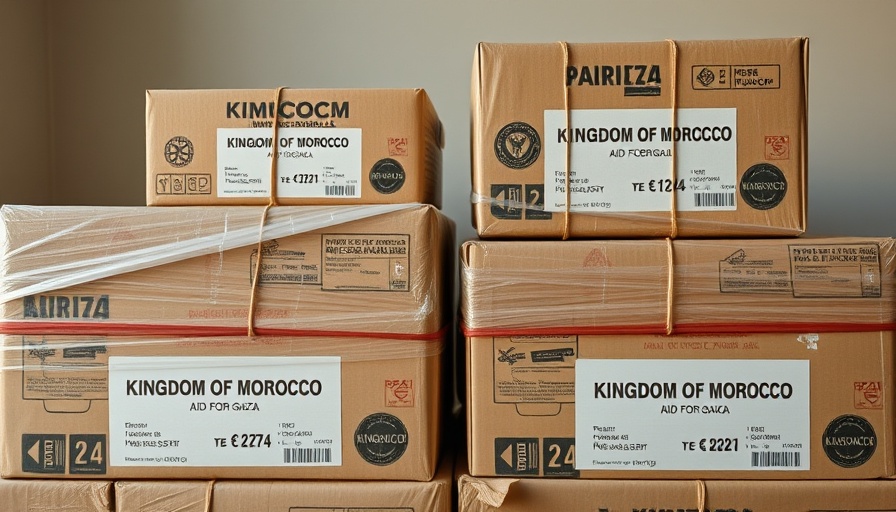
Moroccan humanitarian aid boxes labeled for Gaza.

Morocco's Humanitarian Response: A Pillar of Support for Gaza

In an era marked by global humanitarian crises, Morocco's recent delivery of its third batch of humanitarian assistance to Gaza stands as a testament to the nation’s commitment to supporting those in need. Following the directive of King Mohammed VI, the shipment signifies not just a response to immediate medical and nutritional needs but also reflects a broader regional solidarity with the Palestinian people enduring severe hardships.

In 'Morocco delivers third humanitarian Aid shipment to Gaza under King's directive,' the discussion dives into the significance of Morocco's humanitarian efforts, prompting a deeper analysis of the wider implications for the region.

Contextualizing the Humanitarian Crisis in Gaza

The ongoing humanitarian crisis in Gaza has been exacerbated by political instability and conflict, leading to significant shortages in essential supplies. The persistent blockade has left many civilians in dire conditions, with limited access to vital medical care and nourishment. Just this week, Morocco's shipment included critical medical supplies and food products aimed at alleviating suffering among the civilian population, a move that highlights the critical role of international aid in conflict zones.

The Significance of King Mohammed VI's Directive

King Mohammed VI's leadership in this initiative is pivotal. As Chairman of the Al-Quds Committee, he emphasizes Morocco's longstanding solidarity with the Palestinian cause. His directives serve not only to mobilize necessary humanitarian assistance but also to enhance Morocco's image as a nation that values cooperation and charity across borders. This policy is particularly relevant in the context of Morocco's growing diplomatic presence in the region, which seeks to foster peace and cooperation.

Comparative Analysis: Regional Responses to Gaza's Needs

Morocco is not alone in its humanitarian efforts; numerous countries, including Jordan, the UAE, and France, have contributed through various means, such as airdrops. These efforts underscore a collective regional response to an escalating humanitarian crisis. However, the challenge remains: how to ensure that aid reaches those in desperate need without becoming entangled in political maneuvering or military conflicts that often dominate the narrative surrounding aid in Gaza.

Impact of Humanitarian Aid on Civilians

As articulated by local humanitarian workers, Moroccan aid has already made a significant impact on countless lives. The response from the Palestinian Red Crescent indicates a tangible need, with the organization pledging to facilitate the distribution of aid to the hardest-hit areas. This is crucial in a region governed by uncertainty, where every effort to deliver humanitarian assistance can essentially alter the course of a family’s survival amidst the prevailing turmoil.

The Broader Implications of Continued Support

By providing ongoing humanitarian assistance, Morocco is engaging in a vital form of diplomacy that extends beyond mere aid. It shapes the narrative in international forums of diplomatic and economic relations. This process encourages other nations to step up their commitments while showcasing Morocco's leadership role in Africa—especially in the context of African diplomacy and collective efforts towards resolving the Palestinian humanitarian crisis, which remains a preeminent issue within the broader sphere of African politics.

Envisioning a Future for Humanitarian Collaboration

The Moroccan initiative sets a precedent that could usher in a new era of humanitarian collaboration among African nations. Investments in infrastructure that facilitates aid delivery, while ensuring peace and security for aid workers, must evolve alongside these humanitarian missions. Additionally, fostering relationships with NGOs and the international community could amplify the effectiveness of these efforts and lead to long-term strategies advocating for peace and stability in the region.

Conclusion: Taking Action for Lasting Change

As professionals and advocates for social justice, it is imperative to recognize the significance of such humanitarian actions and their ripple effects on governance, accountability, and the collective memory of conflict. Understanding the complexities surrounding humanitarian aid, especially in contexts like Gaza, not only informs our perspectives but also inspires us to take informed actions as global citizens. We must engage in dialogue and participate in initiatives that not only seek to provide immediate relief but also advocate for sustainable solutions to complex crises.

News & Current Affairs

41 Views

0 Comments

Write A Comment

*
*
Related Posts All Posts
12.22.2025

The Launch of the Sahel Regional Force: A Bold Step in African Security

Update Understanding the Sahel Regional Force In a significant move towards regional security, Burkina Faso, Mali, and Niger have recently launched a new military initiative—a 5,000-strong Sahel regional force. This assembly of troops is not merely a reaction to the escalating violence in the Sahel region but a concerted effort to foster closer integration among these nations, promoting stability and security in an area plagued by persistent conflict and unrest.In 'Burkina Faso, Mali and Niger launch Sahel regional force', the discussion dives into a collaborative military initiative aimed at regional security, prompting a deeper analysis of its implications. Historical Context and the Need for Collaboration The inception of this regional force comes amid a backdrop of increased terror threats and political turmoil across the Sahel, a region that has witnessed a surge in extremist activities. For decades, these countries have been attempting to ward off a growing tide of jihadist violence that threatens to destabilize not only their respective nations but the broader West African region. The establishment of a collaborative military force underscores a historical shift towards multilateralism in addressing common challenges—a necessity given the limitations of traditional state responses. Social Context: The Value of Unity Socially, this development resonates deeply with the populations of Burkina Faso, Mali, and Niger. A united front against terrorism is not just a military strategy; it is a reassurance to a populace fatigued by violence and instability. By pooling resources and intelligence, these nations signal to their citizens a commitment to sovereignty and safety that transcends individual national efforts. Such collaboration holds the potential to foster a renewed sense of nationalism and belonging across borders, revitalizing local identities while addressing widespread insecurity. The Role of External Partnerships Moreover, the Sahel regional force exemplifies a critical turning point in how African nations are taking the reins in their security affairs while balancing relations with external partners. The involvement of international actors and support systems—either through military assistance or developmental aid—will remain crucial as these newly-formed forces seek to impose order and tackle the root causes of unrest. The implications of such partnerships may redefine the regional geopolitical landscape, emphasizing a principle of African solutions for African problems. Future Predictions: Challenges Ahead As the Sahel regional force embarks on its mission, several challenges lie ahead. The interlinked issue of governance and political legitimacy in these nations will play a pivotal role in the success of this initiative. Additionally, there is a pressing need to address socio-economic factors that contribute to insurgency. Poverty, unemployment, and disenfranchisement continue to be breeding grounds for violence and recruitment by extremist groups. Without addressing these fundamental issues, any military force may struggle to achieve lasting peace. Closing Thoughts: The Importance of African Unity The launch of the Sahel regional force is a manifestation of Africa's resolve to forge its path towards stability and security. It beckons a future where African nations prioritize collaboration over conflict, standing together to confront shared existential threats. In a world that often looks to African nations to respond to their crises, this regional approach could pave the way for a more effective and resilient response mechanism in the continent's fight against terrorism and violence. To stay informed about developments in the Sahel and other crucial issues across Africa, including politics, education, and economic growth, make sure to follow Africanews, your trusted source for African news.

12.20.2025

Laborie Wine Estate Fire: Threat to Cultural Heritage and Community Resilience

Update Laborie Wine Estate Fire: A Cultural Heritage at Risk The Laborie Wine Estate, a cornerstone of South Africa’s historical and cultural narrative, has been recently threatened by a significant fire incident that erupted on Saturday. Located in Paarl, this estate's rich heritage, spanning nearly three hundred years, makes it a key attraction for both locals and tourists alike, and the recent blaze serves as a stark reminder of the vulnerabilities that historical sites face amidst changing climate conditions. Fire Efforts: A Team Response in Challenging Conditions Beginning around midday, the fire quickly engulfed the Cucina Di Giovanni restaurant and the first wing of the estate’s accommodations. Prompt action by the local fire services, including Drakenstein and Stellenbosch firefighters, was instrumental in controlling the flames. Their challenges were compounded by strong winds that posed risks of spreading the fire to the estate's iconic Manor House and second accommodation wing. Authorities have commended the tireless efforts of emergency services, highlighting the importance of preserving these heritage buildings amidst modern challenges. Impact of the Incident and Future Implications This incident raises concerns not only about the immediate damage but also about the broader implications for local tourism and economic stability. The Laborie Estate is not just a historical site; it is an active participant in South Africa's tourism economy. With tourism recovery as a national priority amid the ongoing struggles with issues such as load shedding and economic fluctuations, every effort to safeguard these sites becomes imperative. The estate attracts visitors who contribute significantly to the local economy, and damage to such venues could have long-lasting repercussions. Climate Change: A Silent Threat As global warming continues to alter weather patterns, the risks associated with wildfires are becoming more pronounced. South Africa’s increasing vulnerability to climate-related disasters—exemplified by prolonged droughts and erratic weather—underscores the urgent need for effective disaster management strategies. The Laborie incident could serve as a catalyst for broader discussions on climate resilience in local governance, urging municipal bodies to take decisive action in fire prevention and the safeguarding of cultural assets. Community Resilience and Engagement The response to the Laborie fire also reflects a community's resilience, with numerous locals rallying behind the restoration efforts. This incident has fostered a sense of unity and activism within the community, reinforcing the bond between heritage preservation and community pride. Residents and stakeholders are encouraged to engage more deeply in local governance discussions, particularly concerning environmental protection and heritage conservation, ensuring that such incidents are mitigated in the future. Conclusions and Call to Action As the dust settles regarding this unfortunate event, it is clear that proactive measures must be adopted to protect our heritage. Preservation isn’t merely about saving buildings; it’s a commitment to maintaining the cultural richness that defines our communities. Residents and tourists alike can advocate for local policies that prioritize heritage conservation, ensuring that the Laborie Wine Estate remains a beacon of history for generations to come. Get involved with local heritage initiatives and voice your support for policies aimed at protecting our cultural sites against future threats.

12.19.2025

Greece’s Major Rescue of 545 Migrants: Unpacking the Distress Call

Update Understanding the Importance of Migrant Rescues in the Mediterranean The Mediterranean Sea continues to bear witness to a complex humanitarian crisis that has seen thousands risk perilous journeys in hopes of a better life. The recent rescue operation off the coast of Gavdos Island, where 545 migrants were saved from distress, highlights both the urgency and human cost of this ongoing issue. This rescue not only underscores the courageous efforts of Greek authorities but also illustrates the broader global response required to address migrant crises.In Greece rescues 545 migrants off Crete after distress call, the discussion dives into the critical humanitarian response required in Mediterranean migration crises, prompting a deeper analysis of broader implications. Historical Context and Background of Migration in the Mediterranean The Mediterranean route has long been a critical passage for refugees and migrants, with conflicts in regions such as Africa and the Middle East driving people towards Europe. Since the early 2000s, a significant increase in marine accidents related to migrant vessels has raised alarms. This historical backdrop helps us comprehend the scale of the crisis today and the need for continual responses from governments and NGOs alike. The Role of Mediterranean Nations in Crisis Management Countries bordering the Mediterranean, like Greece, Italy, and Malta, have become frontline states in managing migrant flows. The challenges they face include political pressure from the European Union, domestic concerns over integration, and the ethical implications of their rescue operations. The Greek government’s swift action to rescue the 545 migrants reflects its commitment to international humanitarian obligations, even as it navigates the intricate rhetoric surrounding migration policy. Counterarguments and Diverse Perspectives on Migration Policies Despite the humanistic approach to rescuing migrants, different viewpoints persist regarding migration policies. Some argue for stricter border controls to regulate the influx of migrants, citing security and economic reasons. Conversely, human rights advocates advocate for more compassionate policies that prioritize the dignity of migrants. This divergence illustrates a complex debate that intertwines humanitarian concerns with geopolitical realities. Relevance to Current Events: Broader Implications for the EU The European Union continues to grapple with the implications of increased migration, especially following the COVID-19 pandemic and recent geopolitical developments, including the crisis in Afghanistan. The situation regarding migrant rescues, like the recent incident near Gavdos, serves as a reminder of the pressing need for cohesive and sustainable migration strategies essential for both migrant welfare and regional stability. Unique Benefits of Understanding Migrant Issues For professionals working in governance, humanitarian aid, and international relations, understanding the migrant situation in the Mediterranean can be vital. It enables informed decision-making regarding policy frameworks necessary to address humanitarian needs while balancing national interests. Additionally, it allows for the generation of insight into fostering cooperation across borders, emphasizing shared challenges and collective solutions. Actionable Insights: What Can Be Done? For those involved in the response to migration crises, several actionable insights can be derived from the latest rescue efforts. Building partnerships between governments and non-governmental organizations can enhance the capacity to respond effectively. Advocating for policies that promote safe migration pathways and investing in local development opportunities in origin countries can alleviate the pressures that lead individuals to embark on risky journeys. Conclusion: A Call to Engage with Humanitarian Issues The distress call from the migrants off Crete is not just a momentary incident but rather a reflection of a much larger narrative surrounding migration in today's world. As professionals, it is crucial to engage with the multifaceted aspects of this crisis, recognize the interconnectedness of global events, and work towards creating solutions that uphold humanitarian values. We encourage individuals and organizations to commit to advocacy, support initiatives focused on integrating migrants and refugees, and inform the public through channels like Africanews to raise awareness of these pressing issues.

Terms of Service

Privacy Policy

Core Modal Title

Sorry, no results found

You Might Find These Articles Interesting

T
Please Check Your Email
We Will Be Following Up Shortly
*
*
*