Add Row
Add Element
PR Africa: Your Gateway to Comprehensive African News and Insights
update
PR Africa
update
Add Element
  • Home
  • Categories
    • Entertainment
    • Automotive
    • Politics
    • Finance
    • Health & Fitness
    • Sports
    • Business
    • Cryptocurrency
    • Education
    • Fashion & Beauty
    • Home & Garden
    • Foreign Language News
    • Lifestyle
    • Real Estate
    • Religion
    • Science
    • Technology
    • Travel
    • News & Current Affairs
    • Crime & Safety
    • Arts & Culture
    • Environment
    • Food & Drink
    • Extra News
March 19.2025
4 Minutes Read

Mamelodi Sundowns New Mission: Cardoso's Quest for Greatness

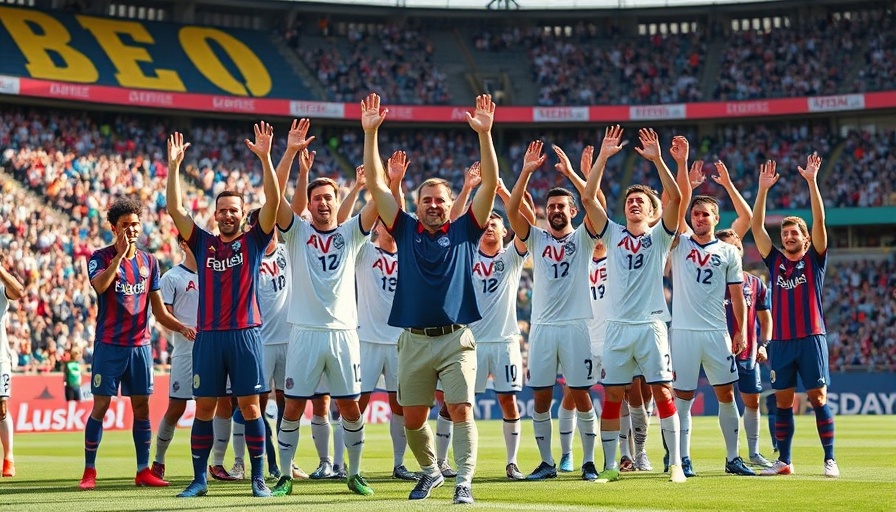
Mamelodi Sundowns new mission celebrated by team on field.

Charting New Paths: Miguel Cardoso’s Vision for Mamelodi Sundowns

The appointment of Miguel Cardoso as the head coach of Mamelodi Sundowns marks a significant pivot point for the club, historically known for its high-profile coaches yet arguably struggling to break through the glass ceiling of African football success. Hiring a European tactician is not new for the club, but Cardoso's task is daunting: restore faith in the Sundowns after the unexpected ousting of Manqoba Mngqithi following a rocky start to the season.

Sundowns’ High Expectations: The Legacy of Winning

He arrives amid the weighty expectations of a club that is accustomed to victory—aiming for an eighth consecutive league title and further glory in the continental sphere. Remarkably, the pressure insiders feel is more acute given that elements which previously propelled the club, like the successful era under Pitso Mosimane, have set high standards. Cardoso faces the test of proving he can accomplish what many European coaches before him could not since the club's ownership transitioned to the Motsepe family in 2004. Given the history, the fight against this legacy is perhaps more formidable than any opposing team.

Overcoming History: A Shift in Mentality

“I didn’t know that,” stated Cardoso when reminded of the stark reminder that no European coach has prospered in the club's history. His fresh off the heels of being released from Esperance despite winning the Tunisian league, Cardoso sees this opportunity as pivotal. “We should think forward and not stay attached to what happened behind us,” he insisted, highlighting a necessity for the team to visualize success and transform the current narrative. In his view, winning is about collective effort and shared visions rather than lingering in a comfort zone of past achievements.

Building Team Dynamics: Establishing Trust and Collaboration

Cardoso's philosophy relies heavily on creating a synergistic environment where each player's contribution is valued and focused towards a common goal. His call for teamwork is strategic; he emphasizes the importance of aligning personal ambitions for the sake of the group objectives. “I want to work day-by-day to make sure we achieve our best,” he articulated, emphasizing the daily grind required to reclaim Sundowns' premier status both locally and in Africa.

Looking Ahead: Challenges and Opportunities

Sundowns are set for a strong challenge in the CAF Champions League, and Cardoso understands what is at stake. His people strategy includes uncompromising preparation and harnessing a newfound drive in the squad to conquer continental rivals like AS FAR and Raja Casablanca. The road ahead necessitates securing strategic wins to elevate the team’s position in the group stage, but there’s more on the horizon. The possibility of showcasing Sundowns at the 2025 FIFA Club World Cup further amplifies the stakes this season, and Cardoso aims to lead the team to not just regional dominance but to international respect.

Lessons from the Past: Key Trends in Coaching Philosophy

Using the past as a compass rather than a crutch will be vital for Cardoso. Some of soccer’s most respected coaches come into positions with the backdrop of previous failures from their predecessors, learning from them rather than allowing history to repeat itself. “I think I want to work day-by-day to make sure we achieve our best,” he reiterated, hinting that sustained effort will be essential not just for the current season, but for establishing a new era at Sundowns.

Cultural Significance: What Mamelodi Sundowns Means to Fans

The emotional investment from fans at Loftus Stadium underscores the importance of this venture. The passionate support from over 30,000 fans cannot be underestimated; it’s a trust and bond transcending mere results. The connection fans feel towards their team serves as a source of power, something that Cardoso must harness—turning palpable excitement into performance on the pitch.

Celebrating the Journey: Aiming for Glory Together

As Mamelodi Sundowns face their competition, Cardoso's focus on growth and his forward-thinking mindset is inspiring. Melding dreams with strategic action inspires his players, proving that even with rich history, moments of aspirations can revolutionize what lies ahead. As he steps into his role, the community watches closely, anticipating a resurgence of pride and profit. With Cardoso at the helm, it’s about transforming aspirations into achievements—together.

For fans and supporters, embracing the journey together with this new leader constructs a hopeful narrative for Sundowns. The 2025 season is about to unfold, with plenty of promise on the horizon. So tune in to the African Champions League and witness history in the making!

Sports

16 Views

0 Comments

Write A Comment

*
*
Related Posts All Posts
02.06.2026

How Galthié’s Leadership Elevates France's World Cup Journey

Update France’s Rugby Stars Shine: The Galthié Effect In the midst of the Rugby World Cup excitement, French coach Fabien Galthié is a name on every fan's lips as he orchestrates an attacking display that's as dazzling as it is strategic. Under his guidance, France has transformed into one of the tournament's frontrunners, showcasing not just talent on an individual level but a cohesive and thrilling style of rugby that is already making waves. Speed and Precision: The Backbone of France's Game Galthié's philosophy revolves around speed—his team’s agility is backed by impressive statistics. The French side boasts a staggering 30% of their rucks being completed in under two seconds during the Six Nations, highlighting their ability to maintain momentum and pressure on the opposition. France knows that in the high-stakes environment of World Cup games, every second counts. Furthermore, the team excels in offloading, with a remarkable propensity to distribute the ball quickly – an impressive skill that lets them keep defenders guessing and allows continuity within their plays. This dynamic approach was evident during their recent game against England where quick offloads led to a beautifully executed try. Such strategies underscore the essence of Galthié’s vision: a game centered on quick-thinking and execution. Physicality Meets Tactics: Balance in Attack However, it’s not all about speed. France combines their rapid play with an element of pragmatism. As Galthié himself notes, they aim to create "small fires" around the ball, ensuring that support players are always ready to capitalize on opportunities. This blend of quick movement and disciplined, physical play sets them apart from other teams. Handling pressure is also key; they demonstrate superior kicking tactics, often forcing opponents deep into their half. Unlike many international teams, France targets the backfield, leveraging their kicks to regain possession or shift momentum, which can be pivotal as they advance through the tournament stages. Learning from the Best: Insights from Other Teams As the Rugby World Cup unfolds, it's fascinating to observe how France aligns its strategy with the overall landscape of rugby. Teams like South Africa and New Zealand have also laid down their game plans, which focus on physical dominance and tactical discipline. This shows that while flair is essential, victory lies in execution and control. For instance, South Africa’s overwhelming display against Romania underscores how effective a strong physical game can be. But let’s not overlook the artistry involved—rugby is a game where tactical lirism must coexist with brute strength. As highlighted in various analyses, Galthié’s France is poised not just to compete but to synthesize these elements into championship potential. What Lies Ahead: Predictions for France's World Cup Journey As France embarks on the knockout phase of the tournament, the landscape is rife with potential challenges. Their upcoming matches against formidable teams will test their strategy's fluidity. Despite losing a key player like Romain Ntamack, Galthié's men are equipped with depth and skill that make them serious contenders for the title. With their unique blend of speed, physicality, and tactical sophistication, France appears ready to light up the World Cup stage. This is a team that could very well break the Northern Hemisphere's long-standing drought in securing the Rugby World Cup championship. The Journey Continues: Engage with the Excitement The heart of rugby also lies in its community. Whether you're an athlete, a diehard fan, or someone interested in sports culture, the upcoming matches promise intense competition and standout performances. Let's stay tuned to how France navigates this high-octane environment as the Rugby World Cup progresses. Will they shine bright enough to capture the coveted trophy? Keep following their journey!

02.06.2026

Bafana Bafana vs Panama: Key Friendlies Ahead of the Upcoming World Cup

Update All Eyes on Bafana Bafana in March Friendlies Against Panama The South African Football Association (SAFA) has recently announced an exciting opportunity for fans and athletes alike, as Bafana Bafana, South Africa's national football team, prepares to face Panama in two international friendly matches this March. Scheduled to take place from the 27th to the 31st, the games will serve as crucial preparation for the much-anticipated 2026 FIFA World Cup. The Importance of International Friendlies These friendlies are not just matches; they are stepping stones towards the global stage. Under the guidance of head coach Hugo Broos, Bafana Bafana aims to sharpen their skills against a strong opponent in Panama, currently ranked 33rd in the world. This challenge is vital as the team seeks to adapt to the competitive nature they will face in their World Cup group, which includes heavyweights like Mexico and South Korea. Strategic Preparation for a Global Tournament As the FIFA World Cup approaches, having a well-rounded preparatory strategy will be essential for Bafana Bafana. The South African team, which celebrates its rich footballing history and passionate fan base, will benefit greatly from these competitive matches that mirror the intensity they will face in their group stages. “The matches against Panama will provide high-quality opposition and tactical challenges,” said a representative from SAFA. It’s also an opportunity for fans to support the team as they gear up for a significant moment in their football journey. What Does This Mean for the Players? For athletes like Percy Tau and Thembi Kgatlana, these friendlies are a chance to showcase their abilities and potentially secure their places in the squad for the World Cup. Each game provides an arena to exhibit skills, work on team dynamics, and build chemistry, crucial elements for success on an international level. Connecting with Fans: The Emotional Aspect The excitement surrounding these upcoming games can’t be understated. Football is more than just a sport in South Africa; it’s a cultural cornerstone that unites fans. The matches will not only strengthen the team’s preparation but also deepen the connection with fans who are longing for a strong performance on the global stage. Looking Ahead: The Path to the World Cup With the World Cup set to take place in the United States, Canada, and Mexico from June 11 to July 19, Bafana Bafana’s matches against Panama are a pivotal part of their strategy. Every minute played in these friendlies counts as they aim to exceed expectations in a tough group. The fanfare leading up to these games adds an emotional layer, showcasing the collective hopes of a nation eager to make a mark on the world stage. Engaging with the South African Sporting Community As we await further details on match venues and ticketing from SAFA, the excitement is growing. Sports enthusiasts are encouraged to stay connected with updates, not just for Bafana Bafana but for the broader South African sports scene, which includes icons from rugby, cricket, and athletics.In addition, with transformative events like the Rugby World Cup and various athletics competitions gaining momentum, South Africa's reach in sports has never been more powerful. The collective spirit and support are crucial in driving our athletes toward success on both national and international platforms. Final Thoughts: United Behind Our Team The upcoming friendly matches against Panama are set to bolster Bafana Bafana's competitive edge and engage fans in what promises to be an exhilarating lead-up to the World Cup. So, gear up, South Africa, it’s time to rally behind our boys and show our support as they chase their dreams on the world’s most prestigious footballing stage! As you follow the journey of Bafana Bafana, remember that your support makes a difference. Whether you are following the matches, attending live games, or engaging with fellow fans online, your presence is felt and appreciated. Let’s unite for a strong showing at the World Cup!

02.05.2026

Why Peyper's Concerns Over Super Rugby Law Trials Matter for Athletes

Update Jaco Peyper: The Voice of Caution Amid Rugby's Evolution Former international referee Jaco Peyper, now serving as SA Rugby’s national laws advisor, is raising concerns about recent changes to the laws of the game, particularly within the scope of Super Rugby Pacific law trials. Advocates of these trials argue that such innovative measures aim to speed up the game and enhance the audience experience. However, Peyper's insights suggest that we may not only be introducing complexity into rugby's sweet simplicity but inadvertently slowing the pace of play. Understanding the Law Trials The recent announcement from Super Rugby included significant changes intended to address stoppages during matches. Among these modifications, teams will now receive free-kicks for accidental offsides and delayed plays from rucks, effectively removing their option to revert to scrums. This aims to enhance the fluidity of gameplay while increasing ball-in-play time, a move many players and fans would welcome. Peyper argues that while the intention is noble – promoting dynamic and continuous play – the reality might unfold differently. Should a team that hasn't retained possession receive a free-kick, it can lead to potential disruptions rather than the enhanced momentum organizers desire. This sentiment echoes the apprehensions expressed recently by Springboks assistant coach Felix Jones, who paraphrased the challenge succinctly: innovation must not come at the expense of the game's core principles. The Real Challenge: Refereeing or Laws? One of the critical points Peyper highlights is that the law trials may not address the fundamental issues plaguing the sport. For instance, while the number of scrums has remained consistent in recent years, increased resets indicate deeper issues with officiating proficiency rather than sheer gameplay mechanics. Peyper notes, “the world’s best referees manage scrums with fewer resets; dedicated training for referees could significantly alleviate the contention surrounding scrums, rather than changing the laws.” This sentiment resonates with the historical context of rugby. The role of a referee has evolved, and ensuring they are adequately equipped to manage the game’s nuances is paramount. Future Implications: The Dangers of Unintended Consequences While the intention behind these trials is to invigorate the game, Peyper warns of possible unintended consequences. He suspects that adjustments like the free-kick for accidental offsides may encourage a reactive style of play, resulting in teams opting for tactical kicks rather than seizing opportunities to advance dynamically. This could lead to increased dead time within matches, contradicting the very essence of what the law changes aim to achieve. “In my experience,” Peyper elaborated, “a free-kick can sometimes hinder the momentum if the awarded team isn’t in possession of the ball.” This outlook invites players, coaches, and fans alike to consider that while reform is necessary, it should align with the essence of rugby's structure and physics. Calls for a Return to Fundamentals As discussions evolve around player safety, aesthetic appeal, and gameplay fluidity, Peyper urges rugby’s governing bodies not to lose sight of the sport's core elements. The physical contest between the scrum is one of rugby's defining features. Reducing this pivotal moment to free-kicks could undermine not only team tactics but also the spirit of competition inherent in rugby lore. “We should invest in training officials, ensuring they have the acumen to manage the game effectively rather than altering the very fabric that makes rugby what it is,” he states decisively. Positing a more substantial investment in officiating might yield the perceived improvements without sweeping away tradition. Actionable Insights for Athletes and Fans As an athlete or simply a passionate supporter of rugby, understanding these evolving regulations can provide clear insights into how the game is transforming. Engagement with various teams, like the Springboks and provincial clubs, can foster conversations that emphasize the importance of continuity while still respecting the integrity of the contest. Analyzing new rules before they take effect allows players to adapt their strategies effectively, leading to enhanced performance and tactical play. Rugby thrives on passionate discussions, so voicing your opinions in forums and during games can yield a culture that truly respects both innovation and tradition. Whether you cheer for local teams in the Currie Cup or enjoy global tournaments such as the Rugby World Cup, being in the know amplifies the excitement surrounding the sport. Conclusion: Navigating Change Wisely The current landscape of rugby is a front stage for innovation, yet caution persists as significant changes loom. As players, coaches, and supporters, we must engage in constructive dialogue surrounding law trials and the future of our beloved sport. Let’s continue advocating for a game that honors its complexities while pushing toward an engaging future. For anyone involved in rugby, this present moment is an excellent opportunity to voice your thoughts and shape how our game evolves. Get involved in local discussions, seek insights from players and officials, and help drive the conversation towards what truly matters for the sport.

Terms of Service

Privacy Policy

Core Modal Title

Sorry, no results found

You Might Find These Articles Interesting

T
Please Check Your Email
We Will Be Following Up Shortly
*
*
*