Add Row
Add Element
PR Africa: Your Gateway to Comprehensive African News and Insights
update
PR Africa
update
Add Element
  • Home
  • Categories
    • Entertainment
    • Automotive
    • Politics
    • Finance
    • Health & Fitness
    • Sports
    • Business
    • Cryptocurrency
    • Education
    • Fashion & Beauty
    • Home & Garden
    • Foreign Language News
    • Lifestyle
    • Real Estate
    • Religion
    • Science
    • Technology
    • Travel
    • News & Current Affairs
    • Crime & Safety
    • Arts & Culture
    • Environment
    • Food & Drink
    • Extra News
May 05.2025
3 Minutes Read

Israel's Plan to Capture Gaza: Risks, Impacts, and Global Responses

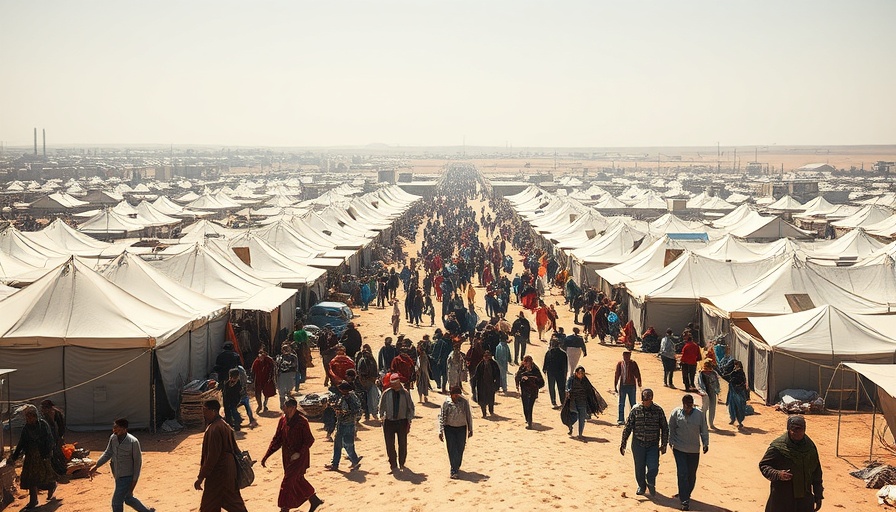
Israel Gaza conflict plans: expansive refugee camp scene with tents.

Unraveling the Impacts of Israel's Ambitious Gaza Strategy

The Israeli cabinet's recent decision to move forward with plans to capture the entire Gaza Strip is a harbinger of escalating humanitarian crises. Underlines the continuing complexity of the Israel-Palestine conflict, this ambitious military operation is poised to alter the lives of countless civilians who are already suffering from the repercussions of an extended conflict. As Israel aims to thwart Hamas's grip and secure the release of hostages, the envisioned strategy invokes not only military considerations but a crucial humanitarian aspect that remains to be satisfactorily addressed.

In 'Israeli cabinet approves plans to capture all of the Gaza Strip,' the discussion dives into Israel's controversial military strategies, prompting us to analyze their broader implications for humanitarian conditions and international diplomacy.

The Humanitarian Dilemma: Displacement and Risk

One of the most concerning elements of the Israeli plan is its emphasis on relocating a significant portion of Gaza's population. This shift echoes the historical precedents of forced displacements during conflicts, raising profound questions about the humanitarian implications. When families are uprooted and moved to uncertain areas, the risk of exacerbated psychological trauma and displacement-related hardships becomes a stark reality. Such outcomes could further entrench societal divisions and conflicts—a vicious cycle that the international community must keenly observe.

International Response and Humanitarian Law

The international community has been vocal in its concern regarding the Israeli government's plan. UN Secretary-General Antonio Guterres expressed alarm over the potential humanitarian fallout, underscoring the importance of adhering to established principles of humanitarian law. As states and organizations grapple with how to broker peace while safeguarding the rights of civilians, the lines of accountability must be clear. Each decision taken in this context reverberates through the geopolitical landscape, necessitating that national strategies remain compatible with international legal expectations.

Echoes of History: Lessons from Conflict

This current scenario mirrors previous instances where military initiatives led to significant civilian casualties and long-term ramifications. Historical parallels can be drawn from other conflict zones where similar strategies were employed, often resulting in widespread discontent, instability, and emerging humanitarian crises. In a region already characterized by fragility, the sensitivity of this backdrop warrants careful examination and nuanced discussions.

Public Sentiment and Social Movements

As the new military strategy unfolds, public sentiment among Israelis and Palestinians plays an influential role. Protests erupting outside the Israeli parliament indicate a growing dissent against the government’s decisions, with families of hostages calling for reconsideration of military actions that jeopardize their loved ones. This interplay between public opinion, government actions, and the fate of hostages is critical in understanding the broader implications of governance and social responsibility within regions afflicted by conflict.

Insights for the Future: Predicting Outcomes

For geopolitical analysts and those tracking African politics and crises, the developments in Gaza may provide crucial insights into how similar scenarios could unfold elsewhere. If lessons from previous international conflicts are anything to go by, the potential for increased regional instability and humanitarian fallout should not only be anticipated but strategically addressed. Moreover, understanding how resilient communities adapt in times of crises can offer a roadmap for intervention strategies that prioritize both humanitarian aid and peacebuilding.

The Call for Constructive Engagement

As we navigate the complexities of ongoing conflicts, the responsibility lies with professionals, policymakers, and civil society to convert these discussions into meaningful actions. It is clear that only through concerted efforts—rooted in empathy and a shared understanding of human dignity—can a path toward resolution and reconciliation be achieved. Engaging critically with developments from Algeria to Nigeria, and from Kenya to South Africa, creates a pertinent backdrop for analyzing how international responses can mitigate crises.

In light of these events, it is imperative for the global community to elevate discussions on humanitarian needs and foster collaborative frameworks that emphasize the restoration of peace, dignity, and justice for all. By exploring the nuances of African current events, professionals can better equip themselves to influence positive change in situations like the one currently unfolding in Gaza.

News & Current Affairs

15 Views

0 Comments

Write A Comment

*
*
Related Posts All Posts
11.30.2025

Netanyahu's Request for Pardon Signals Political Maneuvering Amidst Legal Turmoil

Update Netanyahu's Request for a Pardon: A Sign of Political Maneuvering? In a dramatic twist to a lengthy legal saga, Israeli Prime Minister Benjamin Netanyahu has formally requested a pardon from President Isaac Herzog, hoping to end a five-year trial embroiled in bribery and fraud charges. Netanyahu claims that resolving this case would serve the public interest, a statement met with skepticism and criticism by both political adversaries and many citizens across Israel.In the video titled 'Israeli prime minister requests pardon on longstanding corruption case,' the discussion dives into Netanyahu's controversial plea, presenting key insights that sparked a deeper analysis on our end. Political Ramifications: National Unity Amidst Legal Strife Netanyahu has argued that the ongoing trial is detrimental to national unity amidst a period when Israel faces numerous challenges, including security threats and social divisions. He stated, “The continuation of the trial tears us apart from within, stirs up this division and deepens rifts.” This plea for unity raises significant questions about the ethics of intertwining legal relief with political stability—a tactic that is not new in global politics. Criticisms: Is This a Distraction from Governance? Critics have swiftly countered Netanyahu's assertions, suggesting that his request might be seen as a politically motivated maneuver to retain power while deflecting attention from pressing governmental responsibilities. The timing of his request coincides with an escalation of the Gaza conflict, leading some to argue that he may be using military operations as a means to bolster his political standing. This presents a troubling narrative not just for Israeli politics, but for democratic governance worldwide where leaders may prioritize personal agendas over public welfare. Historical Context: Pardons in Israel The request for a presidential pardon in Israel is historically fraught; very few such pardons have been granted prior to a conviction. This tradition underscores a cultural and legal reluctance to intertwine justice with political expediency. Critics also highlight that a pardon would require an admission of guilt and an immediate retirement from political life—a concession Netanyahu has yet to demonstrate. Opposition Response: Voices Against the Pardon The response from Netanyahu's opposition further emphasizes the divide. Many are calling on President Herzog to reject the pardon, asserting that any such decision would undermine the integrity of Israel’s judicial system. The sentiments echo across various factions in Israeli society, where debates over the nature of accountability and governance remain lively and contentious. Implications for Israeli Society What Netanyahu perceives as a pathway to national reconciliation is viewed by others as a potential source of division. Many citizens recognize the broader implications of his request, viewing it as indicative of a political landscape where the rule of law might be overshadowed by the machinations of power. A society grappling with issues of governance, security, and civil stability cannot afford to ignore the signals sent by its leaders during such turbulent times. Future Predictions: Will Israel Navigate Towards Unity or Division? The ultimate outcome of Netanyahu's request for a pardon remains uncertain. How President Herzog responds could set a significant precedent that either reinforces or undermines public trust in Israel’s political institutions. As voices for accountability grow louder and the nation grapples with its democratic principles, the need for genuine leadership committed to serving all citizens becomes increasingly paramount. Conclusion: A Call for Civic Engagement The events surrounding Netanyahu’s political trials and requests for a pardon remind us of the intricacies of governance and the pivotal role civic engagement plays in maintaining democracy. Citizens must remain vigilant and informed, understanding the implications of political decisions made at the highest levels. As tensions simmer within the region, the urgency for accountability and transparent leadership in Israel has never been clearer. Participate in discussions and engage with local civic platforms to influence positive change within your community and beyond.

11.29.2025

The Crisis of Unaccompanied Children in Tawila Camps Amid Violence

Update The Humanitarian Crisis Unfolding in Tawila The Tawila refugee camp in Sudan has become a heartbreaking symbol of the turmoil engulfing West Darfur, as hundreds of unaccompanied children pour into its already-stretched facilities. These children are the latest victims of escalating violence sparked by intense clashes involving the Rapid Support Forces (RSF). Recent reports from the Norwegian Refugee Council detail that over 400 children have arrived in Tawila over the past month alone, often left to fend for one another as their families have vanished amid the chaos.In 'Hundreds of children flee to Tawila camp amid violence in Sudan’s west Darfur,' the discussion dives into the humanitarian crisis affecting unaccompanied minors, exploring key insights that sparked deeper analysis on our end. The Trauma of Conflict As these children settle into their temporary home, the emotional scars of their harrowing journeys are evident. Many of them have experienced profound trauma, often caring for younger siblings or peers—exemplifying resilience but highlighting their precarious situation. A humanitarian worker described the initial state of these children as being characterized by aggression and withdrawal, reflecting their struggles with loss and abandonment. Thankfully, after dedicated time and therapeutic interventions, many have shown improvement. However, the psychological impact of conflict lingers, raising critical questions about what lies ahead for these young clouded by grief. The Fragility of Peace Efforts Despite a newly brokered ceasefire by the U.S. aimed at restraining the rebels, the Sudanese military's rejection of the terms offers little hope for immediate resolution. The on-ground reality in war-torn regions like Tawila is that camps are stretched to their limits, desperately needing resources to address the needs of both children and adults escaping violence. The RSF's acceptance of the truce does not change the volatile environment, where continuous threats and fear paralyze efforts toward meaningful coexistence. Reforming Emergency Education Systems As the crisis deepens, experts urge a renewed emphasis on providing education during emergencies. The trauma these children endure is not only a call to action for humanitarian relief but also for educational initiatives. Providing educational opportunities can be a life-saving measure, allowing children to regain a semblance of normalcy despite their shattered realities. Lessons Learned from Tawila's Experience The humanitarian response in Tawila raises important questions about long-term strategies in war-affected areas. The camp’s struggle illustrates broader systemic issues related to governance and accountability in conflict resolution. With many of these children facing what could be years of displacement, the need for sustainable, effective leadership and framework solutions in Sudanian governance resounds more critically than ever. Statistical Reflection on Conflict’s Impact Amid the grim statistics surrounding the violence in Sudan, it becomes evident that this conflict disproportionately affects the most vulnerable—children. According to recent reports, millions of children across Sudan's conflict zones are in dire need of aid, highlighting an urgent need for international attention and response. Efforts must focus not only on immediate humanitarian needs but on rebuilding lives through peace initiatives. A Call to Action for Global Awareness and Support The crisis in Tawila exemplifies why awareness and action from the global community is integral. It's not merely enough to be informed; individuals and organizations must mobilize support to provide humanitarian relief, education, and healing for the children affected by wars across Africa. Engaging in advocacy, supporting reputable NGOs, and participating in broader discussions surrounding African politics can help ensure the voices of those suffering from the repercussions of violence resonate worldwide. Being aware of African current events and engaging in conversations that advocate for lasting peace, education, and accountability in government systems can inspire collective action. Advocate for and participate in initiatives that ensure the humanitarian needs of those affected, most notably vulnerable children, are met. The lens of our responsibility must be directed towards justice as much as immediate relief, to cultivate a peaceful future for generations to come.

11.29.2025

Navigating the Jet Fuel Licensing Controversy: What Professionals Should Know

Update Understanding the Unfolding Jet Fuel Licensing IssueThe South African Revenue Service (SARS) is at the center of a heated discussion regarding jet fuel licensing, incited by an article in News24 alleging a crisis in the licensing process. SARS refutes these claims, emphasizing that no crisis exists despite ongoing challenges in the aviation fuel supply chain.SARS Commissioner Edward Kieswetter’s proactive measures demonstrate the agency's commitment to maintaining a robust fuel supply amidst global and local challenges related to fuel production and compliance. Since the declaration of a potential fuel shortage, only a minimal number of entities—three to be exact—have sought the necessary licenses, rendering the allegations of a bureaucratic holdup somewhat unwarranted.Fuel Sector Accountability and ComplianceThe Fuels Industry Association has echoed concerns regarding the delays attributed to SARS audits affecting fuel supplies at critical hubs like Cape Town International Airport. Avhapfani Tshifularo, the association’s CEO, highlighted that disruptions caused by prolonged audits not only threaten flight schedules but could have a ripple effect on tourism and economic stability in the Western Cape.Despite criticism, SARS maintains its stance on strict adherence to regulatory compliance, especially given the implications of non-compliance on national fuel security. The risk of illicit activities and fuel adulteration remains a significant concern, necessitating stringent oversight methods to safeguard public safety and economic interests.The Reality of Fuel ShortagesSouth Africa's declining refinery capacity—reportedly halved over the past five years—has exacerbated issues surrounding fuel availability, leading to a dependency on imports, specifically from the Middle East. According to reports, jet fuel imports via the current infrastructure have become essential, with a significant shortfall expected if compliance issues persist.In a market that requires real-time responsiveness to supply needs, delays in licensing processes—as criticized by the industry—pose a direct threat to operational stability. However, the imperative for regulatory compliance cannot be overstated; lapses could lead to unsafe practices that jeopardize both the ecosystem of air travel and economic landscapes reliant on it.The Implications of SARS’s Zero-Tolerance PolicySARS operates under a zero-tolerance policy regarding non-compliance with customs and excise regulations, which applies to all entities involved in the fuel distribution chain. This framework is not merely punitive; it is designed to ensure fairness and safety across the industry, maintaining operational integrity. While compliance may slow down processes in the short term, it ultimately fosters a stable environment for businesses to thrive.Enhancing the compliance framework will involve cooperation between SARS and industry players. This synergy is critical, particularly in responding to market dynamics such as heightened demand during peak travel seasons. As the holiday travel accelerates, the importance of regulated fuel distribution becomes even clearer.The Path Forward: Collaboration and TransparencyAs the discussion about the jet fuel licensing situation evolves, it is crucial for both SARS and the Fuels Industry Association to work together. Open lines of communication will foster an environment where compliance does not hinder essential operations but rather secures them.In conclusion, the call for urgent cooperation rings true. Stakeholders must align to ensure both availability and regulatory compliance are achieved systematically, thereby averting unnecessary crises in fuel supply chains as showcased in the jet fuel licensing landscape.As we reflect on the ongoing situation, fuel industry professionals are encouraged to stay informed and engaged in dialogues surrounding these crucial topics. Regular updates from SARS and industry representatives will be paramount in navigating these challenges.

Terms of Service

Privacy Policy

Core Modal Title

Sorry, no results found

You Might Find These Articles Interesting

T
Please Check Your Email
We Will Be Following Up Shortly
*
*
*