Add Row
Add Element
PR Africa: Your Gateway to Comprehensive African News and Insights
update
PR Africa
update
Add Element
  • Home
  • Categories
    • Entertainment
    • Automotive
    • Politics
    • Finance
    • Health & Fitness
    • Sports
    • Business
    • Cryptocurrency
    • Education
    • Fashion & Beauty
    • Home & Garden
    • Foreign Language News
    • Lifestyle
    • Real Estate
    • Religion
    • Science
    • Technology
    • Travel
    • News & Current Affairs
    • Crime & Safety
    • Arts & Culture
    • Environment
    • Food & Drink
    • Extra News
April 18.2025
2 Minutes Read

Rwanda Bridges Security Gaps: Southern Africa Troops Granted Passage to Tanzania

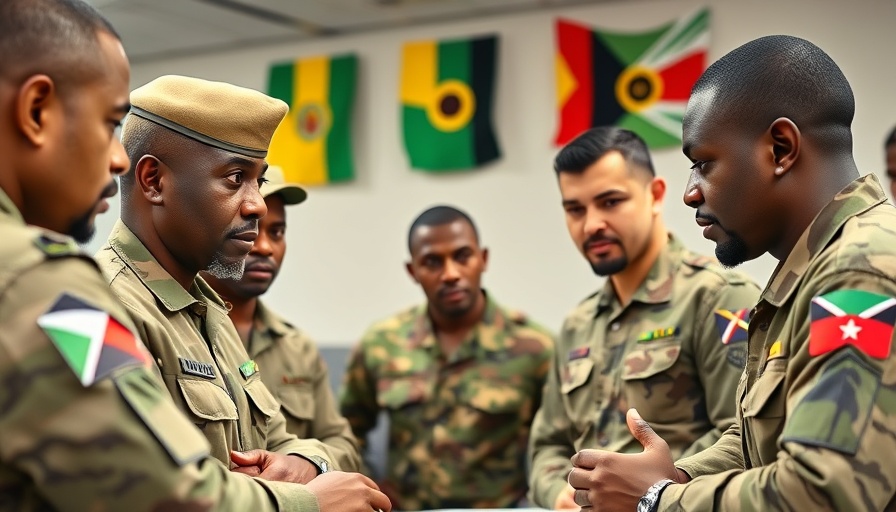
Soldiers collaborating at a strategy meeting for Military Cooperation in Africa.

The Evolving Military Dynamics in Africa: A Strategic Imperative

As tensions escalate in the eastern Democratic Republic of Congo, Rwanda has extended a critical lifeline to Southern African troops. This decision, aimed at facilitating their passage to Tanzania for operations against armed groups, reflects a changing landscape in regional security dynamics. The collaboration signals not only Rwanda's military strategy but also highlights the interconnectedness of African nations in addressing common threats.

The Role of Regional Cooperation

This unprecedented move can be seen as a response to the perennial instability in the region, underscoring the importance of cooperation among African nations. As Rwanda allows transit for the Southern African Development Community (SADC) forces, it brings to light a collective regional commitment to improving security and stability. This cooperation might pave the way for joint operations in the future, promoting a shared vision for peace.

Potential Implications for South Africa

For South Africa, a key player in the SADC, this development could have far-reaching implications. It opens avenues for enhanced military collaboration and intelligence-sharing between countries facing similar threats. Observers are keenly watching how South Africa will respond to this opportunity, which could redefine its strategic posture in the region, fostering deeper security alliances.

Regional Stability as a Global Concern

The implications of this agreement extend beyond mere regional politics. Global powers have vested interests in the stability of the DRC due to its vast mineral wealth, which plays a crucial role in supply chains worldwide. The involvement of southern African forces may signal to international stakeholders a new era of responsibility-sharing in maintaining peace and order, thereby attracting economic investments in the affected regions.

Diversity of Perspectives on Military Interventions

While some experts support the idea of a united military front in Africa, others caution against the implications of external involvement. Concerns over African sovereignty and potential escalation of violence are valid points of contention. This discourse reflects a broader debate on how best to deal with intra-continental conflicts — whether through diplomacy or military might.

Conclusion: Navigating Complex Waters Ahead

The development of Rwanda permitting Southern African troops to transit serves as a stirring reminder of the complexities involved in African politics and the role military interventions play in resolving regional concerns. Executives, analysts, and decision-makers should keep a close watch as these events unfold, as they could alter not just regional dynamics, but also create opportunities for dialogue and investment as nations unite around shared challenges.

News & Current Affairs
Facebook Twitter

24 Views

0 Comments

Write A Comment

*
*
Related Posts All Posts
01.31.2026

IMBISA Urges Global Support for Flood Victims in Southern Africa

Update Unprecedented Flooding Crisis in Southern Africa The Inter-Regional Meeting of Bishops of Southern Africa (IMBISA) has urgently appealed for support for flood victims in Mozambique, Zimbabwe, and South Africa, regions severely affected by relentless torrential rains since mid-December 2025. The humanitarian disaster has prompted a wave of international concern, with the death toll surpassing 100 in Mozambique alone and hundreds of thousands left displaced and vulnerable. Pope’s Compassionate Solidarity Amidst Tragedy In their poignant statement, IMBISA expressed heartfelt appreciation for the solidarity shown by Pope Leo XIV. The Pope's call for unity and prayers resonates deeply with the affected communities, emphasizing the spiritual dimension of resilience in the face of adversity. His message invites the global Church to lend a helping hand in this challenging time, fostering a sense of hope. The Scale of Disaster: Human and Environmental Factors The catastrophic flooding in Southern Africa, exacerbated by human-driven climate change and La Niña phenomena, underlines a complex interaction of environmental factors unique to this region. As reported by various sources, infrastructure has crumbled under the intensity of rainfall, and the public health crisis looms large due to poor sanitation in displacement camps, making the need for humanitarian assistance pressing. International Response: How Can We Help? IMBISA has called upon humanitarian organizations and governments to provide vital assistance to those in need. This global appeal not only seeks immediate relief supplies but also emphasizes sustainable long-term support strategies. Community-driven recovery efforts will play a crucial role in rebuilding trust and stability in these regions. The Urgency of Global Solidarity For executives and decision-makers, this crisis represents more than a natural disaster; it is an opportunity to reassess our collective responsibilities in the face of climate-induced challenges. Innovations such as tech-driven disaster management solutions could evolve from this crisis, prompting discussions around AI, cloud computing, and digital transformation in crisis response initiatives. Businesses engaged in sectors like renewable energy and disaster recovery technologies may find pathways to contribute meaningfully towards recovery efforts. Protecting Vulnerable Communities: Lessons Learned This disaster serves as a poignant reminder of the vulnerabilities entwined within socio-economic structures. A focus on digital inclusion and the development of resilient ecosystems is critical. The adoption of technologies aimed at enhancing disaster readiness and response, such as IoT for real-time data collection and predictive analytics for early warning systems, can safeguard future communities against similar crises. Call to Action: What Can You Do? As individuals and organizations, we are called upon to respond with compassion and strategic action. Whether you contribute financially, advocate for resources, or support local initiatives, your involvement can make a real difference. Engage in meaningful discussions about digital transformation solutions that could mitigate the impacts of such disasters in the future. Let us prioritize global solidarity and action in the face of humanitarian crises.

01.31.2026

Legal Counsel Insights: Implications of SARS Amendments for Professionals

Update Understanding the Impact of Recent Legislative Changes in South AfricaOn January 30, 2026, significant amendments were proposed to the South African Revenue Service (SARS) Act, 1997, reflecting ongoing improvements in governance and fiscal responsibility. These changes, which include the amendment of Schedule 1 of the Act, remain a critical concern for professionals engaged in tax law and public policy. The amendments aim to streamline operations within SARS, ultimately enhancing clarity and efficiency in tax administration.The Broader Implications of Rule Amendments for StakeholdersIn a related notice published on January 28, 2026, the Customs and Excise Act, 1964 also underwent essential revisions. This amendment includes adjustments to the Automotive Production and Development Programme (APDP) quarterly account. Professionals should anticipate these updates to influence not only tax compliance but also the broader economic landscape, particularly impacting stakeholders in the automotive industry.Why These Changes Matter to ProfessionalsFor professionals in finance and law, understanding the nuances of these amendments is vital. They underline SARS's commitment to transparency and the efficient use of resources, fostering an environment where businesses can operate with confidence. Regulatory changes can often lead to confusion or misinterpretation. Therefore, the clarity offered by these updates is paramount for effective compliance and risk management strategies.Navigating the Regulatory LandscapeAs authorities implement these changes, professionals must prepare to navigate the evolving regulatory landscape. This involves not just understanding the current amendments, but also anticipating future regulations that could arise as SARS continues its reform efforts. The introduction of specific provisions related to tax rebates, customs duties, and obligations for registrants highlights the necessity for continuous education in tax law dynamics.Engaging with the Future of Public PolicyExamples from previous years, including governmental responses to economic pressures and public inquiries into revenue generation, reflect the fluidity of South African fiscal policy. Professionals must remain vigilant and proactive in their engagement with these matters to promote good governance and accountability in public institutions.Conclusion: You Can't Afford to Stay InformedIn summary, the recent amendments to the SARS Act and the Customs and Excise Act reflect critical shifts in South African tax and legal frameworks. Staying updated on these changes is essential for professionals aiming to drive compliance and advocate for necessary reforms. Engaging with these issues can better equip you to navigate the complexities of the legal and economic environment in South Africa.Preparedness is key; engage with your peers, participate in ongoing training, and constantly review official communications from SARS to ensure you're fully informed and ready to respond appropriately.

01.30.2026

Understanding RSF's Struggles to Establish Governance in Sudan: A Call for Urgent Action

Update The Fragmentation of Governance in Sudan: RSF's Informal Administration Since the outbreak of conflict in Sudan in 2023, the landscape of governance has significantly shifted. Amidst the chaos, the Rapid Support Forces (RSF), led by Mohamed Hamdan Dagalo (known as Hemedti), have emerged as a formidable power, proclaiming a parallel government in western Sudan. This development is particularly evident in regions like Nyala, South Darfur, where the RSF's new administrative structure seeks to assert control amidst growing unrest. Yet, the struggle to effectively roll out public services highlights a complex relationship with local populations. The Informality of RSF's Government The RSF's decision to create an alternative governance structure reflects their desire to challenge the legitimacy of the Sudanese Armed Forces (SAF) and grow their political influence. However, their administration remains largely informal and unevenly executed across different regions. Residents report that public services are being rolled out at a sluggish pace, raising discontent among the local populace. This has sparked questions about the RSF's governance capabilities and intentions, as their efforts appear fragmented and lacking coherence. Impact on Local Populations: A Struggle for Legitimacy As the RSF pushes for broader acceptance, the contrasting perspectives from local communities reveal a deeper dilemma. Many residents are skeptical of the RSF's ability to deliver essential services and maintain order, especially in areas where violence has long been a part of daily life. Despite being presented as a legitimate administration, the RSF's connections to past conflicts and human rights violations bear heavily on their acceptance. Without a clear mandate or functioning economy, the RSF risks alienating those they intend to govern. Regional Dynamics and Potential Consequences The ongoing conflict and RSF’s emergence also pose a broader threat to Sudan’s territorial integrity. Concerns are rising over the potential for partition, as the RSF's governance may pave the way for further fragmentation of the state. Egypt’s influence looms large in this context, as it articulates non-negotiable red lines regarding Sudan's stability. The RFS’s advances could signal a shift in regional geopolitics, where neighboring nations will likely respond to threats against their security interests. Future Predictions: Is a Permanent Conflict on the Horizon? As Sudan approaches 2026, entrenched fighting becomes evident, with no comprehensive peace talks in sight. The RSF, while attempting to consolidate control, faces the challenge of integrating its efforts into the existing system without broad international recognition. The longer the war endures, the more normalized the violence may become, risking the establishment of a permanent conflict as a new political status quo. Quelling hopes for peace, the RSF’s current trajectory raises concerns about whether Sudan can escape this vicious cycle of governance amidst atrocity. Global Perspectives on Sudan’s Crisis The international community continues to grapple with how to effectively respond to the Sudanese crisis. With humanitarian needs escalating as famine conditions spread across the country, the focus shifts from resolution to management of the conflict. The implications of Sudan's situation resonate globally, emphasizing the interconnectedness of modern conflicts with international power dynamics, trade, and humanitarian responses. Understanding Sudan’s turbulent governance landscape provides crucial insights into the potential outcomes that may arise if proactive measures are not prioritized. Concluding Thoughts: The Urgent Need for Action In light of the complex situation in Sudan, it is evident that both regional and international actors must navigate this turbulent landscape with urgency. The success of any emergent governance structure should depend not only on military might but also on an inclusive dialogue fostering reconciliation and rebuilding trust within affected communities. It is essential for outside stakeholders to invest in long-term solutions prioritizing humanitarian support and encouraging sustainable governance rather than mere military interventions. For those impacted by the crisis, their voices must be amplified amidst the political vacuum as they become pivotal storytellers of their destiny in the ongoing struggle for peace and sovereignty.

Terms of Service

Privacy Policy

Core Modal Title

Sorry, no results found

You Might Find These Articles Interesting

T
Please Check Your Email
We Will Be Following Up Shortly
*
*
*