Add Row
Add Element
PR Africa: Your Gateway to Comprehensive African News and Insights
update
PR Africa
update
Add Element
  • Home
  • Categories
    • Entertainment
    • Automotive
    • Politics
    • Finance
    • Health & Fitness
    • Sports
    • Business
    • Cryptocurrency
    • Education
    • Fashion & Beauty
    • Home & Garden
    • Foreign Language News
    • Lifestyle
    • Real Estate
    • Religion
    • Science
    • Technology
    • Travel
    • News & Current Affairs
    • Crime & Safety
    • Arts & Culture
    • Environment
    • Food & Drink
    • Extra News
March 06.2025
3 Minutes Read

R6 Million of Cocaine Seized at OR Tambo: Implications for South African Politics and Safety

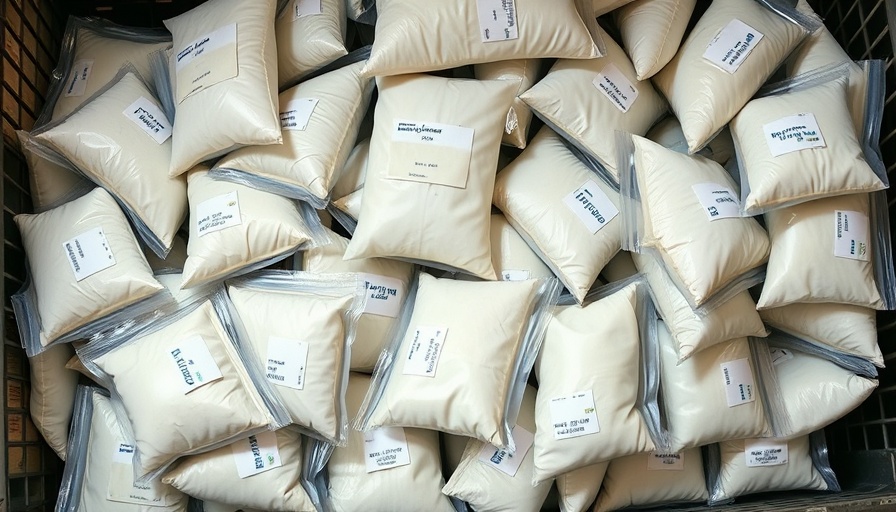
Sealed bags of cocaine seized at OR Tambo in a metal crate.

Drug Trafficking at OR Tambo: A Worrisome Trend

In a significant bust, South African authorities intercepted a shipment of cocaine valued at R6 million hidden inside boxes labeled as hair products at OR Tambo International Airport. This discovery is not an isolated incident but rather part of a troubling pattern of increasing drug trafficking activity. The cocaine, which originated in São Paulo, Brazil, was scheduled to head to France, raising concerns about South Africa's role in international drug routes.

SAPS spokesperson, Lieutenant Colonel Amanda Van Wyk, confirmed that the illicit goods were uncovered during a meticulous operation involving collaboration between the South African Police Service (SAPS) and Customs officials. This seizure underscores the importance of vigilant customs inspections, particularly at a major transit hub like OR Tambo.

Recent Trends in Drug Trafficking

The cocaine interdiction is merely the latest chapter in a series of drug trafficking arrests at OR Tambo. Just hours before this incident, a 55-year-old Nigerian national was arrested after swallowing cocaine valued at R7.5 million. This method of smuggling, known as 'body packing,' poses severe health risks for the trafficker, suggesting desperation and the lengths to which individuals will go amidst South Africa's significant unemployment and economic challenges.

Alongside these arrests, two South African traffickers were also apprehended upon their arrival from São Paulo, with drugs valued at R7.5 million found in their possession. These recent busts highlight a concerning trend of drug-related crime that could undermine public safety and exacerbate the already critical issues of crime and corruption in South Africa.

The Economic and Social Implications

Moreover, these incidents provide a lens through which to examine broader societal issues. South Africa’s struggles with economic recovery, notably high unemployment rates, and ongoing state capture, have created a fertile ground for organized crime and drug trafficking. With the economy still reeling from the COVID-19 pandemic and increased load shedding affecting businesses and livelihoods, these crimes are symptomatic of deeper systemic issues.

Authorities face a growing crisis, where drug trafficking not only jeopardizes public safety but also disturbs the social fabric. The need for a multifaceted approach that encompasses economic policies, crime prevention, and community resilience strategies is more urgent than ever.

Future Challenges: A Call for Action

The question that arises from this current issue is: what steps can be taken to combat drug trafficking and improve safety in South Africa? First, enhancing law enforcement’s capacity through better training and resources is crucial. Second, fostering collaboration between agencies, both domestically and internationally, can create a more robust response to the evolving drug trafficking networks.

Furthermore, long-term solutions must address the root causes of drug crime, including poverty alleviation and educational advancements. National elections and subsequent government policies need to prioritize tackling these systemic challenges, thus forging a sustainable path towards economic stability and reduced crime.

Conclusion: The Road Ahead

The interception of R6 million worth of cocaine at OR Tambo is more than just a law enforcement success; it is a call to action for South African society to confront the challenges posed by drug-related crime head-on. As citizens, stakeholders, and policymakers rally together, the focus must remain on fostering transparency, justice, and accountability in order to reclaim public spaces from the grip of illicit activities.

Your role in this narrative is crucial. Stay informed, engage in local community discussions, and advocate for policies that prioritize safety and economic stability for everyone. Together, we can make strides towards a safer future.

Crime & Safety

16 Views

0 Comments

Write A Comment

*
*
Related Posts All Posts
12.10.2025

Major Tax Fraud Case Highlights Need for Stronger Accountability Measures

Update Groundbreaking Legal Action Against Tax Fraud in South Africa In a significant development for South African governance and financial integrity, the Investigating Directorate Against Corruption (IDAC) and the South African Revenue Service (SARS) have successfully convicted Tshepo Khoza, a company director, for tax fraud amounting to R3.6 million. The verdict, handed down on December 9, 2025, marks a pivotal moment in the fight against financial corruption permeating public sector procurement. A Deep Dive into the Case and Its Implications Khoza, the director of Grey Apple Trading Enterprise (Pty) Ltd, received a six-year prison sentence with two years suspended. His conviction stemmed from his involvement in obtaining tenders from the South African Police Service (SAPS), specifically concerning the forensic DNA project. Evidence revealed that Khoza capitalized on familial connections with a high-ranking SAPS officer to secure contract bids. Despite earning substantial revenue, Khoza failed to declare any income to SARS, falsely registering his company as dormant during the years in question. The prosecution, led by IDAC and supported by SARS, underscores the urgency of addressing corruption within state procurement processes, a long-standing issue contributing to the erosion of public trust in government institutions. Edward Kieswetter, SARS Commissioner, emphatically stated, “Tax fraud is not a victimless crime. Every rand stolen through fraudulent schemes undermines our country’s ability to deliver on its constitutional mandate.” The Role of Collaborative Law Enforcement Efforts The successful conviction of Khoza is the result of diligent investigative work under Project Blue Lights, aimed at dismantling corruption networks that hinder fiscal integrity. IDAC’s collaboration with SARS and other law enforcement agencies sets a precedent for future cases, demonstrating the power of unified efforts against tax-related offenses. As highlighted by IDAC spokesperson Henry Mamothame, Khoza's case is not an isolated incident; it is part of a broader strategy to expose and eliminate systemic corruption within public services. This strategy is crucial for ensuring public resources are used for their intended purposes — supporting health care, education, and other vital government functions. Looking Ahead: Predictions and Responsibilities With Khoza’s trial on various corruption charges set to continue on February 22, 2026, it is essential for the public and professionals alike to stay informed and engaged. The outcomes of such trials can influence legislative reforms aimed at enhancing public procurement processes and government accountability. Future predictions indicate that, if the current momentum continues, South Africa may see increased transparency and stricter measures against similar cases of corruption. Public trust can only be restored through accountability and effective governance. As professionals, actively advocating for and participating in discussions surrounding these issues is crucial. Call to Action: Engaging for Change In light of this case and the ongoing challenges in combatting corruption, it is imperative that professionals lead the charge for reform in their respective fields. Engage with local advocacy groups, participate in public forums, and support legislation that promotes transparency and accountability. Your voice is vital in the collective quest toward genuine governance. The TZ team at IDAC and SARS remains steadfast in their mission to uphold the tenets of justice and integrity within financial governance. By ensuring accountability for crimes like those committed by Khoza, we pave the way for a more trustworthy public sector.

12.08.2025

The Tragic Murder of Marius van der Merwe: A Wake-Up Call for South Africa's Witness Protection

Update The Heartfelt Tribute and Outrage Following a Tragedy The tragic assassination of Marius van der Merwe, a whistleblower at the Madlanga Commission, has sent shockwaves through South Africa, sparking outrage and calls for urgent reform in witness protection and accountability within the police force. Gunned down in front of his family outside their Brakpan home, van der Merwe's death highlights the perilous consequences faced by those who dare to speak up against corruption. A Grief-Stricken Widow Speaks Out In a deeply emotional TikTok tribute, Leanne van der Merwe shared a montage of memories, lamenting the loss of her husband with chilling words, "How do I say goodbye?" Her tribute reflects not just personal devastation but resonated with a broader sense of national grief. As tributes poured in, many expressed support for Leanne, affirming that her husband's courage had illuminated the fight against systemic corruption. Context of Courage and Controversy In November, under the pseudonym "Witness D," Marius van der Merwe testified before the Madlanga Commission, where he implicated several high-ranking officials in murder cover-ups. His courage to expose wrongdoing allegedly angered powerful individuals, making his assassination no mere coincidence. Where van der Merwe's fate was seemingly sealed by those he sought to expose, the outpouring of public sympathy underscores a troubling reality—many believe that the current government’s inadequate mechanisms to protect whistleblowers exhibit systemic flaws. President Cyril Ramaphosa's expression of sorrow over the murder, pointing to an urgent need for accountability, highlights the political ramifications of van der Merwe’s violent end. Call to Action: A Community's Response This incident has ignited a communal outcry that transcends personal loss. It’s not merely a tragedy for one family but a wake-up call for a nation grappling with corruption and governance failures. Political parties and civil society groups are now demanding reforms in witness protection protocols to ensure that those who speak truth to power can do so without fear of retaliation. Implications of the Madlanga Commission's Findings The Madlanga Commission, established to investigate political interference within the criminal justice system, faces significant scrutiny following van der Merwe's death. As trust in law enforcement dwindles, the commission's ability to function effectively hangs in the balance. Security experts suggest that this will also lead to adjustments in how witnesses are identified, protected, and encouraged to testify, making it imperative that public trust is restored. What's Next: Future of Witness Protection in South Africa The fallout from Marius van der Merwe’s assassination raises essential questions about the safety and rights of whistleblowers in South Africa. Advocacy for reform must be coupled with systemic changes within law enforcement to ensure that accountability is not just a catchphrase but a reality for those who bravely challenge corruption. Together, communities and civil society must push the narrative towards substantive reforms and greater protection mechanisms that honor the courage of whistleblowers and uphold the rule of law. The battle against corruption requires not only awareness but concrete actions that foster a safer environment for future truth-tellers. Conclusion: Take Action and Demand Change The tragic loss of Marius van der Merwe is a poignant reminder that the price of truth can be deadly. As we reflect on his courage, it is imperative that we demand accountability from our leaders and advocate for the reforms necessary to protect future whistleblowers. Take a moment to share your support and stand against corruption—it is only through collective action that change can occur.

12.06.2025

Gauteng's Tragic Cycle: Mass Shooting in Pretoria Spotlights Illegal Taverns

Update The Tragic Toll of Gun Violence in South Africa's Illegal TavernsIn a harrowing incident that has shaken the community of Atteridgeville, Pretoria, a mass shooting at an illegal tavern has claimed the lives of 12 individuals and left another 13 seriously injured. The tragic event occurred during the early hours of Saturday morning, drawing immediate attention to the rising tide of violence associated with unregulated liquor establishments in South Africa.A Summary of the IncidentOn December 6, 2025, around 4:15 AM, three unknown assailants stormed into the unsecured tavern located in a hostel and opened fire indiscriminately. Among the deceased were three minors aged three, 12, and 16, illustrating the devastating impact of such violent acts on vulnerable members of society. Subsequently, a manhunt was initiated for the shooters, but as of now, they remain at large.The Link Between Illegal Taverns and Increased CrimeAuthorities, including police spokesperson Brigadier Athlenda Mathe, have condemned the violence and highlighted a worrying trend: illegal liquor outlets are increasingly becoming hotspots for crime. In a recent briefing, Mathe noted that these illicit establishments have been linked to numerous shootings—not always due to alcohol-fueled disputes, but because patrons may be targeted for violent crime.The City of Tshwane's MMC for Community Safety, Hannes Coetzee, echoed this sentiment, affirming that illegal taverns perpetuate an environment rife with unrest and danger. According to Coetzee, “These establishments are a significant driver of crime and disorder,” prompting the city to prioritize operations targeting such venues.Government Response and Community ResponsibilityThe Gauteng Premier, Panyaza Lesufi, has also voiced his dismay, describing the loss of innocent lives as “heartbreaking and unacceptable.” These sentiments reflect a wider concern among government officials regarding the effects of gun violence on public safety and community stability. Premier Lesufi emphasized the urgent need to address illegal liquor outlets, promising to intensify operations to shut down both legal and illegal establishments that jeopardize citizens' safety.The Rising Trend of Mass ShootingsThe uptick in mass shootings linked to illegal taverns raises alarms about the broader implications for South African society. As outlined in various reports this year, four separate mass shootings have been documented in Gauteng alone, marking a clear escalation in violent crime within these venues. This consistent pattern prompts questions about law enforcement's effectiveness in addressing the underlying issues and the effective regulation of liquor sales.Engaging the Community in Crime PreventionIn light of this alarming trend, experts suggest involving community stakeholders in crime prevention strategies. By promoting awareness and establishing community policing initiatives, neighborhoods can play a vital role in holding both law enforcement and local businesses accountable. Furthermore, public forums and community organizations can serve as platforms for dialogue on public safety, potentially guiding effective policy changes.A Call to ActionThe tragic mass shooting in Pretoria serves as a somber reminder of the dire need for reforms in crime prevention and alcohol regulation in South Africa. Enhanced policing strategies, community engagement, and stricter controls on alcohol sales could foster safer environments. Citizens are encouraged to remain vigilant and involved in community safety initiatives, as collective action can pave the way for deeper changes in crime dynamics.ConclusionThis devastating incident underscores the urgent need for comprehensive strategies to combat violent crime in South Africa, particularly in relation to illegal liquor establishments. As communities mourn the loss of innocent lives, a collaborative approach involving government, law enforcement, and citizens is essential in reshaping the narrative around safety and accountability.

Terms of Service

Privacy Policy

Core Modal Title

Sorry, no results found

You Might Find These Articles Interesting

T
Please Check Your Email
We Will Be Following Up Shortly
*
*
*