Add Row
Add Element
PR Africa: Your Gateway to Comprehensive African News and Insights
update
PR Africa
update
Add Element
  • Home
  • Categories
    • Entertainment
    • Automotive
    • Politics
    • Finance
    • Health & Fitness
    • Sports
    • Business
    • Cryptocurrency
    • Education
    • Fashion & Beauty
    • Home & Garden
    • Foreign Language News
    • Lifestyle
    • Real Estate
    • Religion
    • Science
    • Technology
    • Travel
    • News & Current Affairs
    • Crime & Safety
    • Arts & Culture
    • Environment
    • Food & Drink
    • Extra News
March 20.2025
3 Minutes Read

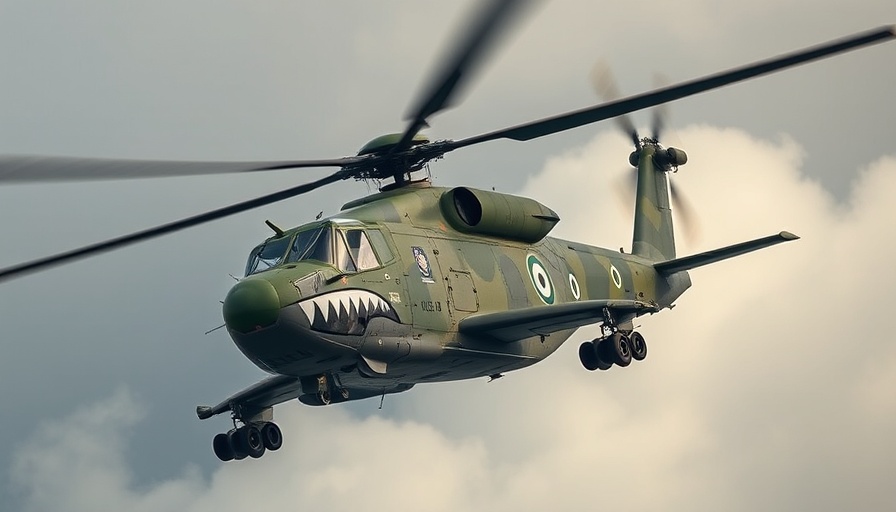
Ivory Coast's Air Force: Aiming for Strategic Upgrades in Airpower

Military helicopter with shark mouth nose art in flight, Ivory Coast Air Force modernization.

A Strategic Overhaul: Meeting the Challenges of Modern Warfare

The recent acquisition by the Ivorian Air Force, including four Soviet-type helicopters, forms part of a broader strategy to enhance its operational capabilities amid evolving security challenges. This upgrade is particularly crucial given the volatile geopolitical landscape in West Africa, marked by terrorism and ongoing conflicts in neighboring regions.

Decoding the Need for Upgraded Airpower

The drive to modernize the Ivorian Air Force can be seen as a direct response to national security threats, including terrorist activities emanating from extremist groups exploiting weaknesses in border security. By bolstering its aerial capabilities, Ivory Coast is taking proactive measures, ensuring not only domestic safety but also contributing to regional stability through potential peacekeeping roles.

Technology as a Cornerstone: Collaborations and Future Prospects

In addition to Russian equipment, the Ivorian military is in discussions to secure a consignment of advanced Chinese aircraft. Such partnerships reflect a growing trend among African nations seeking to diversify their military procurements beyond traditional Western suppliers. Meanwhile, continued cooperation with France remains pivotal, particularly in areas like training and equipment transfer as the French military presence in the country adjusts.

Contextualizing Current Developments in Governance and Security

The bid for improved military hardware aligns with ongoing efforts to reinforce governance and democratic processes in Ivory Coast. With presidential elections on the horizon, the current government is not only looking to strengthen its military capabilities but also to enhance public trust through bolstered national security measures. This dual approach may well serve to mitigate discontent and build a more stable political environment.

Broader Implications: Economic Growth Through Military Investment

Investing in military infrastructure prompts discussions on economic growth and poverty alleviation. A modern air force is essential not only for securing borders but can also foster a climate conducive to foreign investment. As industrialization progresses, stability and safety will play critical roles in attracting international business interests and enhancing trade under initiatives like the African Continental Free Trade Area (AfCFTA).

International Relations and the Ivorian Air Force

As Ivory Coast navigates its military and diplomatic relations, the evolving dynamics with China, the US, and France will significantly shape its future. By leveraging these partnerships, the Ivorian government can aim for a balanced foreign policy that not only enhances its defense posture but also promotes economic resilience and cultural diplomacy.

Engagements in Human Rights and Governance

A military upgrade also raises questions about governance, human rights, and civil-military relations in Africa. Politically, the population will need to remain vigilant as the government enhances its authority through military power. Therefore, transparency in military dealings and respect for human rights will be paramount as the country pivots toward enhancing defense capabilities while maintaining democratic ideals.

Concluding Thoughts on a Significant Shift

The modernization of Ivory Coast's air force is a multifaceted development deeply intertwined with regional security, economic growth, and governance issues. As the nation enhances its military prowess, it will be interesting to observe how these changes influence political stability and economic strategies moving forward. It is critical for citizens and stakeholders to remain engaged, advocating for approaches that prioritize human rights even in the face of bolstered military strength.

News & Current Affairs

23 Views

0 Comments

Write A Comment

*
*
Related Posts All Posts
12.11.2025

Neighbor Urges Inspections After Deadly Building Collapses in Fez

Update Tragedy Strikes: The Deadly Collapse in Fez In the quiet neighborhood of Fez, Morocco, a devastating incident unfolded overnight when two four-story residential buildings collapsed, claiming the lives of at least 22 people. The chaotic scene left residents in shock and disbelief, as many rushed to assist their neighbors, embodying the spirit of community amidst heartbreak. This incident marks the second fatal building collapse in Fez this year, raising urgent questions about the safety of similar structures throughout the city.The video 'Neighbor urges inspections after deadly building collapses kill 22 in Fez' presents a heart-wrenching account of this tragedy, prompting an urgent analysis of the pressing safety concerns that necessitate attention in Moroccan urban planning. Calls for Safety Inspections Grow Louder In the aftermath of the disaster, Teria, a local resident who witnessed the chaos, expressed a deep concern shared by many: “We want the authorities to inspect the other buildings so that there is no repetition of what has happened.” This plea highlights a systemic issue within Moroccan urban planning — the inconsistent enforcement of building codes, particularly in older districts where many structures date back decades and may not meet modern safety standards. The Broader Context: Infrastructure and Governance in Morocco Urban planners and various rights organizations have long warned about these lapses in enforcement, which pose a significant risk to public safety. Heavy criticism has been directed toward the Moroccan government, particularly in light of the recent protests that swept across the country, highlighting discontent over inadequate investment in essential services. Demonstrators have accused the government of focusing resources on grand sports projects instead of prioritizing critical infrastructure like housing, healthcare, and education. This relentless push for modernization must not come at the sacrifice of the safety and well-being of the citizens. A Historical Look at Building Safety in Morocco Historically, building collapses in Morocco are not new; similar incidents have precipitated public outcry in the past. The persistence of this issue raises broader concerns about governance and accountability in the country. Building codes that once were stringent have fell prey to corruption and neglect, as compliance checks and balances fall sharply short of what is required to guarantee safety in urban living environments. The Ripple Effect: Societal Implications Beyond the immediate tragedy, the ramifications of such structural failures extend deep into the societal fabric. Families are left grieving the loss of loved ones, and communities are struck by fear and uncertainty. Moreover, the psychological toll on surviving residents is profound, highlighting the essential need for a robust response from authorities to reassure the public of their safety. The financial impacts are also staggering, as compensation for victims and rebuilding efforts will strain local resources. Urgent Need for Policy Change Moving forward, the Moroccan government must take decisive steps to reassess and reform its urban planning and safety protocols. Drawing from the insights of urban planners, it is crucial to prioritize inspections and rigorous enforcement of building codes, specifically targeting the most vulnerable areas. This not only mitigates risks of future tragedies but also reinforces public trust in a government that is perceived to prioritize its citizen’s safety. Looking Ahead: A Call to Action for Civic Engagement As citizens absorb this latest tragedy, the call for action becomes more pressing. It is vital for communities, civil society organizations, and even international watchdogs to advocate for systemic changes that prioritize safety over economic gain. With the right policies and public pressure, tangible change can occur, and improving building safety standards can prevent unnecessary loss of life in the future. If we want to ensure this tragedy does not happen again, now is the time to demand accountability and reform in Morocco. The community’s voices must be heard, not just in Fez, but across all neighborhoods where unsafe living conditions exist.

12.11.2025

Why the Central African Republic's UN Mission Budget Cuts Matter for Peacekeeping

Update Big Cuts at MINUSCA: What It Means for the Central African Republic The United Nations Multidimensional Integrated Stabilization Mission in the Central African Republic (MINUSCA) is facing significant reductions in its operational capacity ahead of crucial national elections in December 2025. Triggered by severe budget cuts following the United States' reevaluation of funding to international peacekeeping efforts, the mission's police forces will be the first impacted, raising concerns over the maintenance of peace and stability in a region still reeling from years of conflict. Understanding the Financial Strain on MINUSCA According to reports, MINUSCA's financial challenges stem from a broader liquidity crisis within the UN, characterized by over $500 million in unpaid contributions. These fiscal issues pose a direct threat to various components of the mission, potentially stalling critical peacekeeping operations in a nation where elections carry significant risks amidst existing tensions and instabilities. The Political Landscape: Elections and Governance The upcoming elections represent both an opportunity and a challenge for the Central African Republic. The political setting remains fraught with divisions, particularly between the government and opposition groups such as the Bloc Républicain pour la Défense de la Constitution (BRDC), which boycott negotiations with the administration, complicating the path to inclusive governance. The support of MINUSCA is seen as vital to facilitating peaceful elections, but the cuts threaten to undermine its effectiveness. The Implications of MINUSCA’s Reductions on Human Rights A reduced peacekeeping presence risks exacerbating human rights abuses in a country where violations remain prevalent. Reports indicate continuing arbitrary detention and excessive use of force by national armed forces, further fueling distrust among the civilian population. MINUSCA has been instrumental in monitoring human rights and providing oversight; without a robust operational capacity, these efforts may falter. Future Predictions: A Volatile Path Ahead As December approaches, analysts predict turbulence for the Central African Republic: the elections might occur, but not without heightened logistical and security challenges. The ongoing struggle between government forces and armed groups, alongside potential voter intimidation, could lead to violence if not managed properly. Observers emphasize the need for greater local engagement and the implementation of effective measures to enhance community involvement in the democratic process. Reassessment of External Support and Involvement The current conditions raise questions about the role of external actors, particularly in light of shifting alliances. With increasing competition for influence in CAR, particularly from Russia, the mission must navigate geopolitical tensions that could further complicate international engagement. The lack of substantial foreign investment reflects the broader skepticism surrounding governance practices in the country, which are crucial to economic growth and stability. The Need for Innovative Approaches to Stabilization Going forward, emphasis should be placed on innovative strategies to support stabilization efforts. Strengthening civil society participation, fostering transparent governance, and leveraging technology for better communication and reporting mechanisms may offer the CAR respite from cyclical instabilities. The advent of digital transformation initiatives, locally tailored fintech solutions, and a focus on empowering the diaspora could pave the way for economic resilience and a more robust civil infrastructure. Conclusion: The Responsibility of the International Community As the Central African Republic braces itself for a critical electoral period, the international community must reassess its approach to support the nation’s journey towards peace and democracy. Engaging in deep-rooted governance reforms and enhancing structural frameworks to protect human rights must be prioritized. Only through collaborative efforts can a sustainable and inclusive future be forged for the Central African Republic. In light of these challenges and opportunities, stakeholders must take action to ensure that the Central African Republic receives the necessary support to navigate this tumultuous period successfully. Engaging in active discussions about governance, human rights, and peacekeeping strategies is essential for fostering a stable and democratic future.

12.10.2025

Revolutionizing Logistics: CommsCloud's Borderless IoT SIMs in Africa

Update Transforming African Logistics: The Power of ConnectivityIn a continent where logistical challenges can mean the difference between success and failure, CommsCloud’s launch of Cloud Connect SIMs heralds a new era of borderless connectivity for African fleets and logistics operations. These innovative multi-IMSI SIM cards leverage a robust cloud-based infrastructure to ensure seamless communication regardless of geography, a necessity in a region notorious for patchy mobile coverage and high roaming costs. As Peter Walsh, CommsCloud's CEO, articulates, the repercussions of connectivity interruptions are dire. They extend beyond mere inconvenience to encompass reputational damage, insurance disputes, and, alarmingly, issues of public safety. With the increased reliance on Internet of Things (IoT) technologies in logistics, maintaining continuous connectivity is not just beneficial but essential. The launch of these SIMs arguably addresses one of the most critical infrastructure gaps faced by logistics companies across Africa, positioning them to tackle obstacles with newfound resilience.Historical Context: Challenges in African LogisticsThe logistics landscape in Africa has been fraught with challenges owing largely to its diverse geographies and infrastructural inconsistencies. Traditional solutions—such as using multiple SIMs or high-cost satellite options—have long plagued the logistics industry, leading to inefficiency and increased operational costs. By integrating multiple IMSI profiles within a singular SIM, CommsCloud’s initiative answers this long-standing dilemma, offering companies the reliable connectivity they need to operate effectively across borders.Insights on the Future of IoT in AfricaThe implications of Cloud Connect SIMs extend well beyond improved connectivity; they signify a pivotal shift toward embracing IoT within logistics in Africa. As organizations secure uninterrupted access to real-time data, they can streamline operations, optimize routes, and enhance safety measures—driving overall productivity. As we look ahead, the alliance between CommsCloud and floLIVE, a leader in hyperlocal connectivity, illustrates a collaborative approach to technological advancement that could revolutionize entire supply chains across the continent.Addressing Cost and Efficiency ConcernsOne of the standout features of the Cloud Connect SIMs is the significant reduction in connectivity costs, quoted at 70% lower than traditional roaming solutions. This economic shift permits logistics companies to allocate resources more effectively while simultaneously improving service delivery. With vehicles equipped with constant connectivity, companies can ensure their operations are responsive to real-time demands, ultimately fostering a more agile and sustainable logistics environment.Empowering Local Economies Through Enhanced LogisticsEnhanced connectivity contributes directly to economic transformation, facilitating commerce across borders and creating uninterrupted supply chains vital for local and regional economies. By enabling logistics enterprises to operate without the worry of downtimes and black spots, CommsCloud’s initiative empowers businesses, creating a ripple effect that can aid in poverty alleviation and economic development. This could serve as a pivotal point for a network of small to medium enterprises, helping them to integrate more fully into the formal economy.Cultural Relevance: Connecting Communities and Delivering ValueThe launch of these Cloud Connect SIMs aligns closely with the continent’s move toward digitization and economic inclusion. By focusing on resilient connectivity, CommsCloud not only connects logistics entities but also fosters social connection by contributing to a more prosperous, accessible marketplace. The benefits encapsulate a broader vision of safety and modernization that resonates deeply with Africa's dynamic societal fabric, enabling them to participate fully in the global economy.Conclusion: Achieving Operational Efficiency and SafetyAs African logistics stakeholders look to the future, embracing innovative solutions like CommsCloud’s Cloud Connect SIMs will be paramount. The advent of reliable connectivity has the potential to not only enhance operational efficiency but also to catalyze a wave of economic transformation, enabling local communities to thrive in today’s interconnected landscape. To those involved in logistics or supply chains, the message is clear: the future of efficient, safe, and cost-effective logistics is here.

Terms of Service

Privacy Policy

Core Modal Title

Sorry, no results found

You Might Find These Articles Interesting

T
Please Check Your Email
We Will Be Following Up Shortly
*
*
*