Add Row
Add Element
PR Africa: Your Gateway to Comprehensive African News and Insights
update
PR Africa
update
Add Element
  • Home
  • Categories
    • Entertainment
    • Automotive
    • Politics
    • Finance
    • Health & Fitness
    • Sports
    • Business
    • Cryptocurrency
    • Education
    • Fashion & Beauty
    • Home & Garden
    • Foreign Language News
    • Lifestyle
    • Real Estate
    • Religion
    • Science
    • Technology
    • Travel
    • News & Current Affairs
    • Crime & Safety
    • Arts & Culture
    • Environment
    • Food & Drink
    • Extra News
April 03.2025
2 Minutes Read

Counterfeit Whiskey Crisis in Southern Africa: What You Need to Know

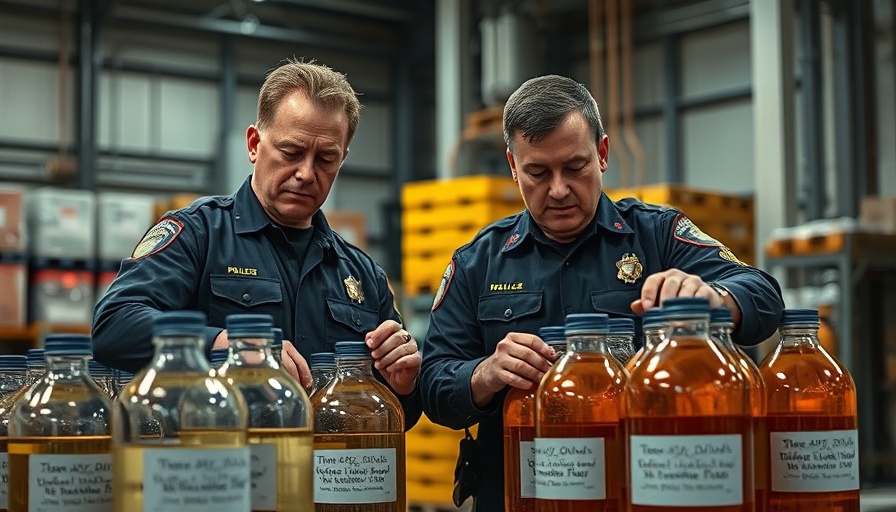
Officials inspecting counterfeit alcohol production, highlighting crisis in southern Africa.

Counterfeit Whiskeys: A Growing Concern in Southern Africa

The counterfeit whiskey crisis sweeping through southern Africa, particularly Zimbabwe, calls for urgent attention. As smugglers bypass customs for mere bribes, what appears as Bushmills Irish Whiskey and other renowned brands is actually a dangerous imitation distilled in shadowy laboratories from neighboring countries.

Health Implications of Consuming Fakes

The alarming rise in counterfeit alcohol is not merely an issue of lost revenue for legitimate producers; it poses significant health risks as well. As these imitation beverages flood the market, they are becoming a popular yet perilous choice for the unemployed youth and those seeking cheap thrills. The low pricing is appealing, but the immediate dangers, like kidney health crises, addiction, and potential poisoning, reflect a devastating reality.

The Economic Impact and Market Risks

As counterfeit alcohol gathers momentum, established breweries—some of which are international giants—risk irreparable damage to their brands and market share. George Guvamatanga, chief director of Zimbabwe’s Ministry of Finance, highlights the looming risk that local subsidiaries of brands like Anheuser-Busch InBev face. If this trend continues unaddressed, long-term investments in these regions may dry up altogether.

Organized Crime's Role in Smuggling

As explained by Oliver Mandipaka, a former police inspector, organized criminal groups from tax havens have intruded into the southern African alcohol scene, establishing clandestine operations that parallel the legal framework. These syndicates exploit skilled chemists and local resources to create counterfeits that even professionals can mistake for authentic products. An urgent question arises: How do we mitigate this complex problem when external actors are literally reshaping the landscape?

Making Informed Decisions: What Consumers Need to Know

With an increase in the availability of counterfeit alcohol, consumers must stay informed and cautious about their choices. Understanding the risks associated with counterfeit spirits can be the first step toward avoiding health crises. Investigating brands, supporting local producers, and educating peers about the dangers can help shift demand back toward legitimate products.

Moving Forward: Strategies for Change

In light of these developments, stakeholders—ranging from government officials to consumers—must band together to formulate solutions that tackle the counterfeit crisis. This could involve stricter penalties for smugglers and more robust monitoring of import channels. Moreover, raising awareness and facilitating public discussions on the topic will also play a crucial role in shifting public sentiment against these dangerous imitations.

The counterfeit whiskey crisis illuminates the intersection of health, economics, and consumer responsibility in southern Africa. As the landscape shifts, it becomes paramount for authorities and stakeholders to adapt and respond proactively to safeguard both health and economics in the region.

For a future where consumers are protected and legitimate businesses can thrive, the call to action is clear: everyone must align efforts to combat alcohol smuggling and ensure safer consumption practices.

Crime & Safety

12 Views

0 Comments

Write A Comment

*
*
Related Posts All Posts
12.08.2025

The Tragic Murder of Marius van der Merwe: A Wake-Up Call for South Africa's Witness Protection

Update The Heartfelt Tribute and Outrage Following a Tragedy The tragic assassination of Marius van der Merwe, a whistleblower at the Madlanga Commission, has sent shockwaves through South Africa, sparking outrage and calls for urgent reform in witness protection and accountability within the police force. Gunned down in front of his family outside their Brakpan home, van der Merwe's death highlights the perilous consequences faced by those who dare to speak up against corruption. A Grief-Stricken Widow Speaks Out In a deeply emotional TikTok tribute, Leanne van der Merwe shared a montage of memories, lamenting the loss of her husband with chilling words, "How do I say goodbye?" Her tribute reflects not just personal devastation but resonated with a broader sense of national grief. As tributes poured in, many expressed support for Leanne, affirming that her husband's courage had illuminated the fight against systemic corruption. Context of Courage and Controversy In November, under the pseudonym "Witness D," Marius van der Merwe testified before the Madlanga Commission, where he implicated several high-ranking officials in murder cover-ups. His courage to expose wrongdoing allegedly angered powerful individuals, making his assassination no mere coincidence. Where van der Merwe's fate was seemingly sealed by those he sought to expose, the outpouring of public sympathy underscores a troubling reality—many believe that the current government’s inadequate mechanisms to protect whistleblowers exhibit systemic flaws. President Cyril Ramaphosa's expression of sorrow over the murder, pointing to an urgent need for accountability, highlights the political ramifications of van der Merwe’s violent end. Call to Action: A Community's Response This incident has ignited a communal outcry that transcends personal loss. It’s not merely a tragedy for one family but a wake-up call for a nation grappling with corruption and governance failures. Political parties and civil society groups are now demanding reforms in witness protection protocols to ensure that those who speak truth to power can do so without fear of retaliation. Implications of the Madlanga Commission's Findings The Madlanga Commission, established to investigate political interference within the criminal justice system, faces significant scrutiny following van der Merwe's death. As trust in law enforcement dwindles, the commission's ability to function effectively hangs in the balance. Security experts suggest that this will also lead to adjustments in how witnesses are identified, protected, and encouraged to testify, making it imperative that public trust is restored. What's Next: Future of Witness Protection in South Africa The fallout from Marius van der Merwe’s assassination raises essential questions about the safety and rights of whistleblowers in South Africa. Advocacy for reform must be coupled with systemic changes within law enforcement to ensure that accountability is not just a catchphrase but a reality for those who bravely challenge corruption. Together, communities and civil society must push the narrative towards substantive reforms and greater protection mechanisms that honor the courage of whistleblowers and uphold the rule of law. The battle against corruption requires not only awareness but concrete actions that foster a safer environment for future truth-tellers. Conclusion: Take Action and Demand Change The tragic loss of Marius van der Merwe is a poignant reminder that the price of truth can be deadly. As we reflect on his courage, it is imperative that we demand accountability from our leaders and advocate for the reforms necessary to protect future whistleblowers. Take a moment to share your support and stand against corruption—it is only through collective action that change can occur.

12.06.2025

Gauteng's Tragic Cycle: Mass Shooting in Pretoria Spotlights Illegal Taverns

Update The Tragic Toll of Gun Violence in South Africa's Illegal TavernsIn a harrowing incident that has shaken the community of Atteridgeville, Pretoria, a mass shooting at an illegal tavern has claimed the lives of 12 individuals and left another 13 seriously injured. The tragic event occurred during the early hours of Saturday morning, drawing immediate attention to the rising tide of violence associated with unregulated liquor establishments in South Africa.A Summary of the IncidentOn December 6, 2025, around 4:15 AM, three unknown assailants stormed into the unsecured tavern located in a hostel and opened fire indiscriminately. Among the deceased were three minors aged three, 12, and 16, illustrating the devastating impact of such violent acts on vulnerable members of society. Subsequently, a manhunt was initiated for the shooters, but as of now, they remain at large.The Link Between Illegal Taverns and Increased CrimeAuthorities, including police spokesperson Brigadier Athlenda Mathe, have condemned the violence and highlighted a worrying trend: illegal liquor outlets are increasingly becoming hotspots for crime. In a recent briefing, Mathe noted that these illicit establishments have been linked to numerous shootings—not always due to alcohol-fueled disputes, but because patrons may be targeted for violent crime.The City of Tshwane's MMC for Community Safety, Hannes Coetzee, echoed this sentiment, affirming that illegal taverns perpetuate an environment rife with unrest and danger. According to Coetzee, “These establishments are a significant driver of crime and disorder,” prompting the city to prioritize operations targeting such venues.Government Response and Community ResponsibilityThe Gauteng Premier, Panyaza Lesufi, has also voiced his dismay, describing the loss of innocent lives as “heartbreaking and unacceptable.” These sentiments reflect a wider concern among government officials regarding the effects of gun violence on public safety and community stability. Premier Lesufi emphasized the urgent need to address illegal liquor outlets, promising to intensify operations to shut down both legal and illegal establishments that jeopardize citizens' safety.The Rising Trend of Mass ShootingsThe uptick in mass shootings linked to illegal taverns raises alarms about the broader implications for South African society. As outlined in various reports this year, four separate mass shootings have been documented in Gauteng alone, marking a clear escalation in violent crime within these venues. This consistent pattern prompts questions about law enforcement's effectiveness in addressing the underlying issues and the effective regulation of liquor sales.Engaging the Community in Crime PreventionIn light of this alarming trend, experts suggest involving community stakeholders in crime prevention strategies. By promoting awareness and establishing community policing initiatives, neighborhoods can play a vital role in holding both law enforcement and local businesses accountable. Furthermore, public forums and community organizations can serve as platforms for dialogue on public safety, potentially guiding effective policy changes.A Call to ActionThe tragic mass shooting in Pretoria serves as a somber reminder of the dire need for reforms in crime prevention and alcohol regulation in South Africa. Enhanced policing strategies, community engagement, and stricter controls on alcohol sales could foster safer environments. Citizens are encouraged to remain vigilant and involved in community safety initiatives, as collective action can pave the way for deeper changes in crime dynamics.ConclusionThis devastating incident underscores the urgent need for comprehensive strategies to combat violent crime in South Africa, particularly in relation to illegal liquor establishments. As communities mourn the loss of innocent lives, a collaborative approach involving government, law enforcement, and citizens is essential in reshaping the narrative around safety and accountability.

12.05.2025

Witness D's Murder in Brakpan: Shocking Turn in South African Politics

Update Witness D's Assassination: A Grim Reminder of South Africa's Unresolved IssuesThe murder of a witness known only as "Witness D," who testified in front of the Madlanga Commission, has added a chilling chapter to the ongoing saga of corruption within South African law enforcement. Shot dead in Brakpan in the presence of his family, Witness D's death has raised alarm over the potential repercussions for others who dare to speak out against misconduct in a system often plagued by fear and intimidation.According to police reports, the shooting occurred around 19:30 as Witness D arrived at his home with his wife and children. Unidentified assailants approached and opened fire, leaving his family unharmed but sending shockwaves through the community and the broader political landscape.A Corruption Inquiry Under ThreatThe Madlanga Commission was probing allegations against Julius Mkhwanazi, a senior figure within the Ekurhuleni Metropolitan Police Department who is suspended amid claims of a murder cover-up linked to a robbery incident in April 2022. Witness D had implicated Mkhwanazi during his testimony, claiming that he was ordered to assist in concealing evidence after a suspect died during an alleged police operation gone wrong.This disturbing turn of events illuminates not only the risks facing whistleblowers but also the entrenched culture of corruption within South African institutions. As evidenced by the allegations made against Mkhwanazi, police officials are often believed to be engaged in syndicates that abuse their power, complicating the fight against crime and undermining public trust in law enforcement.The Implications for the Justice SystemThe assassination of Witness D signals to potential informants that speaking out could be a fatal decision. This murder not only obstructs the current investigation into Mkhwanazi and associates but also presents a significant challenge for future corruption inquiries within South Africa. The commission has been a critical platform for addressing systemic issues in law enforcement and ensuring accountability.Moreover, the silence imposed through violence discourages broader societal engagement with issues of police brutality, corruption, and governance within South Africa’s political landscape. As roles within governance and law enforcement become tainted by violence and coercion, citizen trust in these institutions dwindles, leading to social unrest and disillusionment with democratic processes.The Broader Context of Violence and CorruptionWitness D's murder is part of a troubling pattern observed within South Africa, where instances of targeted violence against whistleblowers are frequently documented. The assassination occurred amidst growing tensions over corruption investigations and resurfacing debates regarding police reform and human rights. The propensity for violence against informants not only highlights the risks involved in addressing these systematic injustices but also raises significant concerns regarding the safety of individuals who expose wrongdoing in government.What Lies Ahead for South Africa?As citizens, activists, and political leaders grapple with the implications of Witness D's assassination, the future of South African governance appears increasingly overshadowed by fears of violence and corruption. A renewed commitment to safeguarding whistleblower rights, implementing police reforms, and addressing systemic corruption is crucial for restoring public faith in the justice system.The assassination serves as a poignant reminder of the dangers faced by those who dare to expose the truth and highlights the pressing need to take substantial steps towards ensuring safety and accountability for all South Africans.

Terms of Service

Privacy Policy

Core Modal Title

Sorry, no results found

You Might Find These Articles Interesting

T
Please Check Your Email
We Will Be Following Up Shortly
*
*
*