Add Row
Add Element
PR Africa: Your Gateway to Comprehensive African News and Insights
update
PR Africa
update
Add Element
  • Home
  • Categories
    • Entertainment
    • Automotive
    • Politics
    • Finance
    • Health & Fitness
    • Sports
    • Business
    • Cryptocurrency
    • Education
    • Fashion & Beauty
    • Home & Garden
    • Foreign Language News
    • Lifestyle
    • Real Estate
    • Religion
    • Science
    • Technology
    • Travel
    • News & Current Affairs
    • Crime & Safety
    • Arts & Culture
    • Environment
    • Food & Drink
    • Extra News
February 25.2025
3 Minutes Read

Discovering Atterbury's Richmond Park: A Game Changer for Cape Town's Commercial Real Estate

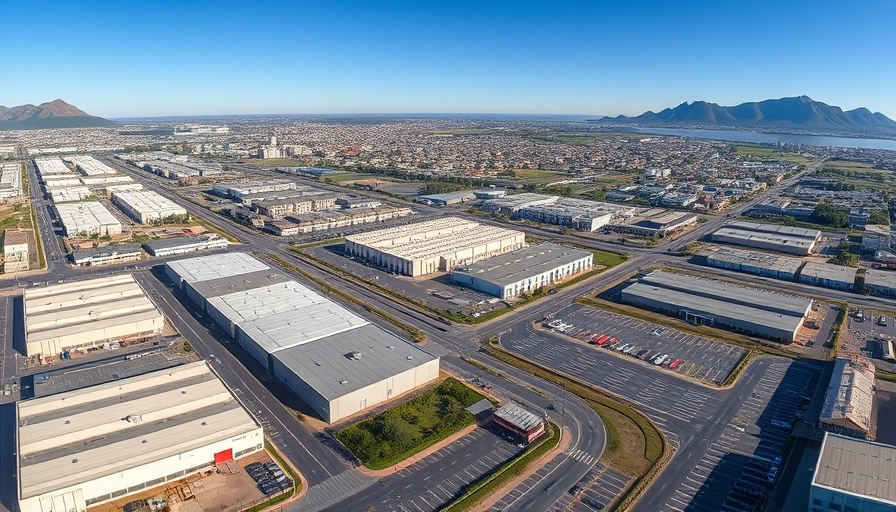
Aerial view of mixed-use developments in Cape Town.

Richmond Park: A Catalyst for Commercial Growth in Cape Town

Atterbury's Richmond Park development is rapidly transforming Cape Town's commercial landscape, representing a significant investment in mixed-use properties. Located strategically along the N7 highway in Milnerton, this multi-billion rand project sets a new benchmark for commercial environments in the Western Cape.

Connectivity and Infrastructure: Key Advantages for Businesses

One of the standout features of Richmond Park is its unparalleled connectivity. With direct access to major transport arteries, including the N7 and Plattekloof Road (M14), businesses have seamless links to vital areas such as the Cape Town Port and the International Airport. This type of access is instrumental for companies that rely on logistics and distribution.

In addition, Atterbury has prioritized modern infrastructure. Comprehensive road upgrades ensure smooth traffic flow, while fiber optic installations support enhanced business operations. The robust power supply from Eskom further translates into operational cost advantages for the tenants.

Richmond Corner: A Thriving Retail Hub

The retail component of the development, known as Richmond Corner, is already attracting well-known national retailers, including Pick ‘n Pay, Woolworths, and Clicks. The inclusion of popular eateries like Vida e Café and Burger King adds to the vibrancy of the area, making it a focal point for both business occupants and the local community. This retail mix is essential; it not only serves employees but also creates employment opportunities for local residents.

Complementary Developments Enhancing the Cape Town Portfolio

Apart from Richmond Park, Atterbury’s Trumali Park in Stellenbosch complements this growth story. Offering A-Grade office spaces visible from the R44, Trumali Park caters to businesses looking for premium locations within the Winelands' commercial hub. With extensive green spaces and ample parking, it highlights the developer's commitment to integrating nature into urban environments.

Looking Ahead: Future Developments and Market Trends

The successes of Richmond Park and Trumali Park illustrate the potential of mixed-use developments in addressing contemporary business needs. As urban centers increasingly shift towards integrated living and working spaces, such developments are expected to proliferate. Key market trends indicate steady growth in both commercial real estate and residential property, driven by demands for greater accessibility and community-centric environments.

The Bigger Picture: Nuances of Urban Planning

These developments not only cater to businesses but also reflect broader urban planning strategies. By focusing on mixed-use spaces, Atterbury is contributing to sustainable construction practices and effective urban regeneration efforts in Cape Town. Understanding the balance between commercial needs and community living is vital for the growth of smart cities in the future.

Conclusion: A New Era for Cape Town's Economic Landscape

Atterbury's Richmond Park exemplifies how innovative developments can catalyze economic growth while addressing the needs of businesses and local communities. As they continue to expand their footprint in the Western Cape, the focus remains on creating integrated environments that foster collaboration and sustainable growth. For businesses interested in prime property opportunities, Atterbury’s headquarters in Pretoria invites inquiries to explore these lucrative options.

Real Estate

18 Views

0 Comments

Write A Comment

*
*
Related Posts All Posts
02.12.2026

Discover Why Modern Liquid Waterproofing Outperforms Torch-On Systems

Update Understanding the Shift from Torch-On to Liquid Waterproofing In the world of commercial real estate, the search for robust and lasting waterproofing solutions remains a pivotal challenge for property managers and building owners. From the perspective of Sealtek Cape, a leading firm highlighting the transformation within the industry, the shift from traditional torch-on membrane systems to modern liquid waterproofing promises not just enhanced performance but could redefine maintenance strategies in the sector. The Hidden Costs of Torch-On Membrane Systems Torch-on membranes ruled the waterproofing landscape during the 1980s and 1990s but their shortcomings are critically evident. They generally need significant repairs or replacements between 10-12 years, primarily due to seam failures aggravated by environmental exposure. This is alarming for property owners who traditionally expect their investments to withstand the test of time without incurring exorbitant repair bills or lengthy disruptions. Outdated as they may be, torch-on systems impose hidden costs as they require a full removal process that can disrupt tenant operations and elevate maintenance costs. For facilities that increasingly pursue efficient operational standards, the case for exploring innovative alternatives is undeniable. Modern Liquid Waterproofing: A Seamless Solution In contrast, modern liquid waterproofing systems—aptly heralded by Sealtek Cape—offer a seamless and adaptable approach to building protection. Instead of utilizing overlapping sheets prone to failure, these systems apply a liquid membrane, effectively becoming a cohesive layer that adapts to the existing structure. Such flexibility isn't merely theoretical; it delivers measurable results, with warranties extending up to 20 years and requiring minimal maintenance. This revolutionary approach is particularly beneficial in South Africa's dynamic climate, where consistent UV exposure and temperature fluctuations exacerbate traditional system vulnerabilities. By eliminating seams, liquid waterproofing mitigates one of the main failure modes of torch-on systems, ultimately leading to more reliable building performance and fewer emergencies. A Conversion Process That Minimizes Disruption The true ingenuity lies in the conversion process, which allows building owners to preserve existing structures while upgrading to modern standards. Rather than initiate demolition, skilled professionals assess and prepare the current surface before applying the new liquid system. This not only limits operational interruptions but also alleviates the financial burden associated with traditional removal procedures. The four phases of this carefully planned process—assessment, surface preparation, primer application, and liquid waterproofing—demonstrate a structured methodology that reaffirms the property’s longevity and resilience. Innovative Materials in Construction: Enhancing Sustainability The transition to liquid waterproofing highlights a broader shift in construction technology and sustainable practices. As the construction industry seeks to reduce its environmental footprint, innovative materials play a pivotal role in the emergence of smart and sustainable infrastructure. According to industry analysts, integrating green building practices not only enhances property value but also aligns with growing consumer demands for sustainable living environments. Long-Term Benefits to Property Management For property managers and developers, understanding these advancements opens pathways to enhance investment returns. With minimal disruption and maintenance, integrating modern materials—like liquid waterproofing—can significantly improve property valuations and tenant satisfaction, creating an atmosphere of long-term value preservation. Urban planners and developers now find these innovations compelling for shaping future commercial spaces that align with sustainability trends. Conclusion: Seizing the Opportunity for Improvement As the landscape of construction and property management evolves, being informed about modern materials like liquid waterproofing systems empowers decision-makers to make enlightened choices. This conversation needs to transcend traditional practices; adopting superior systems can significantly influence maintenance costs, tenant occupancy rates, and, ultimately, the success of property investment strategies. The data suggests that exploring liquid waterproofing as a viable solution will bolster the industry's reputation while ensuring lasting benefits. For those involved in construction and property management, it’s time to reconsider existing waterproofing strategies and transition to forward-thinking solutions that support sustainability and efficiency in the long run.

Terms of Service

Privacy Policy

Core Modal Title

Sorry, no results found

You Might Find These Articles Interesting

T
Please Check Your Email
We Will Be Following Up Shortly
*
*
*