Add Row
Add Element
PR Africa: Your Gateway to Comprehensive African News and Insights
update
PR Africa
update
Add Element
  • Home
  • Categories
    • Entertainment
    • Automotive
    • Politics
    • Finance
    • Health & Fitness
    • Sports
    • Business
    • Cryptocurrency
    • Education
    • Fashion & Beauty
    • Home & Garden
    • Foreign Language News
    • Lifestyle
    • Real Estate
    • Religion
    • Science
    • Technology
    • Travel
    • News & Current Affairs
    • Crime & Safety
    • Arts & Culture
    • Environment
    • Food & Drink
    • Extra News
June 01.2025
3 Minutes Read

Discover the Surprising Impact of African Coffee on Global Markets

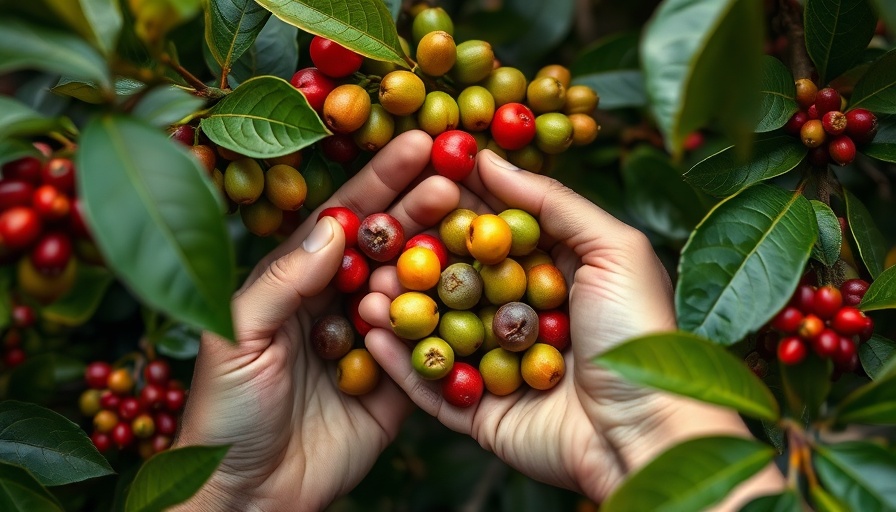
African coffee harvest and its global market impact.

The Origins of Coffee: A Rich History

This cup of coffee might just be more than a morning ritual; it is an echo of history that began over a thousand years ago in Eastern Africa. Legend tells of Kaldi, a goat herder from the Kaffa region of Ethiopia, whose curious nature led him to discover the energizing properties of coffee berries. This discovery consumed the attention of local monks, who leveraged it to enhance their lengthy prayers. Fast-forward to today, coffee is an indispensable part of various cultures, particularly in Ethiopia, where expressions like 'Buna dabo naw' (Coffee is our bread) capture its societal significance.

Why African Coffee Matters in Today's Market

Currently, coffee remains integral to the economies of Eastern African countries. Specialty beans like Kenya AA and Ethiopia Yirgacheffe are not just delicious; they are highly sought-after commodities on the global stage, generating income that directly supports the livelihoods of farmers and their communities. The rich biodiversity and optimal climates of regions like the Lake Victoria Crescent allow both Arabica and Robusta varieties to thrive, contributing to the diverse flavors that coffee enthusiasts enjoy.

The Ecological Significance of Coffee Cultivation

It’s not only about the economy; coffee cultivation in Africa plays a pivotal role in maintaining ecological balance. The practices of traditional farming methods have been passed down through generations, ensuring sustainable production that respects the land. However, with logging and urbanization threatening this balance, there is a pressing need for conscious cultivation practices that safeguard environmental integrity while maintaining coffee quality.

Modern Brewing Techniques: Merging Tradition with Innovation

As the world embraces technological advancements, coffee brewing is no exception. Minimalist home setups with pour-over kits or sophisticated espresso machines reflect a shift towards enhancing coffee’s flavor profile. Alongside traditional methods, innovations like IoT-enabled coffee machines are emerging, giving enthusiasts new ways to experience their brew. This melding of old and new promises intriguing possibilities for coffee lovers, possibly paving the way for new blends that could redefine the global palette.

Future Trends in Coffee: What Lies Ahead?

As consumer preferences evolve, the future of coffee looks promising yet requires attention. With the rise of eco-conscious consumers, there is a growing expectation for traceable and ethically sourced products. This push aligns with broader global trends in sustainability and digital transparency across industries, fundamentally restructuring how we approach food production and consumption. For coffee, this means not only maintaining quality and flavor but also integrating sustainable practices that honor the origins of this cherished crop.

The Cultural Impact of Coffee: A Global Connection

From the streets of Nairobi to cafés in Paris, coffee has woven its way through cultures worldwide, symbolizing connection, creativity, and community. For many, the act of sharing coffee embodies hospitality—bridging cultures and igniting conversations. In a rapidly digitalizing world, where real human connection sometimes fades, the communal aspect of coffee drinking can foster meaningful relationships, providing a space for dialogue and understanding.

Take Action: Savor and Support African Coffee

As executives and decision-makers, consider how your palate choices can influence the global coffee landscape. By choosing specialty African coffees, not only do you enjoy exceptional flavors, but you also support sustainable practices that empower communities. Explore local coffee shops offering African blends or purchase directly from ethical suppliers to further this vital connection.

Food & Drink

17 Views

0 Comments

Write A Comment

*
*
Related Posts All Posts
01.14.2026

How Sunsu Corporation's Konjac Jjonduegi Redefines Healthy K-Snacks

Update Redefining Snacking with Konjac JjonduegiSunsu Corporation, a pioneering food innovator from South Korea, has set its sights on transforming the global healthy snack market with its latest offering, Konjac Jjonduegi. This nostalgic snack—rooted in Korean culture—has been reimagined as a low-calorie, fiber-rich treat, poised to meet the increasing demand for healthier snack options around the world. As consumers become more health-conscious, the importance of clean-label snacks made from natural ingredients cannot be overstated. Utilizing 100% natural materials like brown rice, barley, and konjac, Sunsu positions Konjac Jjonduegi as both a wholesome choice and a taste of home for many.The Emergence of Healthy K-SnacksThe move towards healthier snacking is part of a larger trend in the food industry that reflects changing consumer preferences, particularly in North America and Africa. The United States has seen heightened interest in snacks that complement a wellness-oriented lifestyle, leading Sunsu to focus aggressively on expanding its 'Healthy K-Dessert' ecosystem—a strategy aimed at not just market entry, but making traditional snacks staples in international diets. CEO Dong-hoon Yang emphasizes this mission: “Our objective is to share the healthy value of traditional Korean snacks with the world, maintaining a commitment to honesty and pure ingredients.”Understanding the Cultural Significance of JjonduegiJjonduegi, a beloved Korean snack usually made from potatoes, is often associated with positive childhood memories for many. By reinterpreting this traditional food, Sunsu Corporation is not only attracting health-conscious consumers but also tapping into the emotional and cultural narratives attached to food. Such innovations bridge heritage with modern food technology and respond to consumers’ desires for authenticity within their snacking choices in an increasingly globalized market.Success and Future ProspectsSunsu's growing footprint is evidenced by impressive sales figures—over 10.5 million dollars since 2020—and a remarkable consumer satisfaction rating of 4.82 out of 5, underscoring the market's positive reception toward their offerings. Their recent compliance with U.S. FDA standards further signifies their commitment to ensuring safety and quality, essential for consumer trust in new food products. Additionally, their selection for the 2025 Strong Small Business Growth Program highlights their potential for significant international growth.Competitive Landscape and Innovation in K-FoodThe push for establishing a 'K-Healthy Snack' category places Sunsu in direct competition with other snack brands both domestically and internationally. The need for innovative, low-calorie options that don’t compromise on flavor presents a critical opportunity for brands like Sunsu to differentiate themselves within the saturated snack market. As competition heats up, companies will need to remain agile and responsive to consumer trends while also staying true to the cultural narratives that resonate with their audience.Challenges in the Food IndustryEven with Sunsu Corporation's current successes, entering new markets comes with its challenges. Understanding local tastes, preferences, and even regulatory environments requires nuanced strategies and adaptive approaches. The food industry is often criticized for issues such as sustainability, ingredient sourcing, and processing practices, and Sunsu's commitment to natural ingredients puts them in a favorable position, yet they must continuously emphasize transparency and quality to stave off potential consumer skepticism.Conclusion: Implications for the Global Snack IndustryThe introduction of Konjac Jjonduegi reflects a pivotal shift in the snack industry—one that emphasizes health without sacrificing taste or cultural identity. Sunsu Corporation exemplifies how innovative products can emerge from traditional roots while adapting them to meet modern dietary needs. For food professionals and consumers alike, understanding these trends is crucial for navigating the evolving landscape of dietary choices.Explore more about the trends shaping the future of snacks and ensure you stay informed on coming shifts in the market!

01.03.2026

Why Amura's Opening Marks a New Era for Fine Dining in Cape Town

Update Amura: Culinary Innovation Meets the Atlantic The culinary landscape of Cape Town is about to be redefined with the opening of Amura at Mount Nelson Hotel, spearheaded by three-Michelin-starred chef Ángel León, known affectionately as the "chef of the sea." Unlike any other gastronomic venture in South Africa, Amura represents a marriage of Andalusian culinary traditions and local marine biodiversity, setting a new standard for fine dining. The Vision Behind Amura Chef León’s journey has been shaped by deep respect for the ocean and its often-neglected resources. Having spent two years developing his vision for Amura, he and his head chef Guillermo Salazar curated a menu that highlights underappreciated marine produce while seamlessly blending techniques from their Spanish heritage with local ingredients. Salazar, whose impressive resume includes Michelin-starred establishments like Eleven Madison Park and Arzak, articulated the ethos of the restaurant: "We came to learn, not impose. Cape Town speaks a different culinary language, and we are here to listen." A Unique Culinary Experience Guests can expect a rotating menu that adapts to the seasonal availability of local seafood, emphasizing sustainability with dishes crafted from line-caught fish and foraged ingredients. Among the standout offerings is the electric green plankton risotto—a visual and gastronomical spectacle that encapsulates the essence of León's philosophy. This risotto not only offers a flavourful umami punch but also represents a sustainable approach, as León has cultivated phytoplankton, ensuring that no extraction from the ocean occurs, preserving the delicate ecosystem. Designing the Ocean’s Bounty Amura's interior, designed by renowned architect Tristan du Plessis, transcends traditional nautical themes. From seaweed-strand motifs on the domed ceiling to warm timber and rattan accents, the design evokes a modern interpretation of underwater worlds. The open kitchen allows diners to witness culinary artistry in action, enhancing the dining experience with an element of theatricality. Building a Bridge Between Cultures As chef León observes, cooking in Cape Town is akin to experiencing culinary rhythms from a new perspective. The oceans that flank both Cádiz and Cape Town share cultural and historical connections that inform the menu at Amura, making it not just a restaurant but also a culinary dialogue between two regions. León's commitment to marine conservation is evident not just in the innovative dishes but also in his aspiration to create awareness around sustainable seafood practices. Turning the Tide on Culinary Standards Amura stands at the forefront of a movement toward sustainable gastronomy while educating diners about the ocean’s potential beyond popular seafood choices. Each dish not only showcases local ingredients but tells a story of respect for marine life and cultural heritage. The restaurant challenges conventional notions of fine dining, offering an experience that combines artistry and purpose. Join the Conversation Amura is more than a dining destination; it’s a step towards redefining how we view and interact with our oceans. It encourages patrons to consider the implications of their food choices—a notion especially pertinent in an era marked by concern over climate change and environmental preservation. Visitors to Cape Town should seize this opportunity to engage with a new culinary narrative that champions sustainability and innovation. As the world watches, Amura represents a strong commitment to responsibility while delivering excellence in every dish. Conclusion For those interested in experiencing the intersection of traditional and modern gastronomy in a space that celebrates both culture and nature, Amura is a must-visit. It promises an evening of exquisite dining that seeks to educate and inspire while firmly placing Cape Town on the global culinary map.

12.29.2025

Leveraging Leftovers: How the Easy Breakfast Bake Energizes Mornings

Update Transforming Leftovers into Breakfast: A Culinary Revolution The concept of utilizing leftovers in meals isn’t merely a pragmatic necessity; it is evolving into an innovative culinary practice appreciated by both professionals and home cooks alike. In regions where resourcefulness is key, such as South Africa, the art of transforming leftover food into new dishes holds significant value. The Easy Leftover Breakfast Bake exemplifies this trend, creatively fusing leftover roast vegetables and meats into a nourishing breakfast option. The Recipe Breakdown: Combining Essentials The main ingredients comprise cubed sourdough, eggs, milk, and a variety of possible add-ins, including vegetables and meats. By harnessing what is readily available, this dish resonates well with those pursuing sustainability and cost-effectiveness in food preparation. For around 10 servings, the requisite ingredients include: 2½ cups cubed sourdough 3 cups milk 10 eggs 1–2 cups chopped leftover meats or vegetables ⅓ cup crumbled feta Beyond Savings: Ethical Eating and Culinary Creativity In an era marked by rising food insecurity and economic challenges, cooking with leftovers is not just practical; it is an ethical choice. As the UN warns about the implications of food wastage on the environment, practices like this serve dual purposes. Not only does this concept help reduce waste, but it also encourages culinary creativity—groups experimenting with flavors and textures can produce remarkable dishes that tell a story of their ingredients. Historical Context: The Roots of Creating from Leftovers The tradition of utilizing leftovers is steeped in cultures around the world. In South Africa, where communities often come together to share meals, the incorporation of leftover ingredients reflects the communal lifestyle and attests to cultural heritage. By turning food scraps into treasured family recipes, generations maintain connections through culinary practices. Future Predictions: A Growing Market for Leftover Recipes Looking ahead, businesses specializing in budget-friendly cooking continue to gain traction. Analysts suggest that consumer demand will fuel the rise of culinary innovations that cater to those wanting to maximize flavor while minimizing expense. As cookbooks like Lila Lerie’s “The Big Tasty Bite” promote accessible and creative methods for utilizing food that would have otherwise gone uneaten, this market solidifies its footprint. Practical Insights: How to Implement the Breakfast Bake To successfully implement the Easy Leftover Breakfast Bake, individuals can follow these actionable steps to ensure preparation aligns with their tastes and dietary needs. Emphasizing creativity, modifications can be made based on available leftovers, creating a personal signature dish: Gather any leftover vegetables or meats. Prepare the sourdough base by toasting and seasoning it to preference. Blend eggs, milk, herbs, and spices to form the custard mix. Layer ingredients and let them soak before baking for optimal flavor absorption. Conclusion: Reinventing Breakfast Culture In summary, the Easy Leftover Breakfast Bake isn’t merely a recipe; it’s a manifestation of evolving food culture that values sustainability, creativity, and community. As more people engage in the culinary arts through accessible meals, the societal narratives around leftovers transform into stories of unity and innovation. This evolution encourages us all to reconsider how we approach our meals, paving the way for a future where every bite counts. For those intrigued by this recipe and the philosophy behind it, why not try a new approach to your leftover meals? Embrace the culinary shift that not only honors our resources but also brings joy to cooking.

Terms of Service

Privacy Policy

Core Modal Title

Sorry, no results found

You Might Find These Articles Interesting

T
Please Check Your Email
We Will Be Following Up Shortly
*
*
*