Add Row
Add Element
PR Africa: Your Gateway to Comprehensive African News and Insights
update
PR Africa
update
Add Element
  • Home
  • Categories
    • Entertainment
    • Automotive
    • Politics
    • Finance
    • Health & Fitness
    • Sports
    • Business
    • Cryptocurrency
    • Education
    • Fashion & Beauty
    • Home & Garden
    • Foreign Language News
    • Lifestyle
    • Real Estate
    • Religion
    • Science
    • Technology
    • Travel
    • News & Current Affairs
    • Crime & Safety
    • Arts & Culture
    • Environment
    • Food & Drink
    • Extra News
June 17.2025
3 Minutes Read

DA's Move to Refer Nkabane to Ethics Committee: Impact on Future Elections

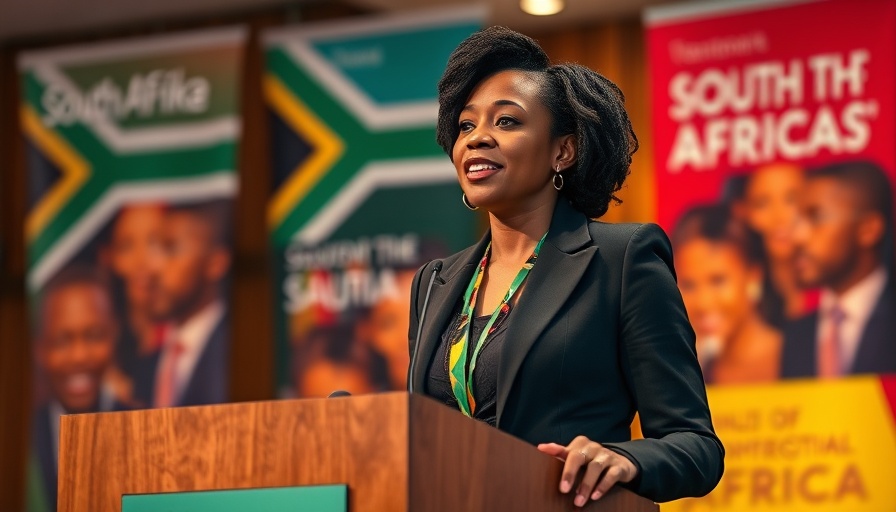
Ethics Committee Referral in South African Politics: professional woman speaking at podium.

Shifting Dynamics in South African Politics: A Closer Look

The recent events surrounding Dr. Nobuhle Nkabane, the Minister of Higher Education and Training, illustrate the critical undercurrents shaping South Africa's political landscape. The Democratic Alliance (DA) has announced its intention to refer Dr. Nkabane to the Ethics Committee for allegedly misleading Parliament, thereby igniting discussions centered on accountability and ethical governance.

The Importance of Parliamentary Integrity in a Coalition Government

In a nation marked by a Coalition Government, the integrity of parliamentary proceedings cannot be overstated. The DA's actions reflect a broader concern regarding transparency within the Government of National Unity (GNU), which includes the African National Congress (ANC) and its coalition partners. As the public grapples with issues like service delivery and corruption, it becomes essential for opposition parties to play a watchdog role.

Ethics and Accountability: A Central Theme for Voter Engagement

Voter turnout and political engagement are heavily influenced by perceptions of accountability. The 2024 general elections are quickly approaching, and opposition figures like John Steenhuisen of the DA are keenly aware that public trust in government institutions is fragile. Misleading Parliament could deeply affect not only Dr. Nkabane's reputation but also voter sentiment towards the ANC and its coalition partners, setting a crucial tone ahead of the elections.

Counterarguments: A Defense of Coalition Stability

While the DA's referral to the Ethics Committee signals a commitment to accountability, proponents of the ANC might argue that such actions could destabilize the current coalition. Critics within the ANC, like Julius Malema from the Economic Freedom Fighters (EFF), may perceive the DA's referral as a political maneuver rather than a genuine appeal for transparency. This raises questions about the political motives behind what appears to be an ethical stand.

Future Predictions: What This Could Mean for South Africa

As South Africa continues to navigate its complex political waters, the implications of this referral could extend far beyond Dr. Nkabane’s immediate future. The government's ability to respond to such challenges may directly influence public sentiment toward upcoming electoral participation. Ensuring that ethical guidelines are upheld within the coalition could either bolster or undermine voter trust.

Impacts of Ethical Governance on Policy Reform

Ethics in governance directly intersects with key policy reforms—such as education reform, economic policy, and public sector accountability. A failure to maintain high ethical standards in leadership can stall significant reforms that are crucial for tackling pressing national issues such as youth unemployment and economic inequality. The DA's call for accountability forces all political entities to reconsider their strategies concerning electoral integrity and responsive governance.

Conclusion: A Call for Sustained Vigilance

In conclusion, the referral of Dr. Nkabane to the Ethics Committee is not simply a political maneuver; it captures the essence of a political environment that vacillates between ethical governance and tactical resilience. For professionals and the public alike, the next few months will be critical in determining the efficacy of governance mechanisms and the true direction of South Africa's future. Engaging in these thoughtful discussions can foster greater awareness and potentially reshape public discourse as we approach future elections.

Politics

40 Views

0 Comments

Write A Comment

*
*
Related Posts All Posts
12.04.2025

Political Shielding? AfriForum Claims Misleading Tactics in Mabuyane Corruption Case

Update The Allegations Unveiled: A Closer Look at Oscar Mabuyane's Case The Eastern Cape Premier, Oscar Mabuyane, finds himself at the center of a significant controversy as AfriForum’s Private Prosecution Unit claims that provincial prosecutors have misled the Hawks in an effort to shield him from corruption charges. The purportedly compelling evidence points towards a deliberate attempt to obscure facts regarding financial discrepancies linked to transport contracts related to the memorial service for the late Winnie Madikizela-Mandela. With accusations of political interference coloring the narrative, the implications extend beyond Mabuyane himself, potentially shaking the very foundations of political accountability in South Africa. Political Ramifications: The Role of the ANC and Opposition As this situation unfolds, the role of the African National Congress (ANC) amid allegations of corruption comes under scrutiny. Critics from opposition parties, such as the Democratic Alliance (DA) and the Economic Freedom Fighters (EFF), have seized upon this opportunity to question the integrity of national leadership. Furthermore, the ongoing preparations for the 2024 general elections and 2026 municipal elections intensify the urgency surrounding Mabuyane's allegations. In the context of a coalition government and the prospect of political realignment, the ramifications of this case could resonate deeply, influencing voter turnout and perceptions of electoral integrity. Evidence and Counterarguments: Examining the Claims At the heart of AfriForum's allegations is the assertion that Mabuyane received R450,000 from fraudulent invoices linked to a memorial service. Lonwabo Bam, described as a key middleman, allegedly created fictitious invoices and subsequently disbursed the funds to various political entities, including Mabuyane himself. While the Hawks have clarified that they were not advised of a need for further investigation, Bam’s claims contradict the narrative supplied by prosecutors. This presents a stark dichotomy that poses crucial questions about the transparency and accountability of legal institutions within South Africa. Future Predictions: The Justice Sector's Response Looking ahead, how will South Africa's judicial system respond to these gravity-laden allegations? The National Prosecuting Authority (NPA) had heeded earlier claims about insufficient evidence and declined to pursue the case, a decision that may have a domino effect on public trust in the justice system. If AfriForum succeeds in its private pursuit against Mabuyane, it could catalyze broader calls for judicial reform, more extensive anti-corruption measures, and greater public sector accountability. This is particularly pressing as citizens express a growing demand for effective governance and improved service delivery. Constitutional Implications: The Path Forward The allegations surrounding Mabuyane pose vital questions about constitutional adherence and operational integrity within public office. As discussions surrounding government reforms intensify, constitutional amendments may become necessary to empower independent oversight bodies for political offices, ensuring that similar instances of alleged misconduct are not swept under political rugs. Given the historical context of state capture in South Africa, robust measures to protect judicial independence and enhance parliamentary oversight can foster a climate in which political figures are less insulated from the consequences of their actions. How This Affects South African Communities The outcomes of this case could have direct implications for ordinary citizens who rely on government services, correlating with pressing social issues such as youth unemployment and economic inequality. As communities grapple with disparities in access to services, the need for accountability in public office is paramount. This situation encapsulates a pervasive narrative within South Africa: the ongoing struggle for transparency in governance affects the lives of everyday people in profound ways, emphasizing the importance of civic engagement and awareness. The unfolding legal drama surrounding Oscar Mabuyane serves as a critical examination of South Africa's political landscape, raising pressing questions about accountability and the quest for justice in a democracy still wrestling with its past and present.

12.04.2025

Why the Rapprochement Between Pretoria and Paris Matters for Africa's Future

Update Strengthening Ties: The Significance of the Pretoria-Paris Alliance In late November 2025, President Emmanuel Macron’s visit to Johannesburg marked a pivotal moment in South Africa's foreign relations. At a time when many nations are seeking to reassess their alliances, this rapprochement with France signals a desire to forge strategic partnerships beyond traditional powerhouses like the United States. For South Africa, which has been navigating a complex global landscape, strengthening ties with Paris offers new opportunities for collaboration and economic growth. Historical Context: A Shift in Alliances The historical context of South Africa's diplomatic stance is crucial for understanding the current dynamics. With Pretoria often at odds with Washington, particularly under the Trump administration, South Africa’s pivot to France can be seen as a realignment towards a more supportive partnership. France, once marginalized in parts of Africa due to instability in the Sahel, is now seeking to leverage its historical ties and technological expertise to gain new footholds on the continent. This shift occurs within a broader landscape of decolonization efforts and Pan-African sentiment aimed at promoting African autonomy and empowerment. Impact on Regional Politics and Governance The growing partnership between South Africa and France holds significant implications for regional governance and democracy. As Africa seeks to address issues such as corruption, economic inequality, and youth empowerment, engaging with French expertise in governance and digital transformation can be beneficial. Collaboration on areas such as renewable energy, climate change, and local economic development could foster sustainable growth and improve governance practices, echoing calls for a new vision in Africa’s political landscape. Future Predictions: A New Economic Landscape? Looking ahead, the ramifications of this partnership extend beyond diplomatic discourse. With the African Continental Free Trade Area (AfCFTA) providing a framework for increased trade across the continent, France's engagement with South Africa might also enhance economic connectivity in the region. By focusing on infrastructure development, renewable resources, and technology transfer, both nations can play a pivotal role in advancing industrialization and creating job opportunities. This enhanced collaboration may catalyze broader regional integration efforts, linking the economies of the Global South. Diverse Perspectives: Counterarguments and Critique However, this burgeoning alliance is not without its critics. Skeptics argue that aligning too closely with France could detract from South Africa's efforts to build stronger ties with other African nations. There are concerns that it might mirror past dependencies, especially considering the colonial legacy that still impacts South Africa’s governance and economic strategies. Acknowledging these perspectives is vital in ensuring that the partnership contributes to authentic development rather than perpetuating historical patterns. Conducive dialogues focusing on African unity and leadership are essential in deriving benefits from this international partnership. Conclusion: Embracing New Opportunities The evolving relationship between South Africa and France illustrates the need for new diplomatic approaches in a shifting global landscape. As both countries delve into collaborative initiatives around trade, technology, and sustainable development, there is potential for significant positive impact on governance and human rights. For South African professionals and policymakers, understanding the nuances of this partnership can open doors to innovative solutions to pressing regional challenges. Engaging in Africa’s developmental conversations with a lens on equity and sustainability allows for truly transformative approaches to complex issues. Join the discussion about how this diplomatic shift can be harnessed for broader African goals, and advocate for informed action on matters of governance, democracy, and economic growth.

12.03.2025

Tshwane’s Political Turmoil: Deputy Mayor Modise’s Fraud Case Sparks Outrage

Update Unraveling the Referral: Tshwane’s Deputy Mayor Faces Heightened Scrutiny The political climate in Tshwane has grown increasingly treacherous for Deputy Mayor Eugene Modise, who currently stands accused of unethical business practices as highlighted by a recent forensic report. The African National Congress (ANC) responded strongly to the Democratic Alliance’s (DA) allegations, asserting that they are baseless and politically motivated. This discourse not only captures the intricate dynamics of local governance but also exposes widespread issues regarding transparency and accountability within South African politics. Historical Context: The Coalition Government’s Fragile Landscape Amidst a growing coalition government landscape, the Tshwane municipality is navigating uncharted waters. Following the 2024 general elections, coalitions have become the norm, prompting numerous political shifts. The relationship between ruling parties often complicates matters such as conflict of interest. The ANC's alliance with other parties, including uMkhonto weSizwe (MK) and various left-leaning factions, reflects a complex tapestry that sometimes leads to protecting members, as seen in Modise's case. Such alliances can lead to perceptions of bias, especially when allegations arise involving financial misconduct. The Allegations: What Do They Really Indicate? The DA has alleged that Modise has profited illicitly from a contract exceeding R300 million linked to Triotic Protection Services. Despite these serious charges, ANC spokesperson Bafuzi Yabo contended that the forensic report failed to find any provable evidence of fraud or corruption. Rather, Yabo suggested that the matter is being handled internally, signaling a trend towards resolving potential misdeeds through political rather than judicial avenues. The implications of such a stance raise questions about the effectiveness of existing anti-corruption measures in municipal governance. Insights into Public Sentiment and Governance Public frustration has reached new heights, particularly regarding allegations of nepotism and corruption within the government. Concerns around Modise’s potential confinement of interests call into question the integrity of public officials and the effectiveness of internal oversight mechanisms. This dissatisfaction might influence political realignment as voters approach the upcoming 2026 municipal elections, with greater calls for ethical standards and transparency in service delivery. Future Predictions: The Impact on Voter Turnout As residents grapple with allegations of misconduct, voter turnout may be jeopardized. Historical data shows that instances of political scandal often decrease engagement among constituents. The DA's push for criminal charges suggests a strategic move to galvanize support for accountability, which could drive voter mobilization against perceived corruption in the ANC-led coalition. The potential fallout may redefine party alignments and open doors for more formidable opposition in future elections. The Role of Media and Public Perception in Political Accountability Media coverage, as evidenced by various sources highlighting the case, plays a critical role in shaping public opinion. Investigative journalism unearths pertinent facts and brings vital insights to light that could otherwise remain overlooked. The reliance on media narratives calls for a profound ethical commitment from journalists to provide balanced reporting that emphasizes diverse perspectives on complex political issues. This ongoing saga encapsulates a pivotal moment for Tshwane’s governance and political accountability. The social and political fabric of the municipality hangs in the balance as various stakeholders engage in a heated discourse over the necessity of transparency, especially in the lead-up to significant electoral processes. Citizens and professionals alike should remain vigilant and proactive, demanding that their leaders uphold principles of integrity and public service. As this story continues to unfold, all eyes will be on how the ANC and DA navigate the challenges posed by allegations and the broader implications for governance in Tshwane. Stay engaged with local political stories that affect your community and influence your future. Understanding the dynamics of your local government not only empowers you but also fortifies democracy.

Terms of Service

Privacy Policy

Core Modal Title

Sorry, no results found

You Might Find These Articles Interesting

T
Please Check Your Email
We Will Be Following Up Shortly
*
*
*